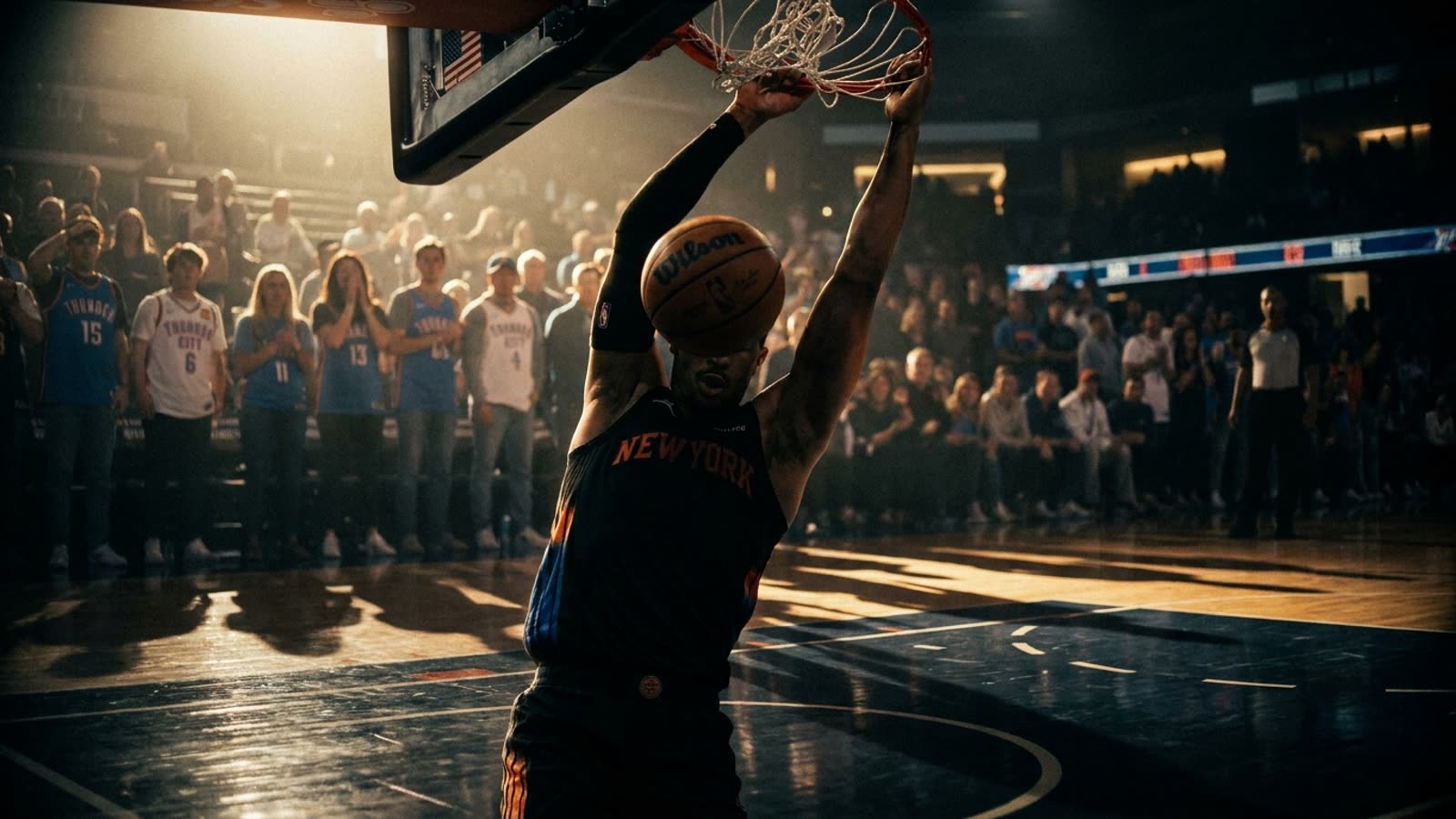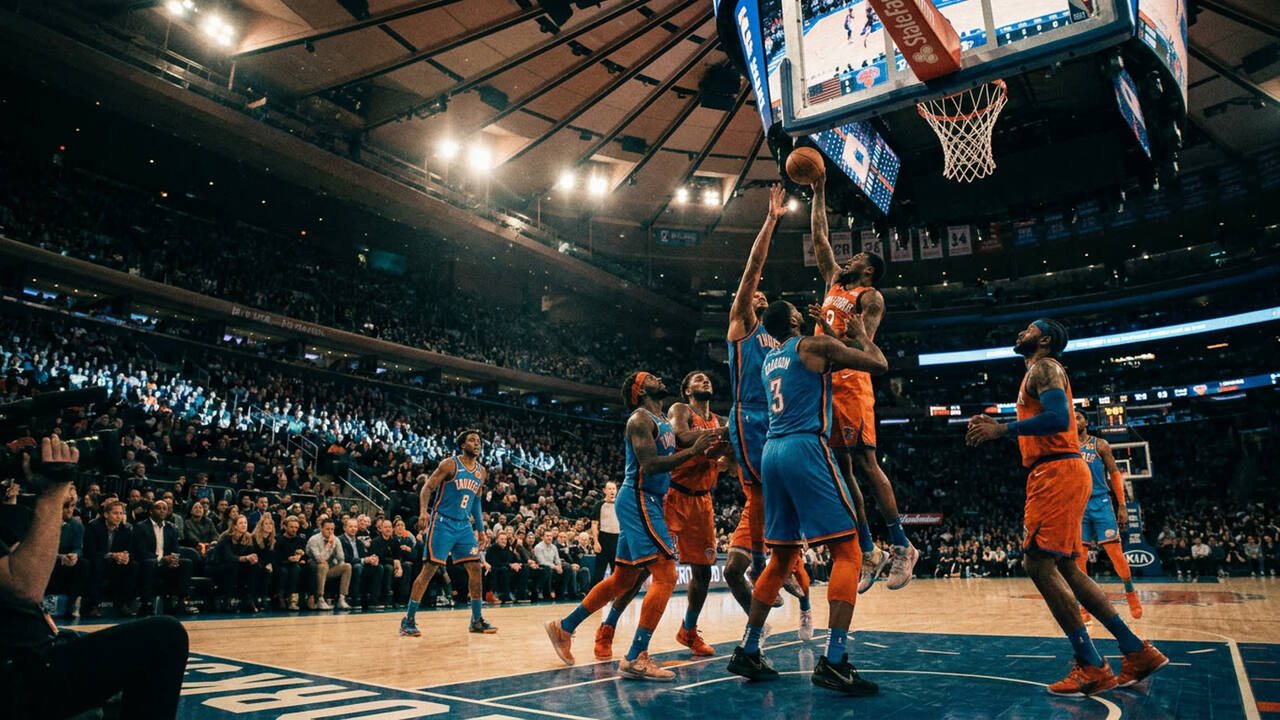
The NBA Finals have become a referendum on two competing theories of championship construction. New York has assembled a top-heavy roster featuring four players who would start on virtually any team in the league. Oklahoma City has built something closer to a basketball hydra — cut off one head and another emerges from the bench.
A comprehensive talent ranking of all 30 rostered players across both teams illuminates the strategic tension that will define this series. The Knicks claim the top slot and three of the top five spots. The Thunder counter with seven of the top fifteen.
The star gap is real but narrow
Jalen Brunson's Game 1 heroics — 38 points, including 14 in the fourth quarter — reminded everyone why he sits atop any reasonable ranking of players in this series. His ability to manufacture offense in isolation, combined with an increasingly sophisticated passing game, makes him the most indispensable player on either roster.
But the gap between Brunson and Shai Gilgeous-Alexander is measured in tendencies, not talent. SGA's length and defensive versatility give Oklahoma City options that Brunson cannot replicate. The difference is that Brunson has Karl-Anthony Towns and OG Anunoby flanking him, while SGA's supporting cast is distributed more evenly.
Josh Giddey, Chet Holmgren, and Jalen Williams would all rank somewhere between fourth and eighth on a combined roster. None is a true second star. All three are capable of winning any given quarter.
Depth as defensive identity
The Thunder's bench is where their roster philosophy pays dividends. Oklahoma City can throw five different defensive looks at Brunson without sacrificing much on the other end. Lu Dort, Kenrich Williams, and Aaron Wiggins are all plus defenders who can guard multiple positions. The Knicks have fewer such options.
New York's bench rotation relies heavily on whether Donte DiVincenzo rediscovers his shooting stroke and whether Miles McBride can handle extended playoff minutes against elite competition. Neither question has a confident answer after Game 1.
Tom Thibodeau's preference for short rotations — sometimes as few as eight players in playoff games — works when his starters are healthy and rested. The Thunder's Mark Daigneault has the luxury of going ten deep without a significant drop-off.
The injury variable
Roster depth becomes most valuable when attrition strikes. The Knicks learned this lesson painfully in previous playoff runs, when injuries to key rotation players forced Thibodeau to ride his starters into exhaustion. Oklahoma City has the bodies to absorb a similar blow.
Through Game 1, both teams remain healthy. But a seven-game series in June is a war of attrition as much as a basketball competition. The team with more viable options may simply outlast the other.
Our take
The Knicks are built to win in five games with dominant performances from their stars. The Thunder are built to win in seven through cumulative advantages. Game 1 suggested New York's approach can work — Brunson was transcendent, and transcendence is hard to scheme against. But the Thunder barely lost despite shooting poorly from three and getting nothing from Holmgren in the fourth quarter. If Oklahoma City's depth eventually wears down New York's stars, the roster rankings will look prophetic in hindsight. Championship construction is not about having the best player. It is about having enough good ones.