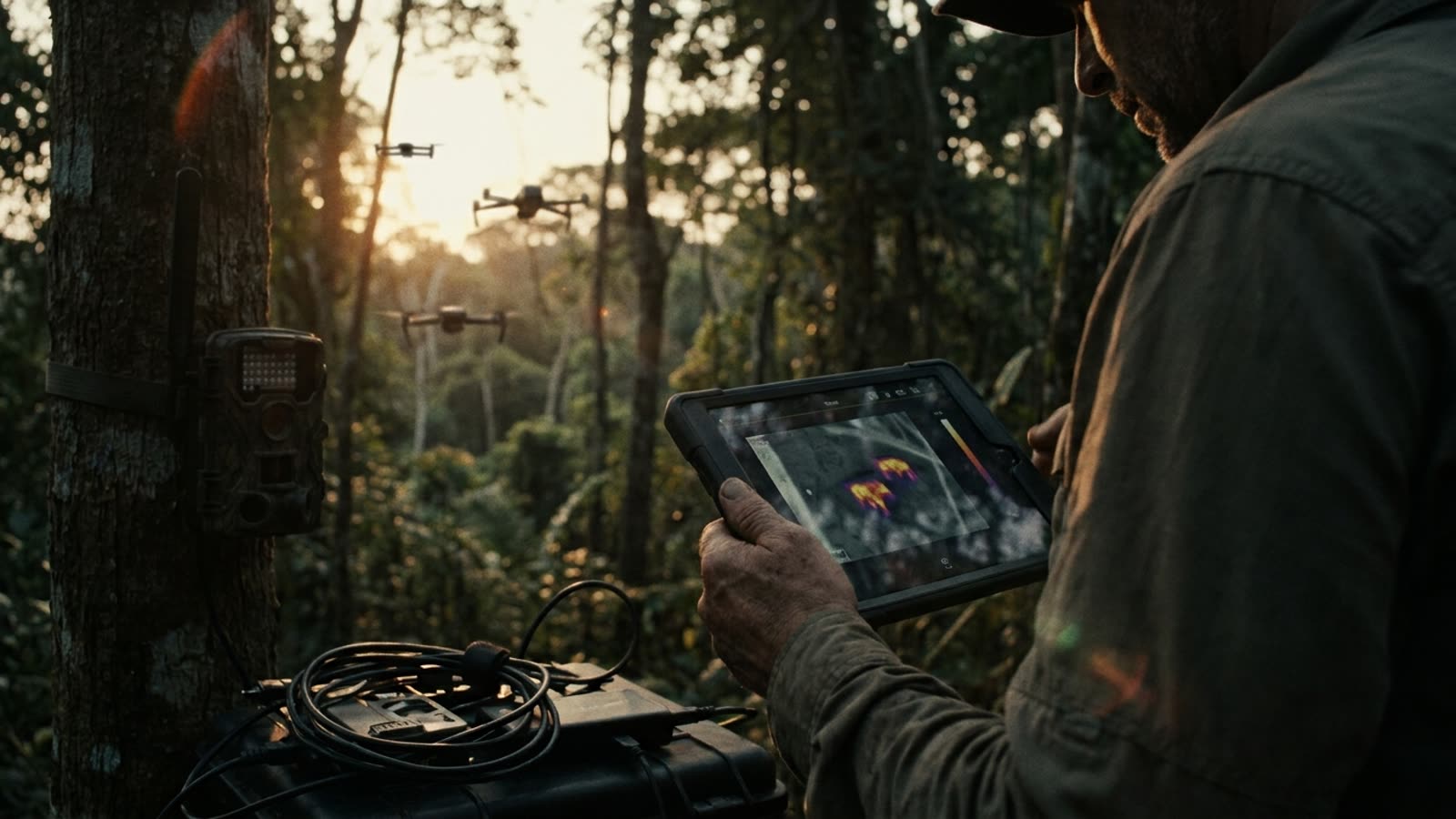
Conservation biology spent decades as a discipline of patient observation and educated guesses. Rangers would trek through reserves counting nests. Graduate students would spend months identifying animals in grainy camera trap photos. Population estimates came with error bars so wide they were nearly meaningless. That era is ending.
The eyes that never sleep
Modern conservation runs on neural networks trained to spot a snow leopard's spots from a drone at 400 feet or identify individual elephants by the pattern of their ear veins. Where human researchers might process a few hundred images per day, these systems analyze millions. The Serengeti Lion Project now tracks 3,000 individual lions through facial recognition software originally developed for human security applications. Each lion gets a unique ID, a movement history, and predictive modeling of its likely location tomorrow.
The transformation goes beyond simple counting. Acoustic monitoring systems in rainforests can identify bird species by their calls, tracking biodiversity changes in real time. Marine biologists use computer vision to count fish populations from underwater footage that would take years to review manually. Anti-poaching units in Kenya deploy predictive algorithms that anticipate where poachers will strike next based on moon phases, ranger patrol patterns, and historical data.
From correlation to intervention
The real revolution isn't in the counting but in what comes after. Machine learning models now predict which conservation interventions actually work. They can simulate the impact of creating a wildlife corridor between two reserves or calculate the optimal placement of ranger stations to maximize coverage with limited resources. The World Wildlife Fund's wildlife crime technology project uses network analysis to map trafficking routes and identify key nodes where enforcement would have maximum impact.
These systems also democratize conservation science. Local communities can use smartphone apps with built-in species identification to contribute to global databases. A farmer in Borneo can photograph a hornbill and instantly add a data point to migration studies. The same technology that powers Instagram filters now helps villagers identify whether the snake in their garden is venomous.
The uncomfortable questions
Yet this technological leap raises thorny issues. Who owns the data when an AI system tracks an endangered rhino across international borders? When algorithms recommend culling one species to save another, who makes that call? The models are only as good as their training data, and most conservation AI has been trained on charismatic megafauna in well-studied regions. The system that perfectly identifies African elephants might fail entirely when deployed in Asian forests.
There's also the risk of technological solutionism replacing deeper engagement with ecosystems. Young conservationists increasingly know animals through data dashboards rather than direct observation. The field skills that allowed earlier generations to read subtle environmental changes are atrophying.
Our take
AI in conservation mirrors AI everywhere else: transformative capability coupled with the risk of losing essential human elements. The technology clearly works. Populations we thought were declining turn out to be stable; species we assumed were extinct get rediscovered by algorithms combing through satellite data. But conservation was never just about counting animals. It was about understanding our relationship with the natural world. The best path forward treats AI as a powerful tool in service of human wisdom, not a replacement for it. The rangers still need to walk the forest. They just walk it smarter now.