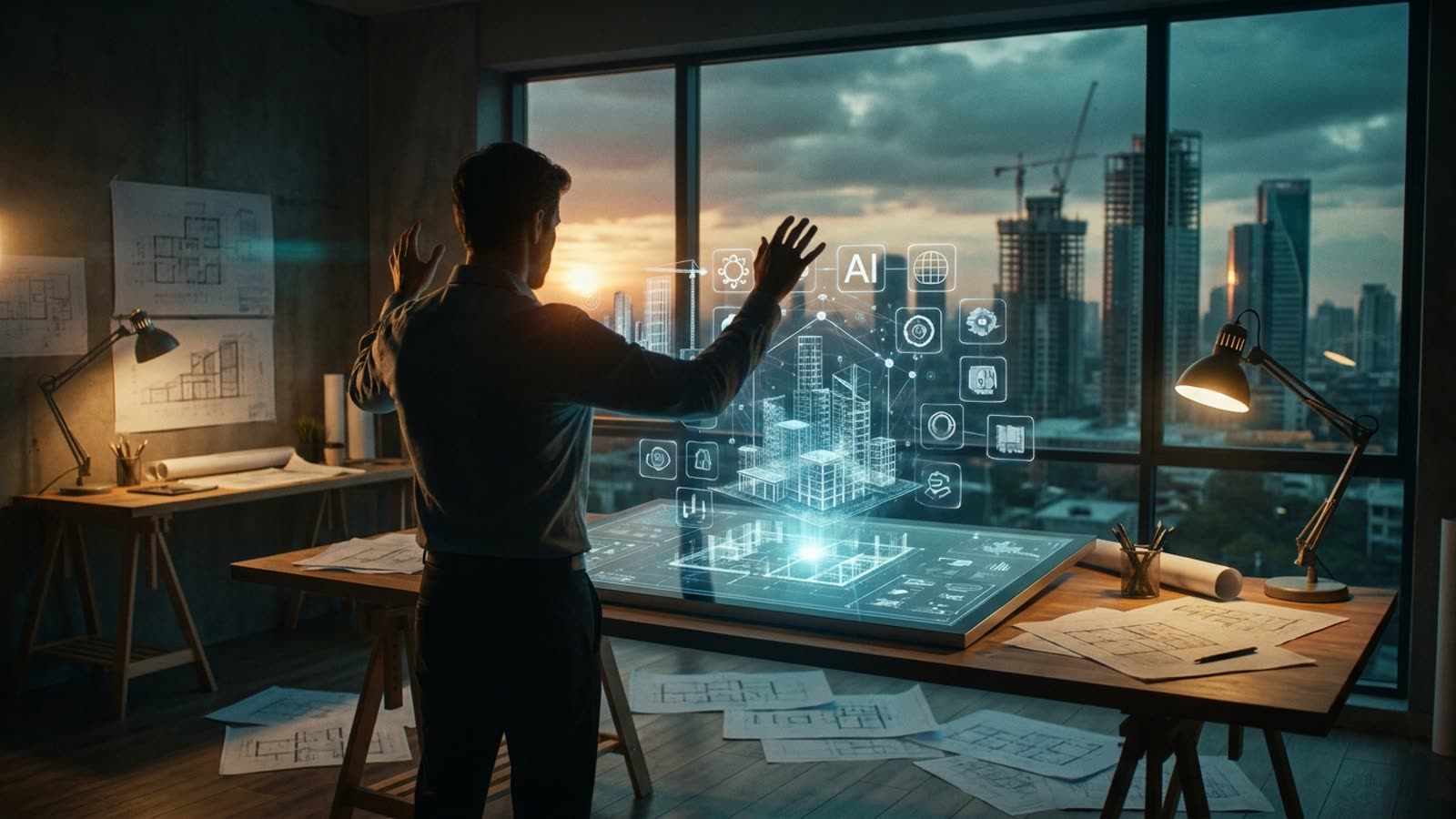
The architecture studio of 2026 looks nothing like its predecessor from a decade ago. Where teams once hunched over drafting tables and CAD stations, architects now orchestrate AI systems that can generate hundreds of design variations in minutes, optimize for everything from natural light to carbon footprint, and even predict how people will move through spaces before ground is broken.
The end of manual iteration
Generative design tools have eliminated the most time-intensive aspects of architectural practice. What once took weeks of manual iteration — exploring different floor plans, testing structural configurations, adjusting for local building codes — now happens in real-time. Architects feed parameters into systems that understand zoning laws, material costs, and engineering constraints as fluently as they understand aesthetic principles.
The shift is profound. Junior architects no longer spend years learning to draft; they learn to guide AI systems toward solutions that balance beauty, function, and feasibility. "We've gone from being craftspeople to being curators," as one practitioner described the transformation. The tools don't just accelerate existing workflows — they've changed what the work fundamentally is.
When algorithms meet aesthetics
The tension between computational efficiency and human creativity has produced unexpected results. AI excels at optimization — minimizing material waste, maximizing natural ventilation, ensuring structural integrity. But architecture has never been purely about optimization. The most celebrated buildings often deliberately violate efficiency principles for emotional or symbolic effect.
This has pushed architects into a new role: teaching machines about intangibles like "presence" or "monumentality." Firms are developing proprietary training sets that encode their design philosophies, creating AI systems that can channel the sensibilities of specific architects or movements. The question is no longer whether AI can design buildings, but whose aesthetic values it embodies when it does.
The human element persists
Despite the technological upheaval, certain aspects of architecture remain stubbornly human. Client relationships, site visits, community engagement — these cannot be automated. If anything, AI has amplified the importance of these skills by freeing architects from technical drudgery.
The most successful firms have restructured around this reality. They employ fewer drafters but more anthropologists, psychologists, and data scientists. They spend less time drawing and more time understanding how people actually inhabit spaces. The architect's core value proposition has shifted from technical execution to creative vision and human insight.
Our take
Architecture's AI transformation mirrors a pattern playing out across creative industries: automation doesn't eliminate human roles so much as it redefines them. The architects thriving in 2026 aren't those who fought the technology but those who recognized early that their value lay not in their ability to draw, but in their ability to imagine spaces that machines, for all their computational power, would never conceive on their own. The blueprints may draw themselves now, but someone still needs to dream the building.