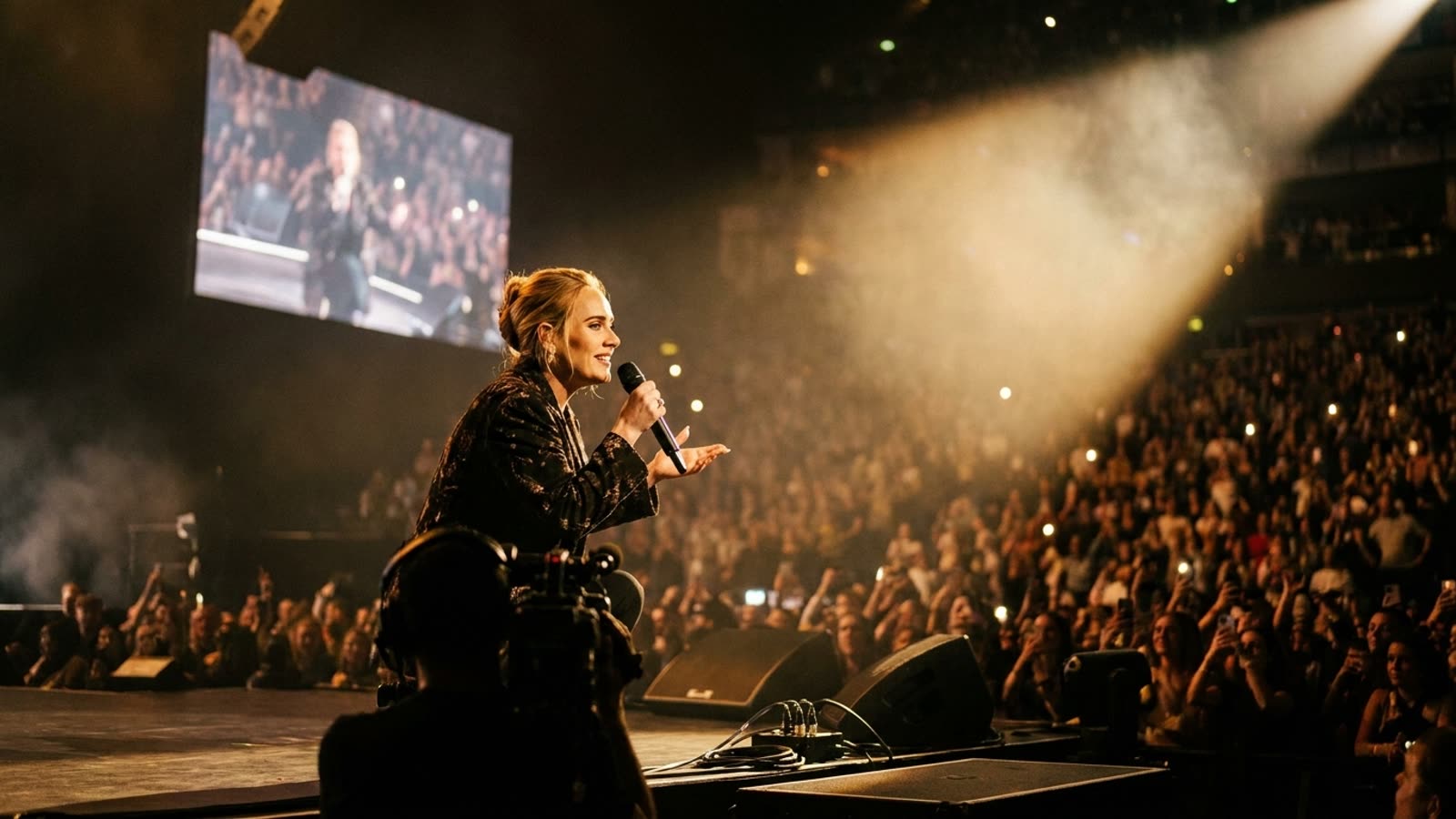
For an artist who has spent the better part of two years insisting she needs time away from the spotlight, Adele looked remarkably comfortable standing in the middle of one this week.
The singer appeared at Bad Bunny's London concert at the O2 Arena, dancing, singing along, and radiating the kind of unguarded joy that her own meticulously staged residencies rarely permit. Videos circulating online show her fully immersed in the Puerto Rican superstar's reggaeton-trap fusion, a genre about as far from her torch-song wheelhouse as contemporary pop allows. She wasn't performing. She wasn't promoting. She was, by all appearances, simply having fun—a state of being that celebrity culture treats as almost subversive.
The architecture of the modern hiatus
Adele announced her extended break from performing in late 2024, following the conclusion of her record-breaking Las Vegas residency at the Colosseum at Caesars Palace. The residency itself had been a monument to controlled spectacle: every lighting cue calibrated, every emotional crescendo engineered for maximum impact. It was, by most accounts, extraordinary. It was also, by her own admission, exhausting.
The hiatus that followed has been notably opaque. Unlike peers who document their time off with wellness retreats and cryptic studio teasers, Adele has largely vanished from public view. Her social media presence has dwindled to near silence. The occasional paparazzi shot surfaces, but she has granted no interviews, announced no timelines, offered no breadcrumbs to the album-cycle-hungry press.
Which makes her appearance at a Bad Bunny concert—unannounced, undisguised, and clearly delighted—feel almost like a statement in itself.
Why Bad Bunny makes sense
The pairing is less unlikely than it initially appears. Bad Bunny has spent the past several years establishing himself as the rare global superstar who treats genre boundaries as suggestions rather than rules. His London shows have drawn audiences that span demographics and musical allegiances, creating the kind of communal concert experience that streaming-era fragmentation has made increasingly rare.
For Adele, attending as a fan rather than a headliner offers something her own performances cannot: anonymity within a crowd, even if that anonymity is relative. The videos show her surrounded by other concertgoers, not cordoned off in a VIP section, participating in the collective experience rather than commanding it.
There is something quietly radical about a performer of her stature choosing to be an audience member—to surrender control, to let someone else dictate the emotional arc of the evening, to simply receive rather than give.
Our take
The entertainment industry has a complicated relationship with rest. Hiatuses are announced with the gravity of diplomatic treaties, parsed for hidden meanings, treated as either strategic retreats or career-ending surrenders. Adele dancing at a Bad Bunny concert punctures that solemnity rather effectively. She looked like someone who has figured out what she actually needs from this strange life she has built—and what she needs, apparently, is to occasionally stand in a crowd and lose herself in someone else's music. The next album will arrive when it arrives. In the meantime, she seems to be doing something more interesting: living.