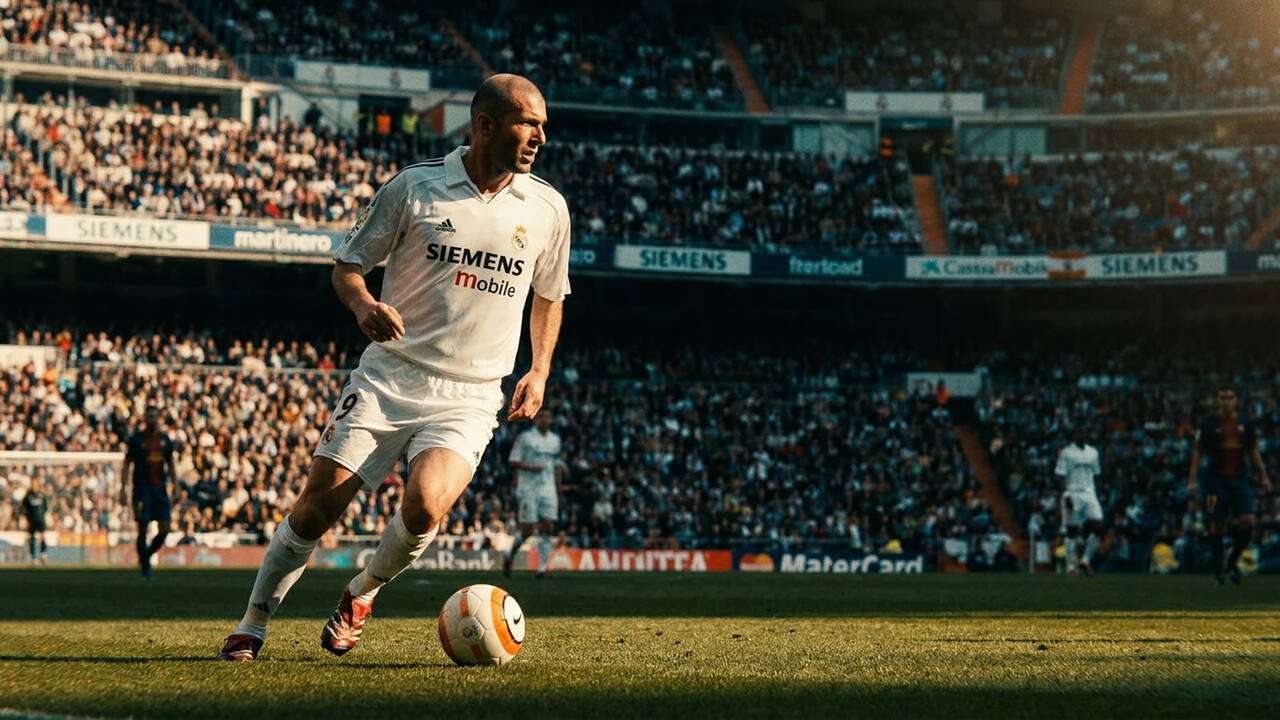
There are two kinds of iconic sporting moments: those that confirm what we already believed about an athlete, and those that shatter it entirely. Zinedine Zidane's headbutt on Marco Materazzi in the 110th minute of the 2006 World Cup final belongs to the second category, and it has never stopped being bewildering.
The facts are straightforward. France and Italy were locked at 1-1 in extra time. Zidane, playing the final match of his career, had already scored a nerveless Panenka penalty. He was minutes away from either winning his second World Cup or at least departing with his legend intact. Then Materazzi said something. Zidane turned, walked back, and drove his forehead into the Italian defender's chest. Red card. Exit. Italy won on penalties.
The mystery of the words
Materazzi eventually admitted to insulting Zidane's sister, though the exact phrasing has been disputed, translated, and retranslated across languages and continents. What he said was clearly vile. But vile words are the background noise of professional football. Defenders have been provoking strikers since the game began. Zidane had heard worse. He had endured racism, poverty, the pressure of representing both France and Algeria's diaspora. He was not naive.
This is what makes the moment so resistant to narrative closure. It was not a heat-of-the-moment lapse in the first minute. It was a calculated walk back to a man who had already moved on. Zidane chose it. He chose it knowing the stakes, knowing the cameras, knowing his children were watching.
The paradox of control
Zidane's genius was always defined by preternatural calm. The volley against Bayer Leverkusen in the 2002 Champions League final, struck with his weaker left foot, required a stillness that bordered on the metaphysical. His entire career was an argument that the highest level of football is played in a state approaching meditation.
The headbutt inverted everything. It suggested that the calm was not mastery but suppression, that beneath the elegance was a violence held in check by will alone. Some found this humanizing. Others found it tragic. Most found it simply inexplicable.
The afterlife of the image
The headbutt became a statue in Paris, a song by French rappers, a meme, a philosophical text. It was analyzed by lip readers, psychologists, and cultural theorists. It became, in a strange way, more famous than any of Zidane's actual footballing achievements. The man who scored twice in a World Cup final against Brazil is remembered primarily for a moment of self-sabotage.
Our take
Perhaps that is the point. Sport promises narrative satisfaction — the hero triumphs, the villain falls, the arc completes. Zidane's headbutt is a refusal of that promise. It insists that human beings are not reducible to their best qualities, that a career of transcendence can end in a single, inexplicable act of destruction. It is uncomfortable precisely because it is true. We do not always rise to the occasion. Sometimes we walk back and ruin everything, for reasons we cannot fully explain even to ourselves.