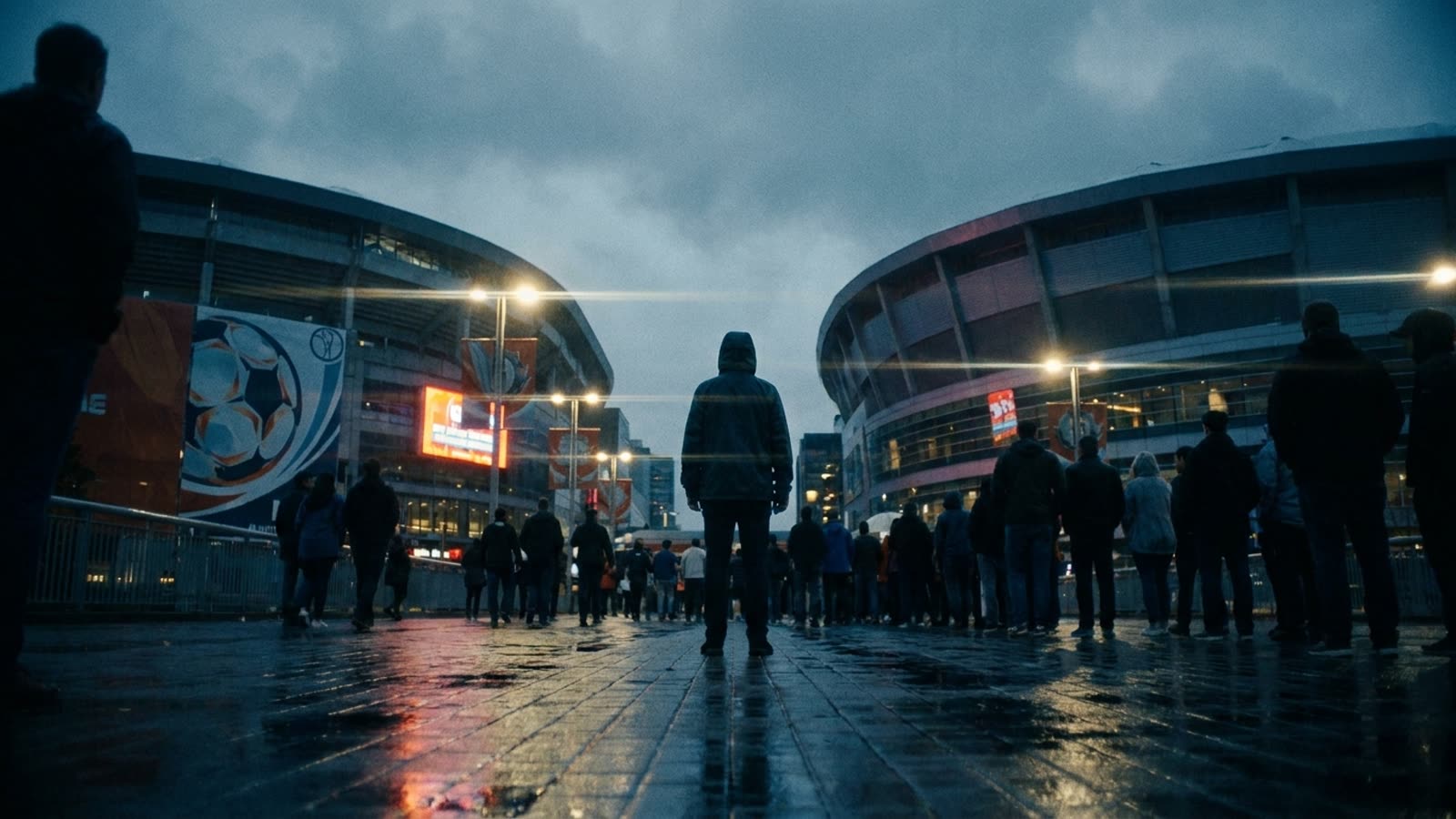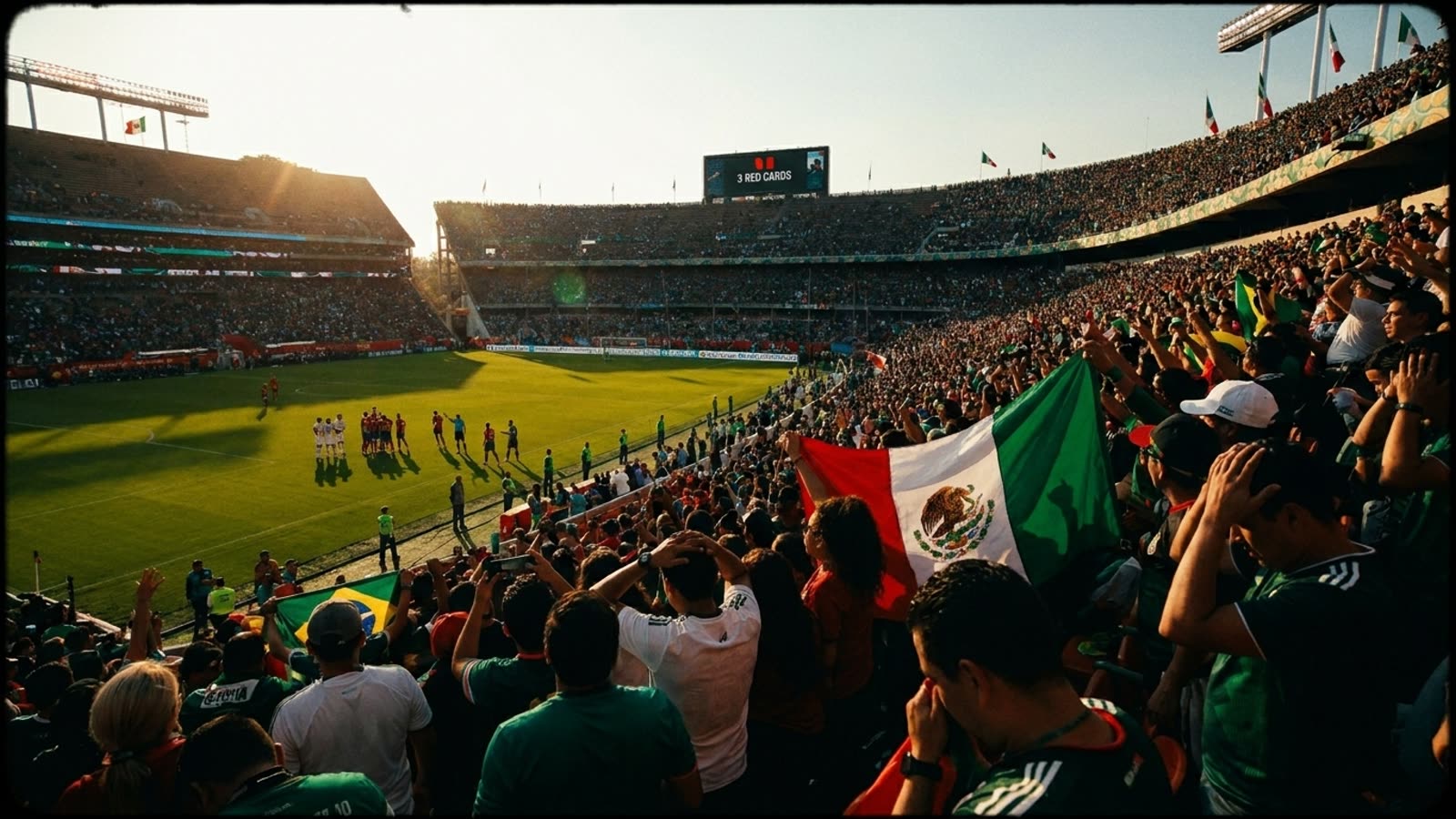
The 2026 World Cup began Thursday night with Mexico defeating South Africa 1-0 at the Estadio Azteca, but the result will be a footnote to the carnage that preceded it. Three red cards—a record for a World Cup opening match—transformed what should have been a triumphant homecoming into a disciplinary spectacle that left both teams diminished and FIFA's expanded tournament format under immediate scrutiny.
Mexico's victory, secured through a second-half goal, was almost incidental to the narrative. By the final whistle, South Africa had been reduced to nine men, their tournament debut marred by two dismissals that will likely define their group-stage campaign. Mexico, too, saw a player sent off, ensuring that neither side could claim the moral high ground in a match that descended into something closer to attrition than football.
The Azteca's complicated return
The stadium itself was supposed to be the story. The Azteca, hosting its third World Cup, carries more tournament history than any other venue—Maradona's Hand of God, Pelé's final World Cup triumph. Mexico's football federation had spent years preparing for this moment, the symbolic return of the world's biggest sporting event to a country that last hosted in 1986.
Instead, the opening ninety minutes delivered a different kind of history. The previous record for red cards in a World Cup opener was one, a threshold crossed regularly but never exceeded. Three dismissals in a single match suggests either extraordinary ill-discipline, overzealous officiating, or some volatile combination of both. Early reviews indicate the referee's decisions were technically defensible but applied with a rigidity that left little room for the occasion's natural intensity.
What this means for the 48-team experiment
FIFA's expanded format, which increased the tournament from 32 to 48 teams, was always going to test the depth of global football talent. South Africa qualified through a pathway that would not have existed under the old structure. Their performance Thursday—competitive for stretches, undone by discipline—will feed skeptics who argued expansion would dilute quality.
But the more pressing concern may be officiating consistency. With more matches, more teams, and more venues spread across three countries, FIFA's referee corps faces unprecedented logistical and interpretive challenges. If Thursday's card-happy approach becomes the norm, the tournament risks becoming a war of attrition rather than a showcase of skill. Players and coaches will adjust their calculations accordingly, and not in ways that favor entertaining football.
Our take
Mexico won, and for the home fans who packed the Azteca, that is what will be remembered. But FIFA should be concerned. The first match of a World Cup sets expectations, and Thursday's expectation-setting was chaotic. An expanded tournament needs tighter officiating standards, not looser ones, and the opening ninety minutes suggested the governing body may not have fully prepared for the complexity it created. The 2026 World Cup has forty-seven more matches in the group stage alone. If they all look like this, the beautiful game will be unrecognizable by the knockout rounds.