A player does not choose how he is remembered. Zinedine Zidane spent fifteen years accumulating the credentials of an all-time great—three Champions League titles, a World Cup, a European Championship, goals that seemed to bend physics—and then, in the 110th minute of his final professional match, he drove his forehead into the chest of Marco Materazzi and walked off the pitch in Berlin while the trophy waited.
The image has calcified into iconography. Zidane's bald head catching the stadium lights, Materazzi crumpling theatrically, the referee reaching for the red card. It is football's Zapruder film, replayed endlessly, analyzed for meaning it may not contain. What Materazzi said remains disputed; what Zidane did remains inexplicable by any conventional logic of self-interest. France lost the penalty shootout. Italy lifted the cup. And yet the moment belongs entirely to the man who was sent off.
The paradox of the perfect career
Zidane's résumé needed no embellishment. The volley against Bayer Leverkusen in the 2002 Champions League final is routinely cited as the greatest goal in the competition's history. His two headers in the 1998 World Cup final against Brazil announced France as a footballing power. He could control a ball with his instep the way a sommelier handles a decanter—unhurried, certain, almost bored by his own excellence.
But genius in football has always coexisted with volatility. Zidane was sent off fourteen times in his career. He stamped on a Saudi defender in the 1998 World Cup group stage and served a two-match ban. He headbutted Jochen Kientz of Hamburg in 2000. The Berlin incident was not an aberration; it was a pattern expressing itself at the worst possible moment.
What the headbutt revealed
The conventional reading is tragic: a great man undone by a fatal flaw, Achilles choosing rage over glory. But this misses something essential about how Zidane played. His brilliance was never clinical. It was emotional, improvisational, rooted in a pride that bordered on fury. The same internal fire that produced moments of transcendence also produced moments of destruction.
Materazzi, by most accounts, said something about Zidane's sister. The specifics matter less than the dynamic: a journeyman defender found the one button that could disable a master. Zidane, offered the choice between swallowing an insult and ending his career in disgrace, chose disgrace. There is something almost admirable in the refusal to calculate.
The afterlife of an image
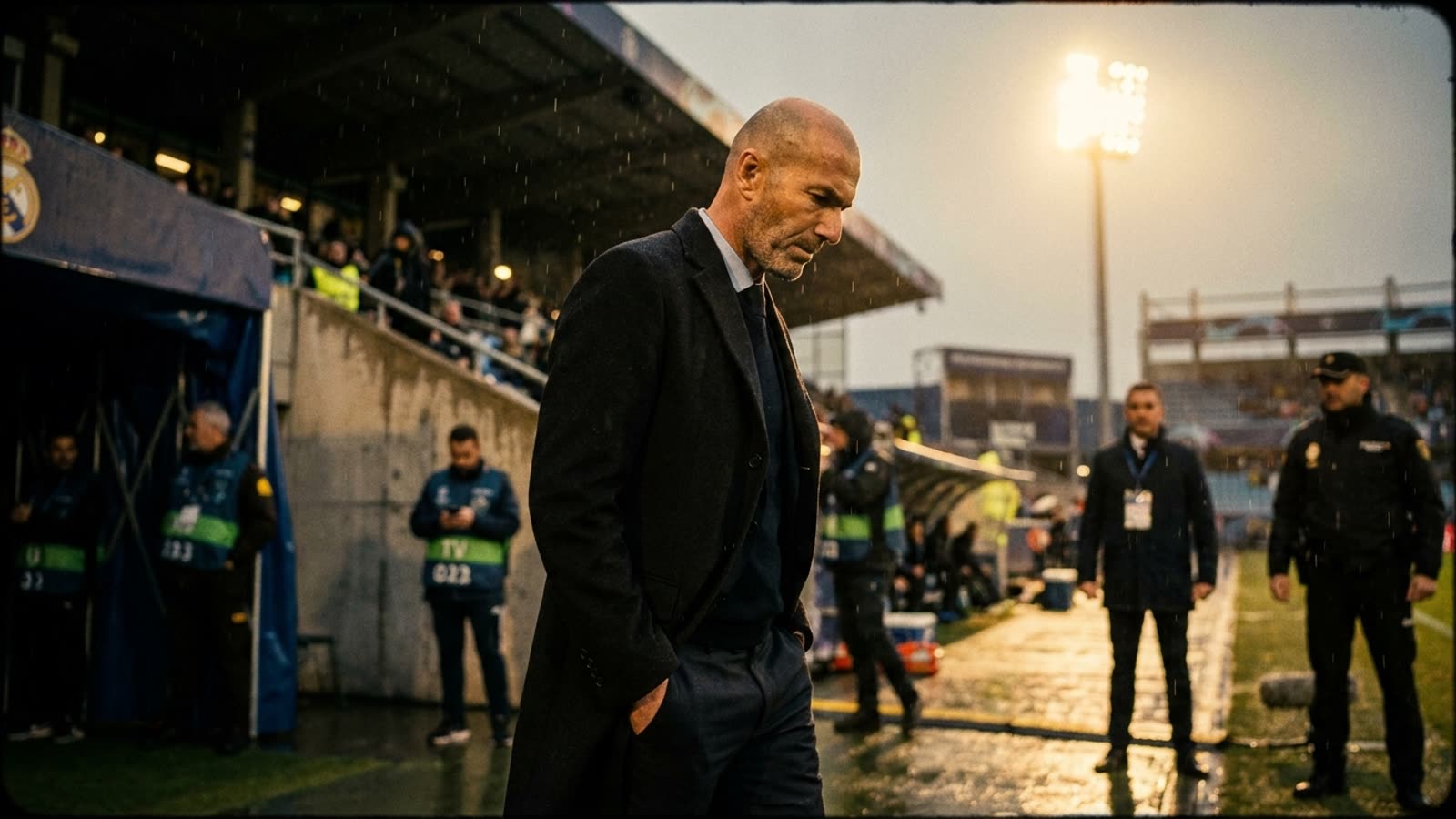
The headbutt has aged strangely. In the immediate aftermath, it was treated as a catastrophe, a stain on an otherwise luminous legacy. Now it functions more like punctuation—the emphatic, irrational period at the end of a sentence that was never going to trail off quietly. Zidane went on to become one of the most successful managers in football history, winning three consecutive Champions League titles with Real Madrid. The sending-off did not diminish him; it completed him.
Football prefers its heroes complicated. Maradona's Hand of God, Cantona's kung-fu kick, Suárez's bite—the sport's mythology is littered with moments of transgression that somehow enhance rather than erase the transgressors. Zidane's headbutt belongs to this tradition. It was wrong, it was costly, and it was indelibly, unmistakably him.
Our take
The headbutt was not a lapse in judgment. It was judgment of a different kind—the judgment that some insults cannot be absorbed, that dignity has a price, that walking off on your own terms beats limping off on someone else's. Zidane lost the World Cup that night. He also refused to lose himself. Whether that trade was worth it depends entirely on what you think football is for.