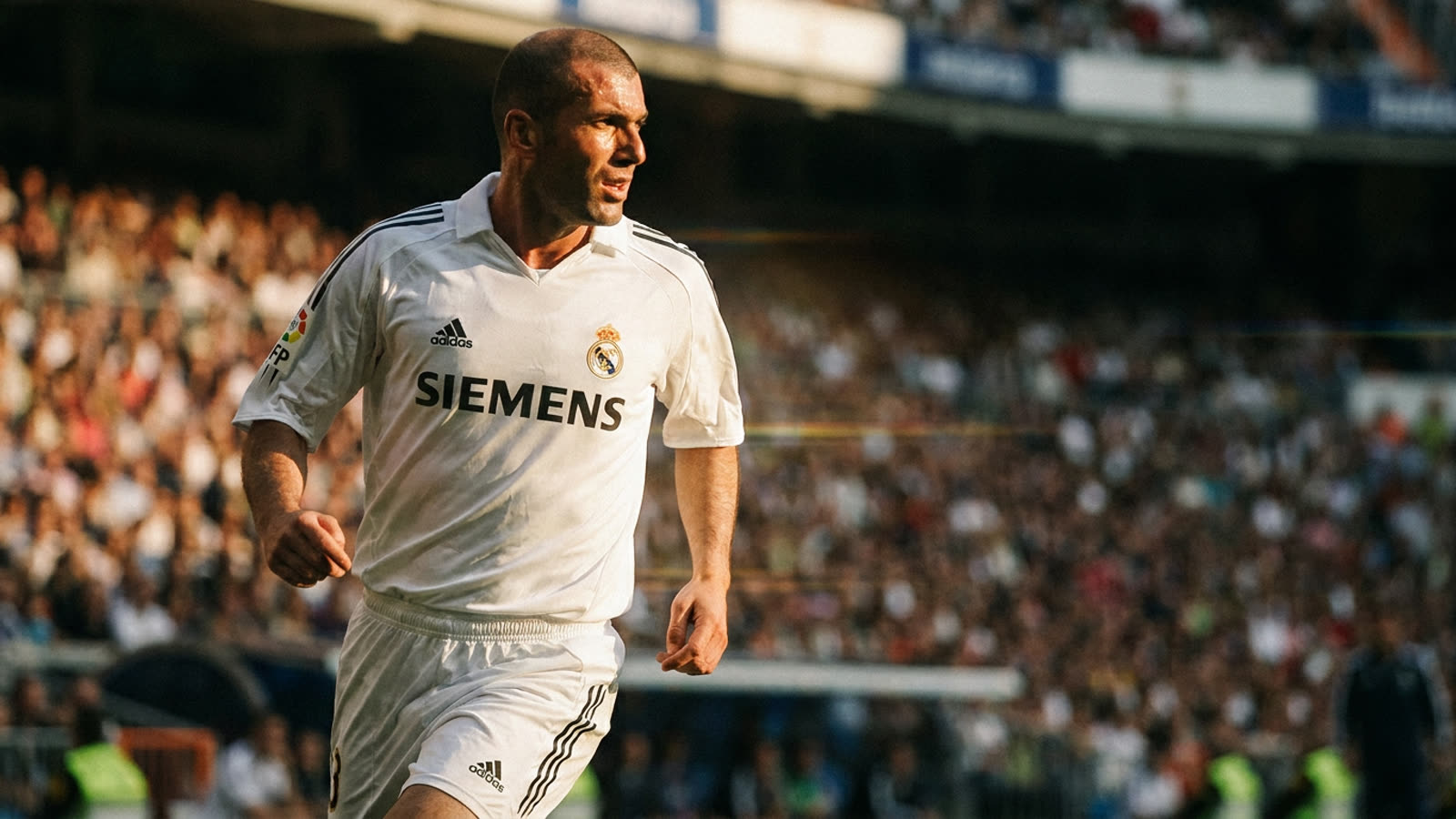
There is no satisfying explanation for what Zinedine Zidane did in the 110th minute of the 2006 World Cup final, and that is precisely why it still haunts us.
The facts are not in dispute. France and Italy were locked at 1-1 in extra time in Berlin. Zidane, playing the final match of his career, had already scored a nerveless Panenka penalty to open the scoring. He was, by most accounts, the best player on the pitch. Then Marco Materazzi said something. Zidane walked away, paused, turned, and drove his forehead into the Italian defender's chest. Red card. Exit. Italy won on penalties. The greatest French footballer of his era watched from the tunnel.
The anatomy of a moment
What makes the headbutt so endlessly fascinating is its total irrationality. Zidane was not a stranger to red cards—he had been sent off more than a dozen times in his career—but this was different. This was a man who had announced his retirement, who knew these were his final professional minutes, who was carrying an entire nation's hopes, choosing to throw it all away over words. Materazzi later admitted to insulting Zidane's sister, though the exact phrasing remains disputed. Whatever was said, it was enough to override every calculation a professional athlete is supposed to make.
The moment revealed something uncomfortable about the limits of self-control. Zidane was not young and impetuous; he was thirty-four, a father of four, a man who had won everything the sport could offer. If he could not master his temper at that moment, in that stadium, with that much at stake, then perhaps the notion that experience confers wisdom is more aspirational than descriptive.
The strange afterlife of disgrace
What happened next was unexpected. Zidane's reputation did not collapse. If anything, the headbutt became absorbed into his legend, reframed as evidence of his authenticity, his refusal to be disrespected, his humanity. A statue outside the Pompidou Centre in Paris immortalized the act. Polls taken shortly after the final showed most French fans had already forgiven him. Within a few years, he was coaching Real Madrid to three consecutive Champions League titles.
This is not how disgrace usually works. When other athletes have self-destructed at crucial moments—missed penalties, blown leads, public meltdowns—the failure tends to define them. Zidane somehow escaped that gravity. Part of it was the sheer weight of his prior achievements: two World Cup finals, a European Championship, a Champions League title decided by his left foot. Part of it was the ineffable quality of his play, the way he seemed to move through matches at a different tempo than everyone else. And part of it was the headbutt itself, which was so bizarre, so out of proportion, that it resisted easy moralizing.
Our take
The Zidane headbutt endures because it refuses to teach us anything clean. It is not a parable about the dangers of losing your temper, because Zidane suffered no lasting consequences. It is not a story about redemption, because he never really apologized. It is simply a reminder that even the most controlled performers carry something ungovernable inside them, and that sport, for all its statistics and tactics, remains a theater for the irrational. Zidane walked off the pitch and past the World Cup trophy without glancing at it. He has never fully explained why. Perhaps there is nothing to explain.