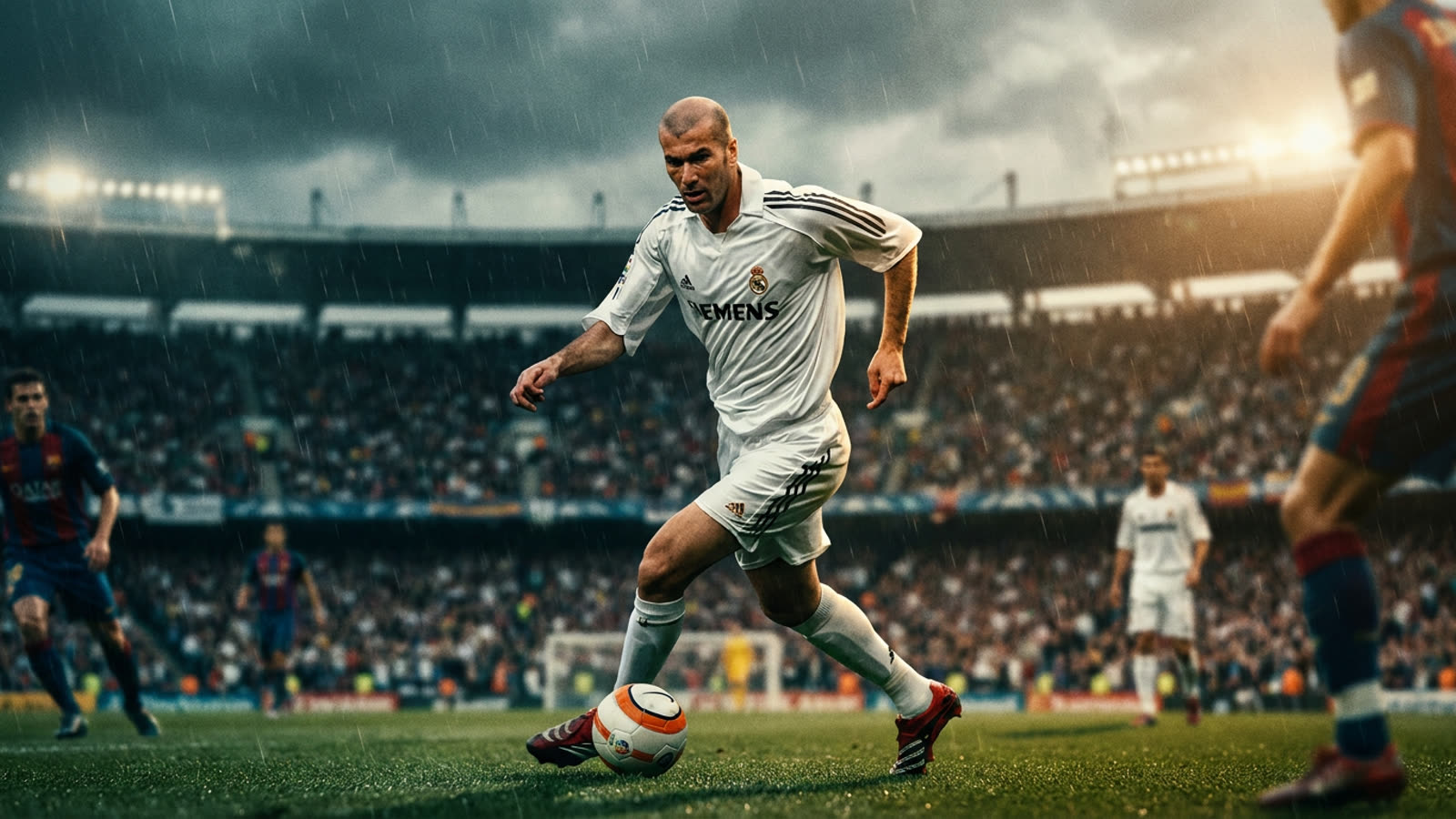
There is no moment in football history that so perfectly captures the sport's capacity for the sublime and the absurd as Zinedine Zidane's headbutt on Marco Materazzi in the 2006 World Cup final. Here was the greatest player of his generation, in the final match of his career, having already scored a nerveless Panenka penalty, walking off the pitch in disgrace with the trophy glinting somewhere behind him. It was operatic, senseless, and somehow inevitable.
The image endures not because we understand it, but because we don't.
The architecture of a tragedy
Zidane had announced his retirement before the tournament began. Germany 2006 was to be his valedictory lap, and he treated it as such. Against Spain in the round of sixteen, he orchestrated one of the great second-half performances in World Cup history. Against Brazil in the quarterfinal, he reduced Ronaldinho and company to spectators. By the final, he had dragged a mediocre French squad to within touching distance of glory through sheer force of will.
The Panenka penalty in the seventh minute was Zidane distilled — technically audacious, psychologically devastating, executed with the insouciance of a man who had transcended pressure. Gianluigi Buffon, perhaps the finest goalkeeper of his era, could only watch as the ball kissed the crossbar and dropped in. It was the kind of moment careers are built around.
And then, in the 110th minute, with the match level and penalties looming, Zidane lowered his head into Materazzi's chest and walked into exile.
The provocation question
Materazzi admitted to insulting Zidane's sister. The Italian later claimed, with characteristic Roman indifference to consequence, that he had not mentioned Zidane's mother — as if this distinction mattered. Various lip-readers and linguistic analysts have offered competing translations of what was said. None of it explains anything.
The real question has never been what Materazzi said. Defenders had been saying vile things to Zidane for two decades. The question is why this time, in this moment, with this much at stake, Zidane chose violence. The answer, perhaps, is that he didn't choose at all. The headbutt looked less like a decision than a reflex, a man reverting to some primal code that superseded the World Cup final, his teammates, his legacy, everything.
This is what makes it so difficult to categorize. It wasn't strategic. It wasn't even satisfying — Materazzi went down theatrically, Zidane was sent off, and France lost on penalties. It was pure id, broadcast to a billion people.
Why it refuses to fade
Football produces countless iconic moments, but most of them resolve cleanly. Maradona's Hand of God was cheating; his second goal against England was genius. Pelé's dummy against Uruguay was audacity rewarded. Zidane's headbutt offers no such clarity. It was simultaneously a betrayal of his team and an assertion of personal honor. It was self-destruction and self-expression. It was the end of a career and the beginning of a myth.
The French public largely forgave him. Polls taken after the final showed a majority believed he had been justified. This tells us something about the French relationship with Zidane — the son of Algerian immigrants who became the nation's most beloved athlete — but it also tells us something about the headbutt itself. People recognized something human in it, something that transcended the usual calculus of sporting behavior.
Our take
The headbutt matters because it refuses to be reduced to a lesson. It's not a cautionary tale about losing your temper, because Zidane's career was already complete. It's not a story about redemption, because there was nothing to redeem — he had already won everything. It exists as pure event, a reminder that even at the highest levels of professional sport, with billions watching and everything on the line, human beings remain gloriously, catastrophically unpredictable. Zidane walked past the trophy that night without looking at it. Seventeen years later, we're still looking at him.