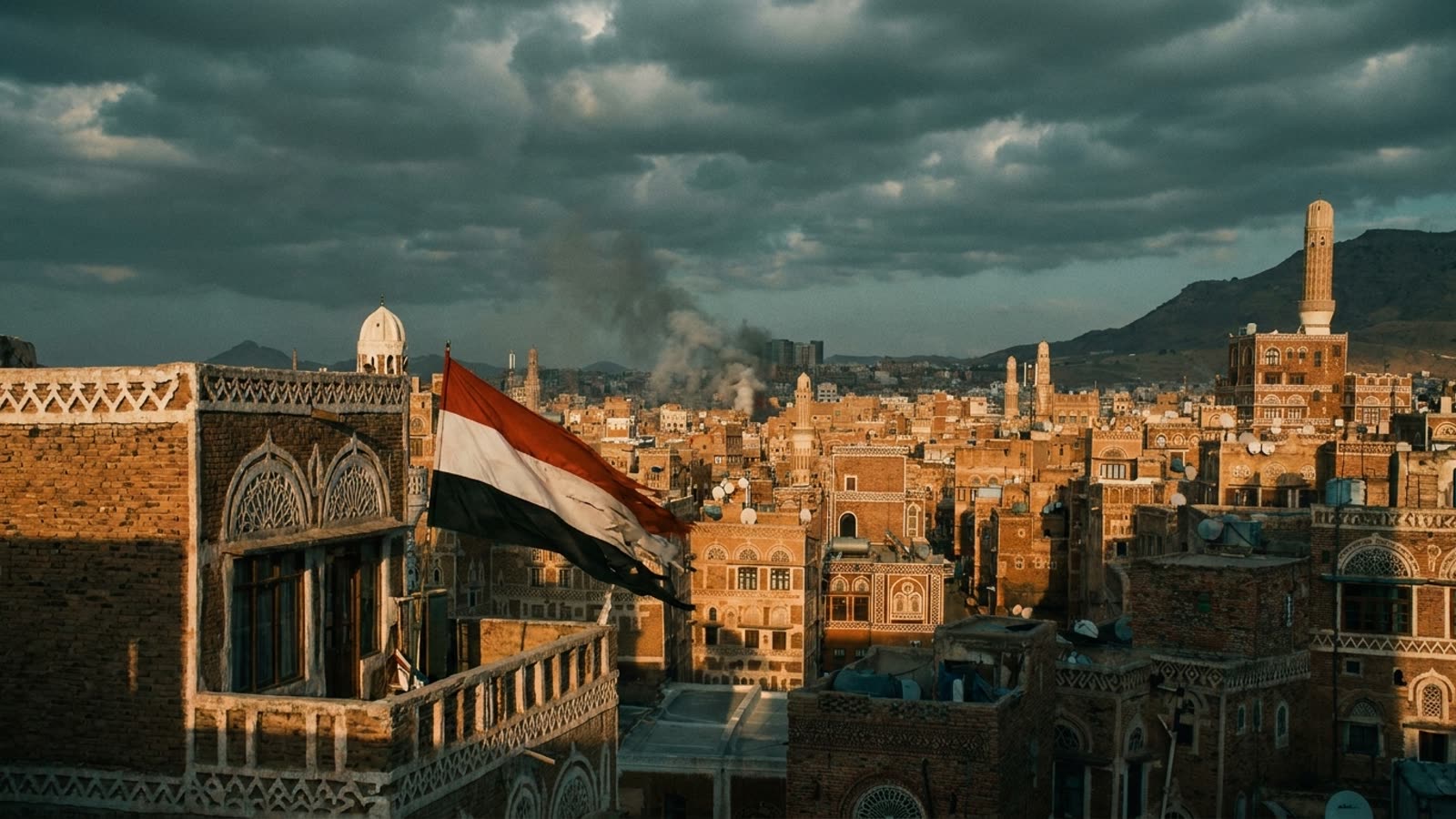
A ballistic missile strike on a presidential palace is not a skirmish; it is a declaration. When Iran-backed Houthi forces hit Yemen's Maashiq Presidential Palace in Aden on Thursday, killing two and narrowly missing Prime Minister Ahmed bin Mubarak and his cabinet, they signaled that the rules of engagement in the Arabian Peninsula have shifted once more. The attack was not merely military theater—it was a calculated probe of how far Tehran can push its proxy network while the world's attention fragments across Ukraine, Taiwan, and America's own domestic convulsions.
The Houthis have spent a decade transforming from a regional insurgency into Iran's most capable non-state military asset. Their drone and missile arsenals, supplied and refined with Iranian technical assistance, now rival those of some nation-states. Thursday's strike on Aden—a city nominally controlled by the internationally recognized government—demonstrates that no corner of Yemen is beyond their reach, and no official is truly safe.
Saudi Arabia's Dilemma
Riyadh has already declared that Iran is "fueling" the escalation, language that stops just short of a direct accusation of orchestration. The Saudis have spent years and billions attempting to extricate themselves from Yemen's quagmire while preserving some semblance of a friendly government in the south. A successful decapitation strike—even one that missed its primary targets—threatens to collapse that delicate architecture. Crown Prince Mohammed bin Salman faces an unpalatable choice: respond forcefully and risk reigniting a full-scale war, or absorb the provocation and invite further tests.
Washington's Bandwidth Problem
The Biden administration once made ending the Yemen war a stated priority. The Trump administration has shown considerably less interest, consumed by domestic battles and European security guarantees. Thursday's attack arrives at a moment when American Middle East policy is effectively on autopilot. The State Department issued a condemnation; the Pentagon offered no indication of any operational response. For Tehran, this silence is data. Every unanswered escalation recalibrates the risk calculus for the next one.
Our take
The Houthis are not freelancing. Strikes of this precision and ambition require coordination, intelligence, and—critically—permission from patrons who understand the geopolitical consequences. Iran is testing the proposition that a distracted America and a war-weary Saudi Arabia will tolerate incrementally bolder moves. So far, the hypothesis is holding. The palace in Aden still stands, but the deterrence architecture around it is looking increasingly hollow.