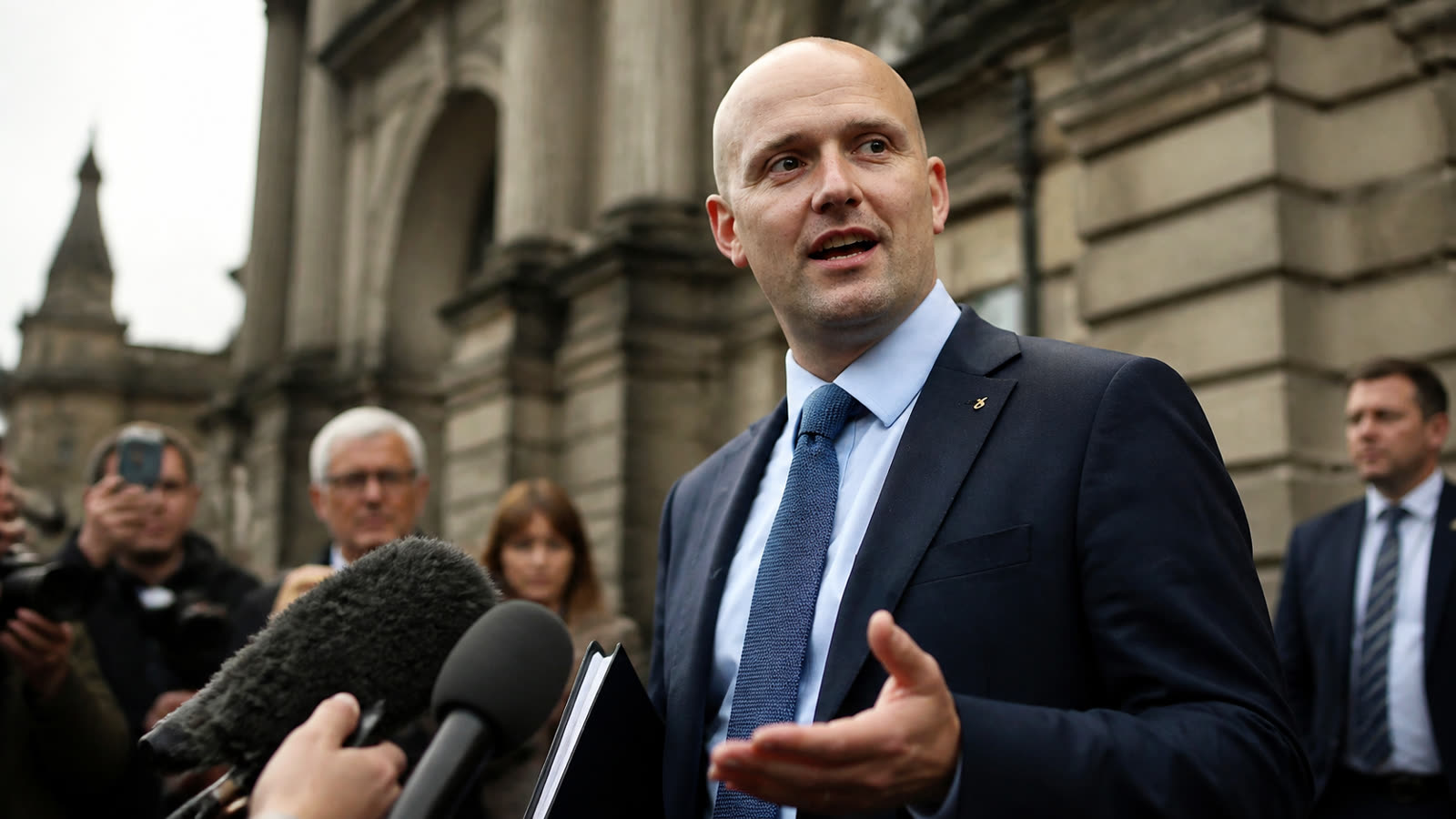
The Scottish National Party has spent the better part of a decade nursing the wound of its 2014 independence referendum defeat, watching Brexit chaos, Conservative austerity, and now Labour's return fail to deliver the constitutional reckoning it craved. That waiting game may be ending. At the SNP's conference in Aberdeen, Westminster leader Stephen Flynn issued a direct challenge to Deputy Prime Minister Andy Burnham: bring on a second independence referendum. "We are winning the argument," Flynn told delegates, framing the dare not as desperation but as confidence that demographic and political shifts have finally aligned in favour of separation.
Flynn's rhetoric marks a tactical shift. For years, the SNP leadership under Nicola Sturgeon and then Humza Yousaf oscillated between demanding a referendum and acknowledging Westminster's refusal to grant the legal authority for one. The party's 2023 Supreme Court defeat—which ruled Holyrood cannot unilaterally hold a binding vote—seemed to close that avenue. But Flynn's provocation suggests the SNP now believes Labour's commanding majority and Burnham's pragmatic brand of unionism present a softer target than the Conservatives' blanket refusal. The gamble is that Burnham, who has cultivated a reputation for devolving power and respecting regional identity, might be cornered into at least debating the terms.
The arithmetic of separatism
Polling on Scottish independence has hovered near parity for three years, with some surveys showing narrow leads for the "Yes" camp. The SNP argues that Brexit—opposed by 62 percent of Scottish voters in 2016—has fundamentally altered the constitutional settlement, and that Labour's inability to reverse Britain's EU exit or meaningfully reform Westminster vindicates the case for independence. Flynn's confidence also rests on generational trends: voters under 50 lean heavily toward independence, and the 2014 "No" coalition of older, unionist Scots is shrinking. The question is whether those long-term advantages translate into a winnable referendum in the near term, or whether Flynn is simply trying to energise a base that has grown restless after a decade of stalled progress.
Burnham's response will be telling. He has publicly opposed a second referendum, arguing that constitutional upheaval would distract from economic recovery and that the 2014 vote was billed as a "once in a generation" decision. But unlike his predecessors, Burnham has also signalled openness to deeper devolution and federal reforms—a position that could either defuse separatist energy or inadvertently legitimise the SNP's claim that the union is negotiable. Flynn's dare is designed to force Burnham into a corner: refuse, and risk looking like another London politician dismissing Scottish democracy; engage, and risk opening a process the SNP believes it can now win.
Our take
Flynn's challenge is smart theatre, but it papers over the SNP's structural weaknesses. The party's credibility has been dented by years of governance failures in Edinburgh—education outcomes have stagnated, NHS waiting times have ballooned, and the ferries scandal remains unresolved. Winning a referendum requires not just polling parity but a coherent economic prospectus, and the SNP has yet to answer basic questions about currency, EU membership timelines, and the fiscal transfer from Westminster that currently props up Scottish public spending. Burnham is unlikely to take the bait, and rightly so. The real risk for Labour is not that it grants a referendum, but that it allows the SNP to frame unionism as anti-democratic intransigence while offering nothing in return. Devolution 2.0 may be the only way to take the air out of Flynn's balloon.