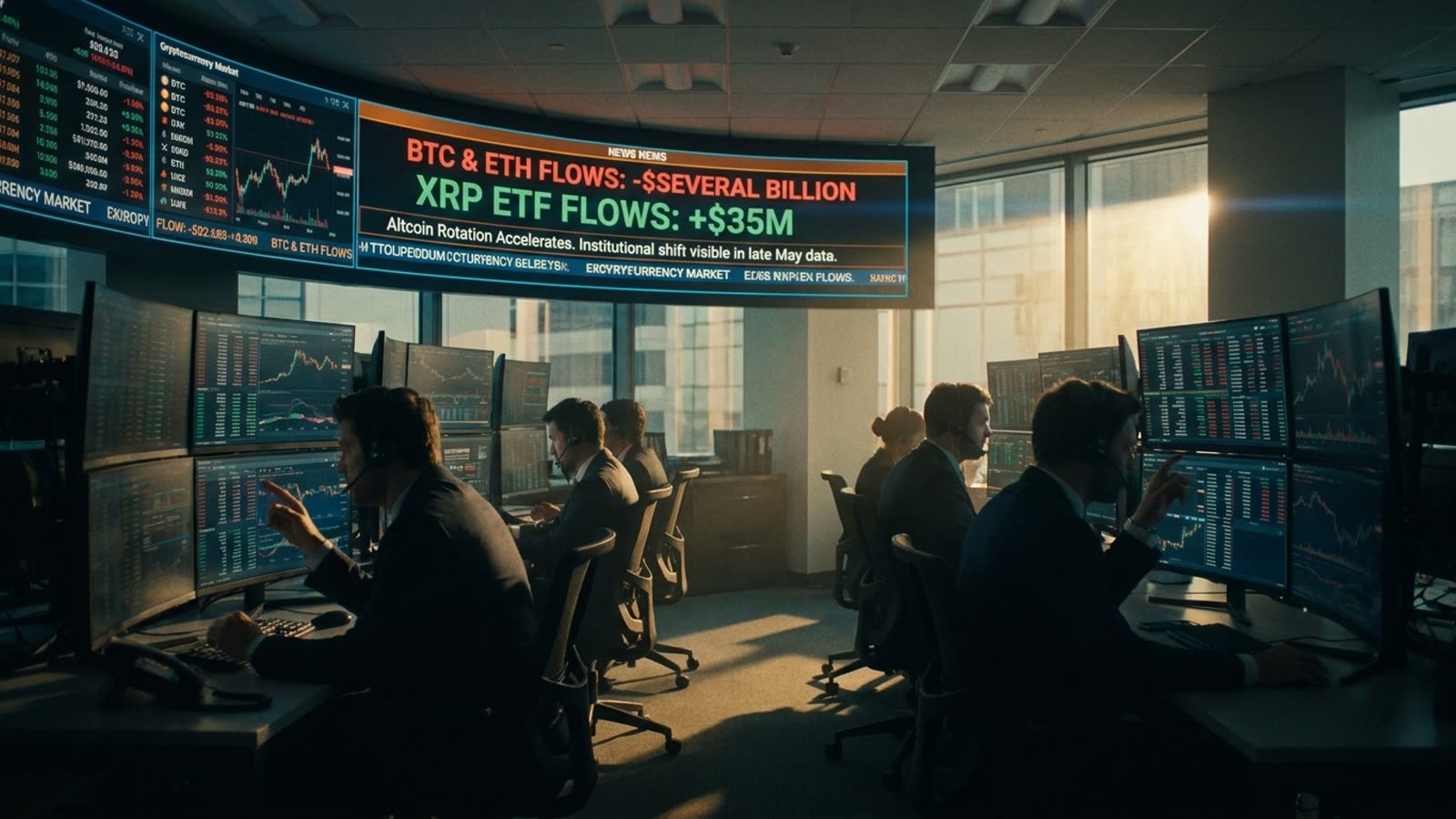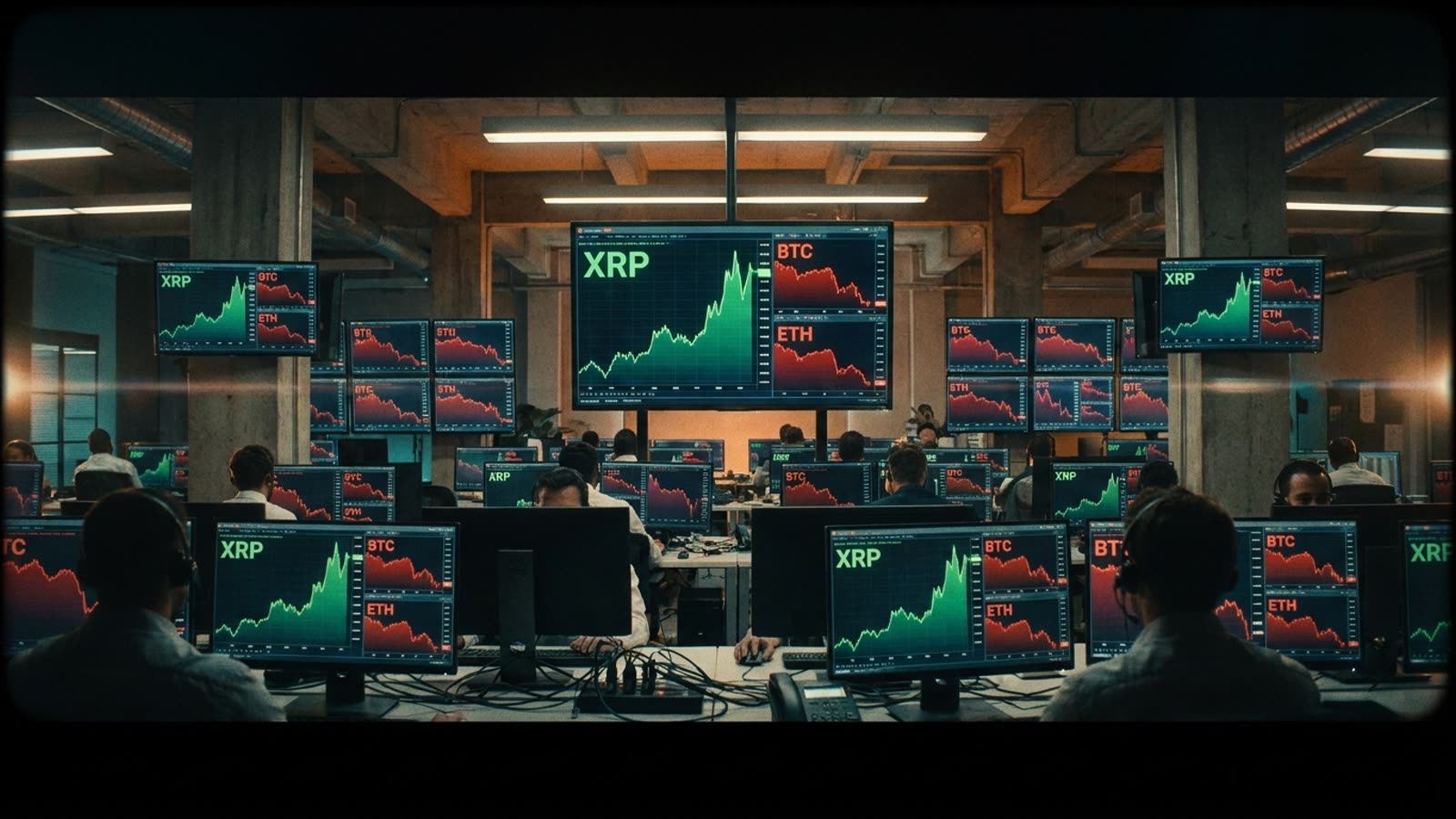
The cryptocurrency ETF market is experiencing its most revealing divergence since spot products launched in the United States. While Bitcoin and Ether funds hemorrhaged roughly $2 billion in the final weeks of May, XRP exchange-traded products attracted $35 million in fresh capital. The absolute numbers favor the majors, obviously, but the directional split tells a more interesting story about who is buying what, and why.
Bitcoin's nine-week correlation with equities has tightened just as traditional markets rallied to new highs. Yet crypto ETF flows moved in the opposite direction — a decoupling that suggests the marginal buyer of Bitcoin exposure through regulated products is not the same animal as the marginal buyer of SPY. Institutional allocators, it appears, are trimming crypto positions even as their equity books run hot.
The XRP anomaly
XRP's modest inflows look less like conviction and more like contrarian positioning. The token's legal clarity following Ripple's partial victory against the SEC in 2023 gave it a regulatory narrative that Bitcoin — perpetually awaiting spot ETF expansion and clearer custody rules — cannot yet match. Retail investors, historically drawn to XRP's lower unit price and Ripple's cross-border payment story, may be treating the ETF wrapper as a legitimacy stamp rather than a portfolio cornerstone.
The $35 million figure is rounding error in a market where Bitcoin funds alone manage tens of billions. But directional flows matter more than absolute size when sentiment is shifting. XRP's inflows during a period of broad crypto ETF redemption suggest a cohort of buyers who either missed the Bitcoin rally or believe the altcoin rotation trade still has legs.
What the outflows signal
The $2 billion exodus from Bitcoin and Ether funds coincides with cooling spot demand and a futures curve that has flattened considerably since April. Basis trades that once offered double-digit annualized yields now barely compete with Treasury bills. For institutions that entered crypto ETFs as a carry play rather than a directional bet, the math no longer works.
Meanwhile, Ether's underperformance relative to Bitcoin has persisted for months. The Ethereum network's transition to proof-of-stake was supposed to unlock institutional interest; instead, it seems to have muddied the investment thesis. Is Ether a yield-bearing asset, a tech platform, or a commodity? The market has not decided, and indecision breeds outflows.
Our take
XRP's mini-rally is less a vote of confidence in Ripple's vision than a symptom of crypto's eternal search for the next rotation. Retail money chases narrative; institutional money chases yield and liquidity. Right now, neither camp is enthusiastic about the majors, and XRP is catching the scraps. That is not a bull case — it is a market in transition, waiting for the next catalyst that will realign flows with conviction rather than boredom.