Championship basketball has always been about who can survive, not merely who can dominate. The WNBA semifinals are proving that theorem in real time, as the Las Vegas Aces and Seattle Storm—two franchises built around generational talent—now face the uncomfortable reality that their postseason fates rest on role players and rehabilitation timelines.
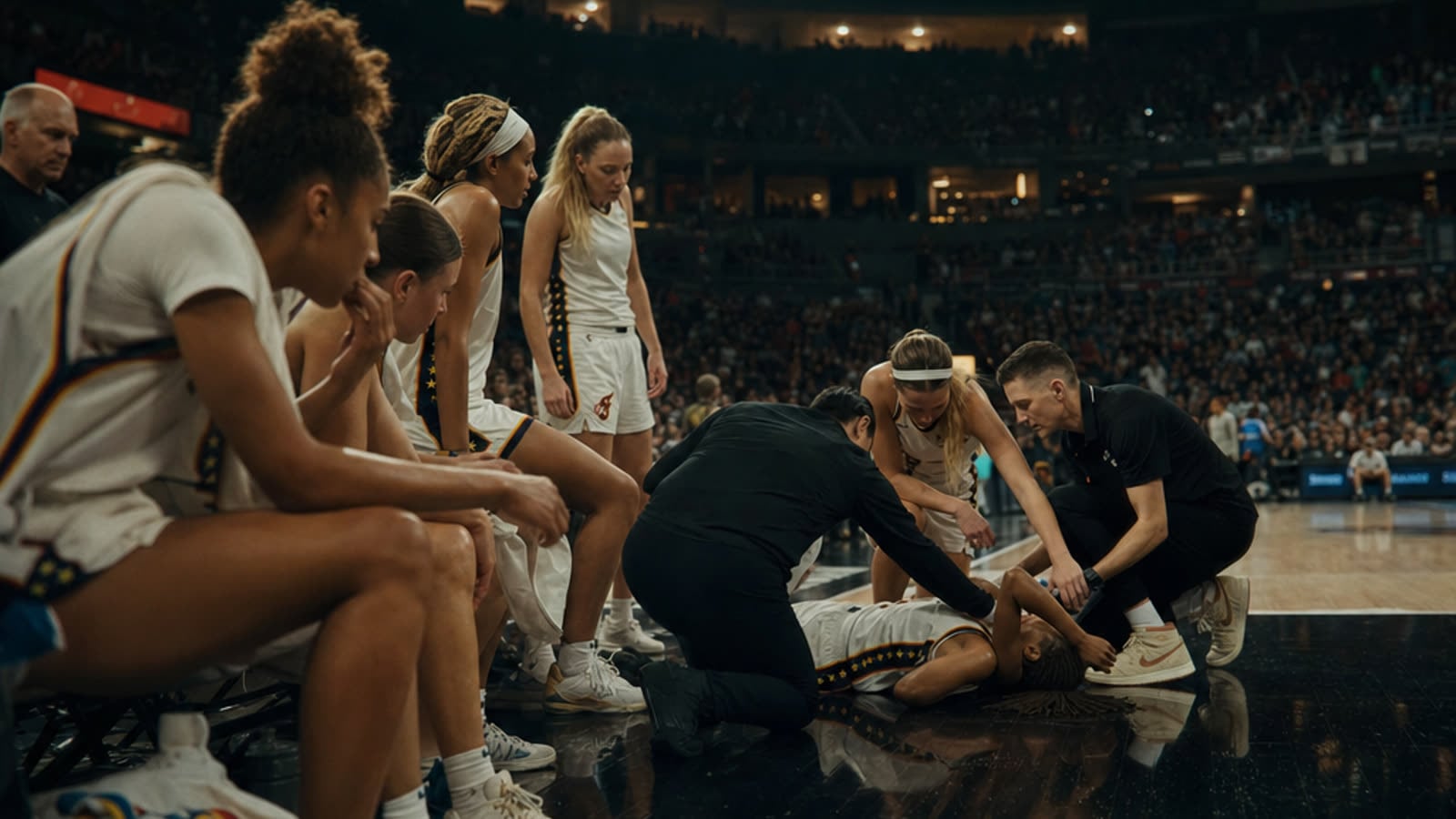
Chelsea Gray, the Aces' orchestrator and two-time Finals MVP, is out. Jewell Loyd, Seattle's leading scorer and the engine of their offense, is listed as doubtful. In a league where rosters are twelve players deep and minutes are precious, losing your primary playmaker isn't an inconvenience—it's an existential crisis.
The depth illusion
Both franchises entered October believing they had solved the depth problem that plagues WNBA contenders. The Aces' bench was supposed to be a luxury, a collection of capable veterans who could spell A'ja Wilson and Kelsey Plum without surrendering leads. Seattle's second unit was constructed to complement Loyd's scoring with defensive versatility. Neither organization anticipated needing those reserves to be starters in win-or-go-home games.
The mathematics are unforgiving. Gray averaged nearly seven assists per game this season; her backup has averaged fewer than two. Loyd's absence removes roughly twenty points of expected offense from Seattle's projections. These aren't marginal adjustments—they're wholesale reinventions of offensive identity, attempted in the middle of a playoff series.
What history suggests
WNBA playoff history offers little comfort to injured contenders. The league's compressed roster sizes mean that star injuries correlate almost directly with elimination. The 2019 Mystics are the notable exception—Elena Delle Donne played through a herniated disc to deliver Washington's first title—but that was a case of playing through pain, not playing without. Complete absence is a different calculation.
For Las Vegas, the question becomes whether Jackie Young can transform from secondary creator to primary architect. She has the skill set; she has never had the responsibility at this scale. For Seattle, the answer likely involves slowing the game to a crawl, turning possessions into half-court grinds where individual brilliance matters less than collective execution.
Our take
This is what makes playoff basketball compelling and cruel in equal measure. The Aces and Storm spent years and considerable resources constructing rosters meant to withstand exactly this scenario, and both are discovering that no amount of planning fully accounts for losing your best player at the worst moment. Whoever advances will have earned it through adaptation, not pedigree. That's not a tragedy—it's the sport working as designed.