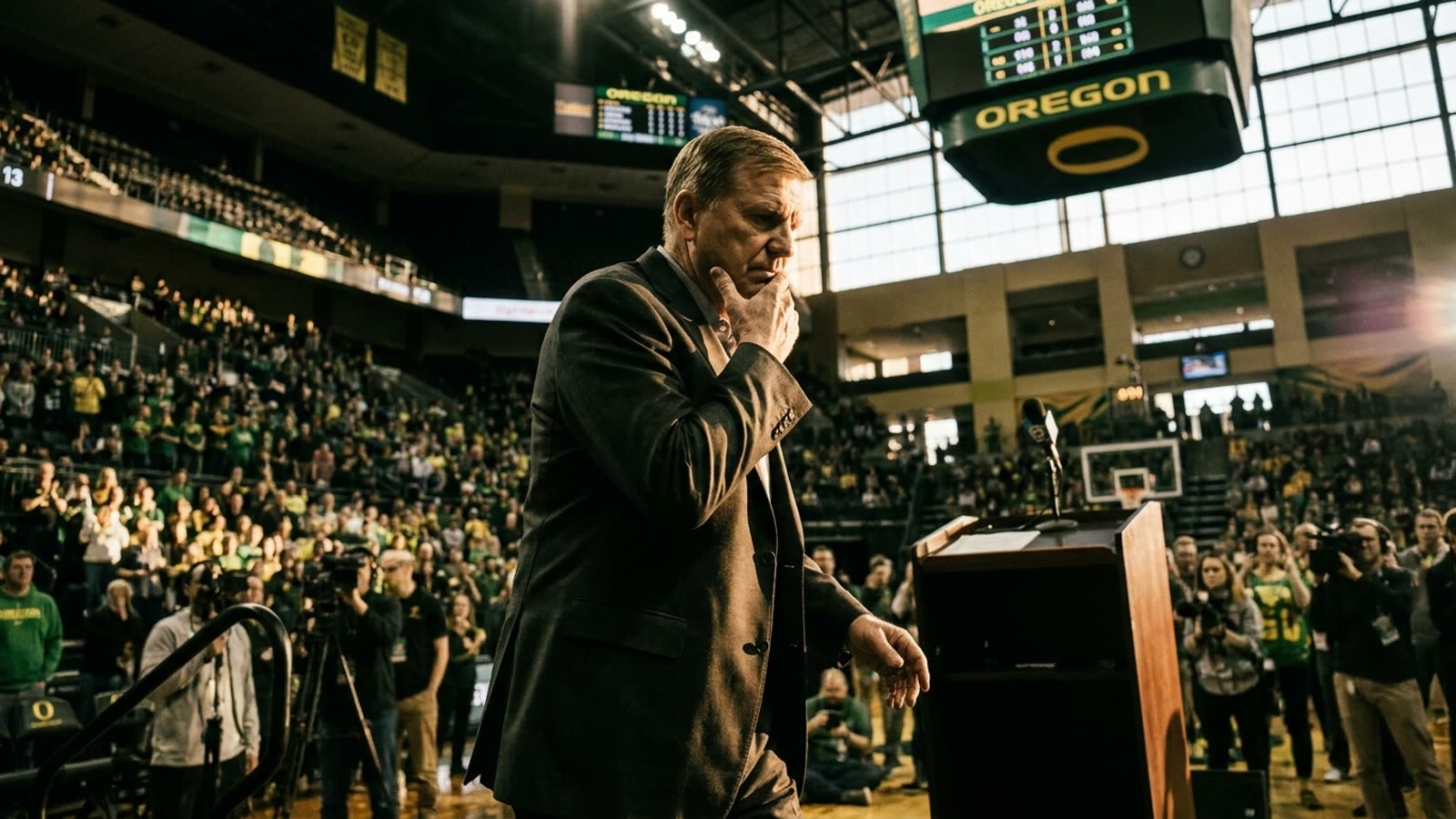
Dana Altman did not inherit a basketball program at Oregon; he inherited an afterthought. When he arrived in Eugene in 2010, the Ducks had made precisely one NCAA Tournament appearance in the previous eight years. They played in an arena that felt like a high school gym with delusions of grandeur. They recruited against geography, against tradition, against the gravitational pull of Los Angeles and the Bay Area. Altman leaves having won more games than any coach in program history, with a Final Four banner hanging in a gleaming arena that Phil Knight's money built but that Altman's teams filled.
The timing of his retirement—mid-autumn, before the season tips off—suggests this was not a sudden decision but a carefully managed exit. At 67, Altman departs having navigated the sport's transformation from scholarship limits to NIL chaos to the transfer portal free-for-all, adapting each time while programs with deeper pockets and longer histories floundered.
The Altman method
Oregon's success under Altman was never about five-star recruits choosing Eugene over Duke. It was about finding players the blue bloods overlooked or discarded—junior college transfers, late bloomers, international prospects—and molding them into cohesive units that peaked in March. The 2016-17 team that reached the Final Four featured exactly zero McDonald's All-Americans. It had Dillon Brooks, a Canadian who arrived as a three-star recruit, and Jordan Bell, who came from a Long Beach high school with minimal national buzz. Altman turned them into lottery picks.
This approach required patience, development, and a coaching staff that could identify talent before it was obvious. In the current landscape, where roster turnover can exceed 50 percent annually and NIL collectives demand immediate returns on investment, that model has become exponentially harder to execute. Altman made it work longer than most.
The search ahead
Oregon's athletic department now faces a question that reveals everything about where the program sits: Is this a job that can attract a sitting Power Five head coach, or is it a promotion for a rising mid-major name?
The resources are there. Knight's generosity has given Oregon facilities that rival anyone's, and the NIL infrastructure in Eugene has grown sophisticated. But the Pac-12's implosion and Oregon's impending move to the Big Ten complicate the calculus. The Ducks will now recruit against Michigan, Indiana, and Purdue—programs with basketball traditions measured in decades, not years. The next coach inherits Altman's wins but also his challenge: convincing elite prospects that Oregon is a destination, not a fallback.
Our take
Altman's legacy is not the Final Four or the conference titles but the proof of concept. He demonstrated that a football school in a remote corner of the country could sustain basketball relevance through smart coaching and institutional commitment. Whether Oregon can maintain that relevance without him depends entirely on whether the administration understands what made him successful in the first place—and whether they are willing to be patient with his successor in an era that rewards impatience. The smart money says they will chase a splashy name. The smarter play would be finding the next Altman.