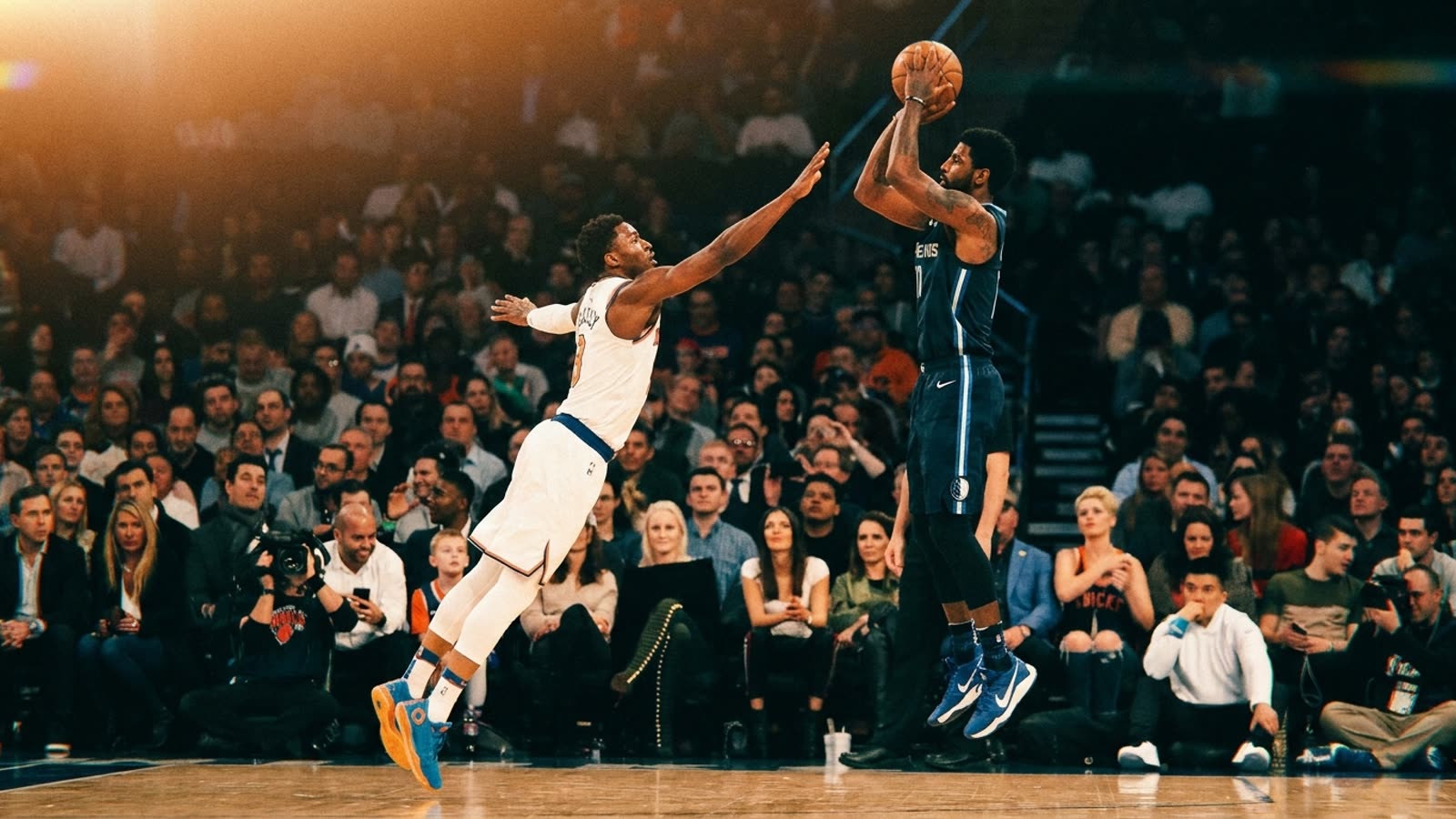
For roughly half a century, the mid-range jumper was the signature move of basketball greatness. Michael Jordan pulling up from fifteen feet. Kobe Bryant fading away over a defender's outstretched hand. Dirk Nowitzki's one-legged fadeaway from the elbow. These were the shots that defined championship moments, the ones that separated the merely athletic from the genuinely skilled. They were also, as it turns out, terrible basketball decisions.
The math is brutal and unambiguous. A league-average mid-range shot converts at roughly 40 percent, yielding 0.80 points per attempt. A league-average three-pointer converts at about 36 percent, yielding 1.08 points per attempt. A layup or dunk converts at around 65 percent, yielding 1.30 points. The mid-range jumper, in the cold language of expected value, is the worst shot in basketball by a considerable margin. It combines the difficulty of distance with none of the bonus for attempting it.
The Moreyball revolution
Daryl Morey, the former general manager of the Houston Rockets, did not invent this insight, but he weaponized it more aggressively than anyone before him. His Rockets teams of the mid-2010s essentially abandoned the mid-range entirely, constructing offenses that funneled every possession toward the rim or behind the arc. The visual effect was jarring—games that looked like layup drills punctuated by three-point barrages—but the results were undeniable. Houston became one of the league's most efficient offenses despite lacking a traditional superstar point guard.
The rest of the league followed, slowly at first, then all at once. In the 2001-02 season, NBA teams attempted roughly 14 three-pointers per game. By the early 2020s, that number had more than doubled. The mid-range, once the proving ground for the sport's most skilled shotmakers, became a wasteland. Young players stopped practicing it. Coaches stopped teaching it. An entire category of basketball artistry began to disappear.
What the numbers miss
The analytics case against the mid-range is airtight on its own terms, but those terms are narrower than they first appear. Expected value calculations assume each shot exists in isolation, unconnected to what comes before or after. They do not account for the way a credible mid-range threat warps defensive geometry, pulling defenders out of the paint and creating driving lanes that would not otherwise exist. They do not capture the psychological weight of a player who can score from anywhere on the floor, the way that threat forces defensive attention and creates opportunities for teammates.
More fundamentally, the anti-mid-range consensus assumes that shot selection is infinitely elastic—that any possession ending in a long two could have ended in a three or a layup instead. This is obviously false. Defenses exist. Clocks expire. Sometimes the mid-range jumper is not a choice but a necessity, the only available option when everything else has been taken away. The teams that abandoned the shot entirely often found themselves helpless in playoff environments, where defenses tighten and easy looks evaporate.
Our take
The mid-range jumper is making a modest comeback, driven partly by the success of players like Kevin Durant and DeMar DeRozan who never abandoned it, and partly by a belated recognition that playoff basketball rewards versatility over optimization. But something has been lost that may never return. A generation of players grew up in a sport that told them the most beautiful shot in the game was also the stupidest, and they believed it. The analytics were correct about expected value. They were wrong about everything else.