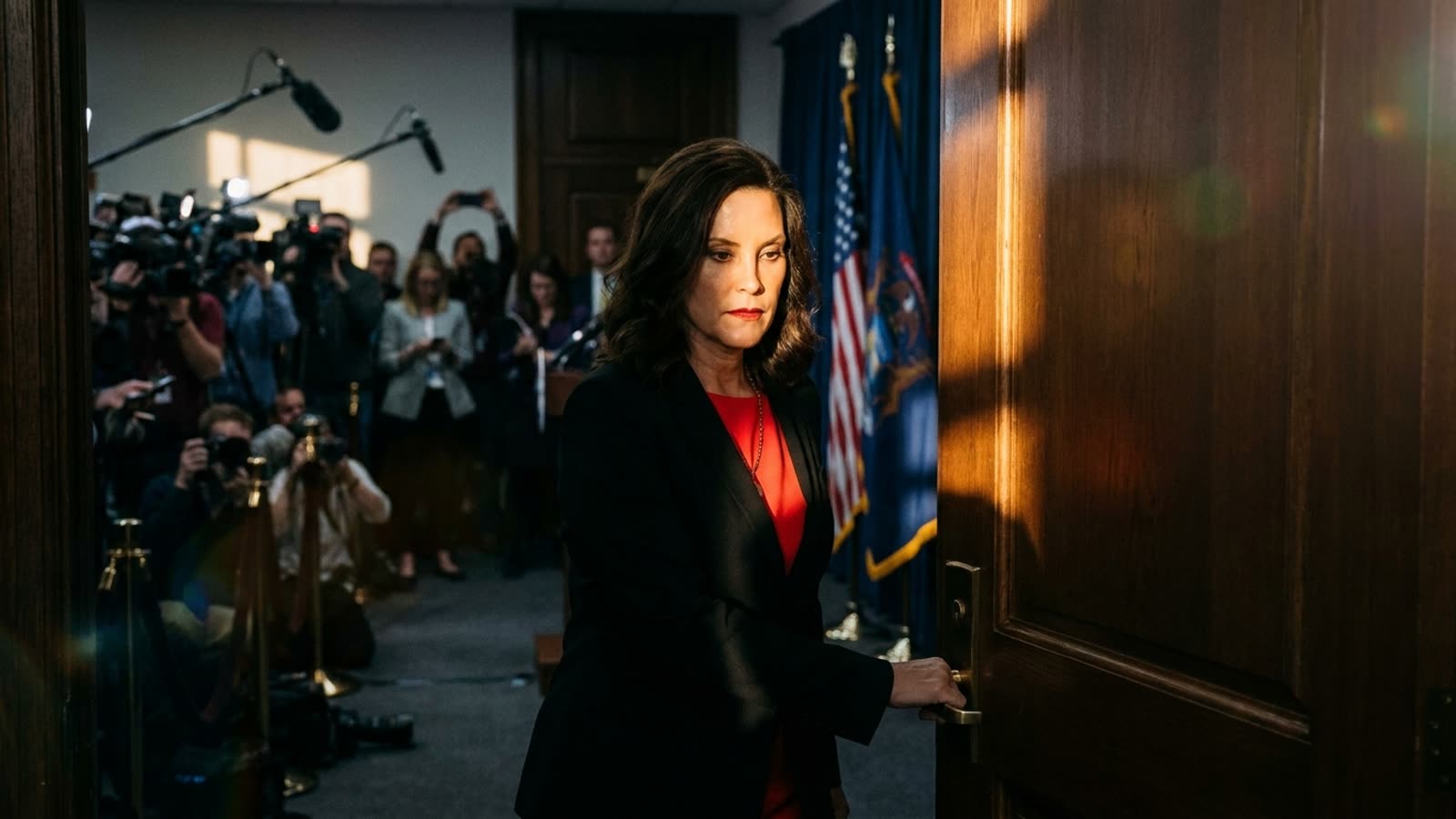
Gretchen Whitmer has decided she does not want to be president — or at least, she has decided she does not want to run for president in 2028. The distinction matters less than the consequence: the Democratic Party's most plausible path back to the White House just got considerably narrower.
The Michigan governor announced on Wednesday that she will not seek the presidency in the next cycle, ending months of speculation that had positioned her as the party's most formidable potential standard-bearer. In a political environment where Democrats have hemorrhaged support among working-class voters in precisely the Midwestern states that decide elections, Whitmer represented something rare: a two-term governor who had won and rewon in a genuine swing state while maintaining crossover appeal.
The Midwest problem
Democrats have spent a decade watching their Midwestern firewall crumble. Michigan, Wisconsin, and Pennsylvania — the three states that flipped to Trump in 2016, back to Biden in 2020, and have remained competitive ever since — require a particular political vocabulary that coastal Democrats have struggled to master. Whitmer spoke it fluently. She governed as a pragmatist, focused relentlessly on infrastructure and economic development, and managed to survive a kidnapping plot by domestic extremists without becoming defined by it.
Her decision to stay out removes the one prospective candidate who had actually demonstrated she could win where Democrats most need to win. The bench, such as it is, now looks considerably thinner.
The 2028 vacuum
With Whitmer out, the Democratic field for 2028 lacks an obvious frontrunner. Vice President Harris, should she choose to run again, would enter as a formidable fundraiser but a candidate who has never won a competitive primary. Transportation Secretary Pete Buttigieg retains strong favorability among college-educated Democrats but has yet to prove he can expand beyond that coalition. California Governor Gavin Newsom carries the baggage of representing a state that Republicans have successfully weaponized as a symbol of liberal excess.
Whitmer's absence creates space for a governor like Josh Shapiro of Pennsylvania or Andy Beshear of Kentucky — both of whom have won in difficult terrain — but neither has indicated serious interest, and both would enter with far lower national profiles than Whitmer had cultivated.
Our take
Whitmer's decision is entirely rational from her perspective: she is 54, has young children, and has already endured the particular hell of being a target of political violence. But rational decisions by individuals can produce irrational outcomes for parties. Democrats needed someone who could credibly argue she understood the anxieties of voters in Macomb County and Kenosha. They needed someone who had won, repeatedly, in the places where winning is hardest. They needed Whitmer. Now they will have to find someone else, and the options are considerably less compelling.