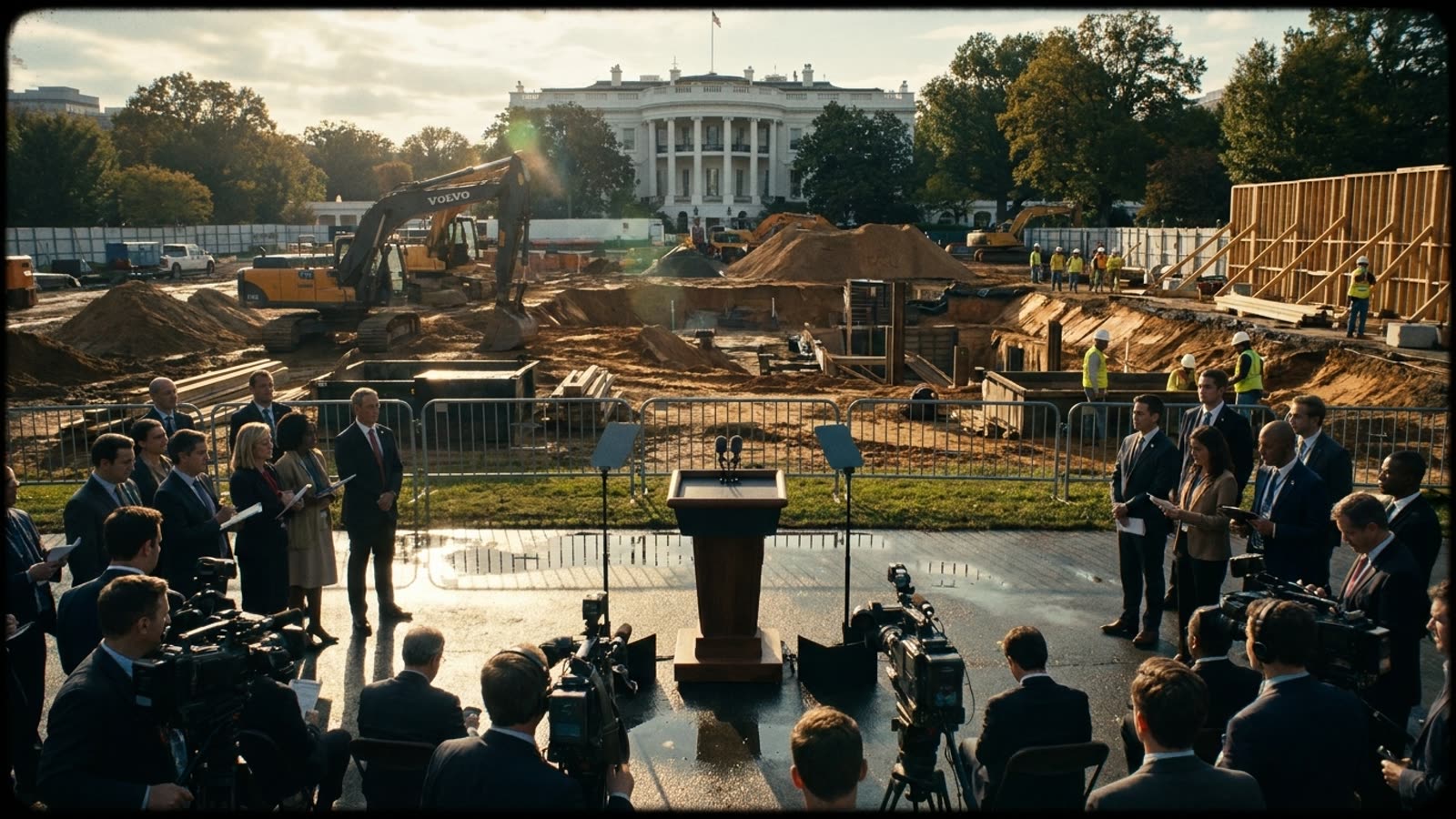
The White House has hosted Rose Garden ceremonies, helicopter departures, and the occasional turkey pardon. It has never, until now, hosted a cage.
President Trump has ordered the construction of what administration officials describe as a "demonstration enclosure" on the South Lawn—a steel-and-glass structure that will reportedly be used to showcase what the president calls "the human cost of open borders." The plan, confirmed by multiple sources familiar with White House operations, involves periodic displays featuring individuals the administration claims were victimized by undocumented immigrants, though the precise format remains unclear. What is clear is that the most famous lawn in American politics is being retrofitted for theater.
The architecture of outrage
The structure itself is modest by construction standards—roughly 20 feet by 30 feet, with reinforced transparent panels—but its symbolic footprint is enormous. Critics have already seized on the obvious imagery: a president who campaigned on building walls is now building cages, on federal property, steps from the Oval Office. The White House insists the framing is unfair, arguing the enclosure is simply a "secure presentation space" for policy events. But the administration has never been shy about spectacle, and the location choice suggests this is less about security than about the camera angle.
The legal questions are secondary to the political ones. The General Services Administration oversees modifications to the White House grounds, and while Congress technically controls the purse strings, small construction projects rarely trigger oversight battles. The real question is whether voters in 2026 want their executive mansion to double as an installation piece.
Precedent and its absence
Presidents have long used the White House as a backdrop for political messaging—Reagan's carefully staged departures, Obama's basketball court diplomacy, Biden's electric vehicle showcases. But those efforts worked within the existing architecture. Physically altering the grounds to create a permanent venue for immigration grievance programming represents something new: the institutionalization of the rally inside the seat of government.
The timing is notable. With midterm positioning underway and the Iran situation consuming bandwidth, the cage announcement serves a familiar Trump function: changing the subject while energizing the base. Immigration remains the president's most reliable applause line, and a physical structure ensures the issue stays visible even when news cycles move elsewhere.
Our take
The cage is absurd, and that's precisely the point. Trump has always understood that critics mocking his excesses only amplifies their reach. The structure will generate exactly the outrage it's designed to provoke, and that outrage will be framed as elite disdain for crime victims. It's a trap built to look like a trap. The more interesting question is what it says about a second term that feels increasingly untethered from traditional governance—less interested in policy wins than in permanent campaign infrastructure. The White House was never meant to be a soundstage. But then, this presidency was never meant to be conventional.