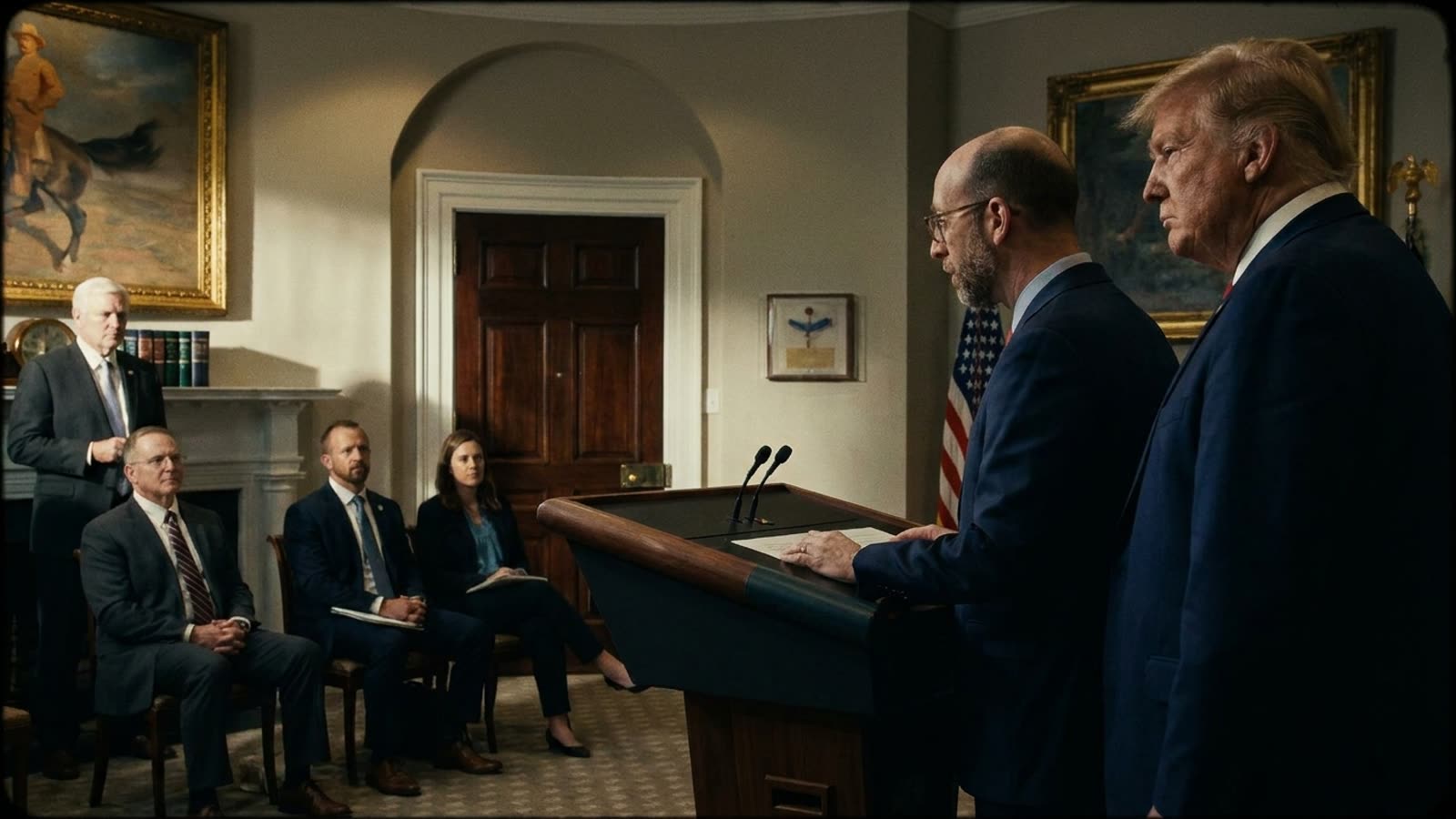
The Trump administration is preparing to impose political litmus tests on federal grant recipients, a move that would fundamentally alter the relationship between Washington and the institutions that depend on its largesse. The proposal, which could affect hundreds of billions of dollars in annual disbursements, represents the most aggressive attempt in modern history to weaponize the federal funding apparatus for ideological ends.
The mechanism is deceptively simple: grant applicants would face enhanced scrutiny to ensure their work aligns with administration priorities, with reviewers empowered to flag proposals that conflict with the White House's policy agenda. In practice, this means universities conducting climate research, hospitals providing certain reproductive health services, and nonprofits engaged in immigration advocacy could find themselves locked out of funding streams they have relied upon for decades.
The money at stake
Federal grants constitute the lifeblood of American research and social services. The National Institutes of Health alone distributes more than forty billion dollars annually to medical researchers. The National Science Foundation funds the basic science that underpins American technological competitiveness. Medicaid grants to states support healthcare for tens of millions of low-income Americans. All of this money would, under the proposed framework, flow through a political filter.
The implications extend beyond the obvious targets. A university that hosts a gender studies program might find its physics department's grant applications receiving unusual scrutiny. A hospital system that provides abortion services in states where it remains legal could see its federal reimbursements delayed or denied. The chilling effect on institutional behavior would likely exceed the direct impact of any individual funding decision.
Legal and constitutional questions
Constitutional scholars are already sharpening their arguments. The First Amendment's prohibition on viewpoint discrimination by the government would seem to preclude exactly this kind of ideological screening. Previous administrations have faced legal challenges when they attempted far more modest interventions in grant-making processes. The question is whether courts, including a Supreme Court that has shown increasing deference to executive authority, would intervene.
The administration's likely defense will center on the president's broad authority over the executive branch and the discretionary nature of grant funding. Unlike entitlement programs, grants are not guaranteed; agencies have always exercised judgment in allocating them. The White House will argue it is simply making that judgment more systematic and aligned with democratic accountability.
Our take
This is not about efficiency or accountability. It is about leverage. The federal government's grant-making power has always carried implicit political weight, but previous administrations maintained at least the fiction of merit-based distribution. Abandoning that pretense transforms grants from investments in public goods into instruments of political discipline. The researchers, doctors, and social workers who depend on federal funding will now have to consider not just whether their work is excellent, but whether it is acceptable. That is a profound change in how America governs itself, and it deserves far more attention than it is receiving.