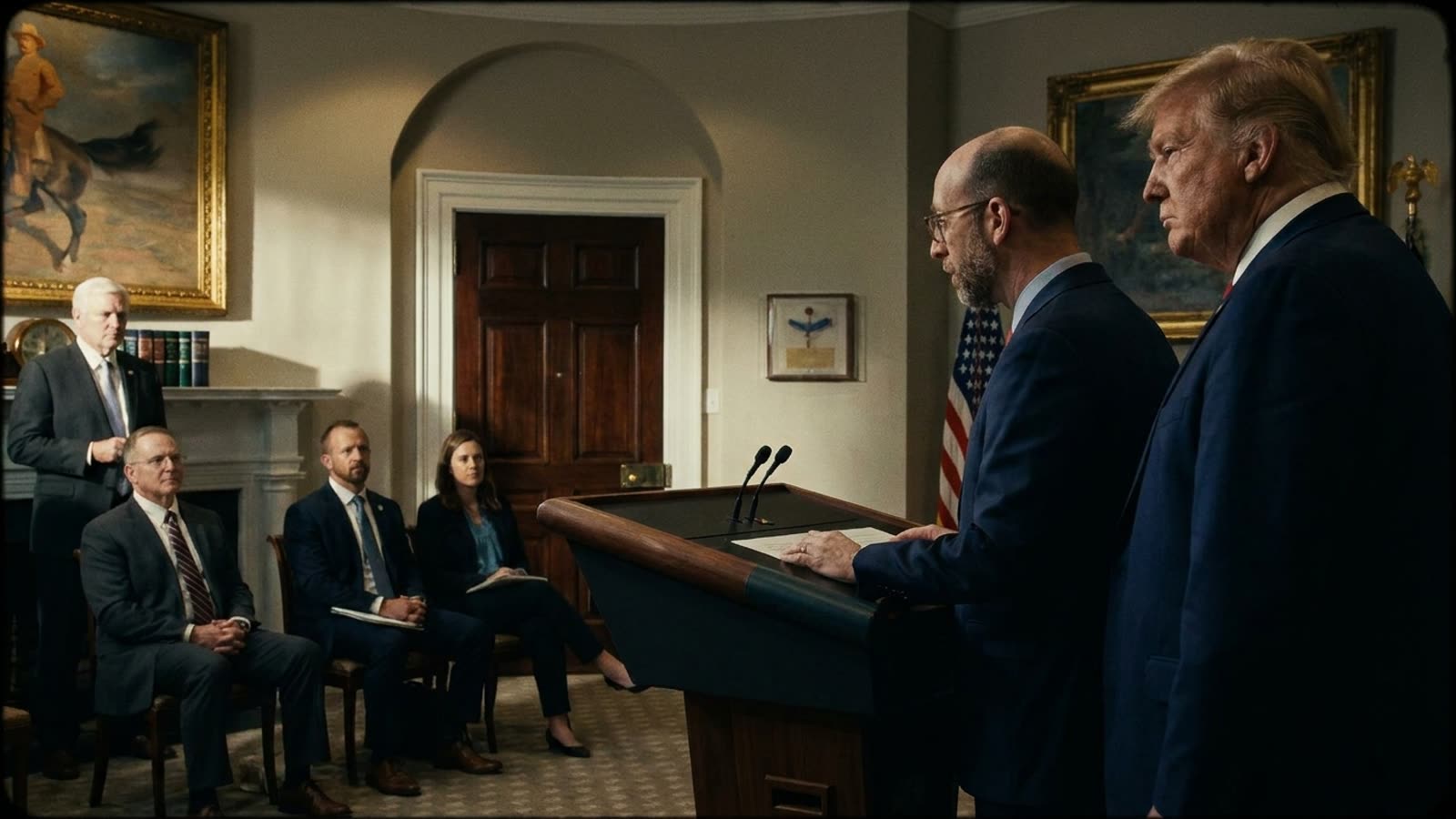
The appointment of a senior housing official to lead the nation's intelligence community would, in any other era, read as bureaucratic satire. In the Trump administration's second term, it reads as strategy.
The president has named his top housing official—a figure whose tenure at HUD has been defined less by policy innovation than by partisan combat—to serve as acting director of national intelligence. The move bypasses the usual credentialing rituals of the intelligence world, where directors typically arrive with decades of experience in espionage, military intelligence, or at minimum, national security law.
The housing-to-intelligence pipeline
The official in question built his recent profile not through intelligence work but through aggressive public attacks on Democratic lawmakers and what he characterized as a "deep state" embedded within federal agencies. His family legacy, which he has invoked repeatedly to burnish his credentials, remains disputed by historians and genealogists who have questioned key claims.
The DNI role coordinates seventeen intelligence agencies and serves as the president's principal intelligence advisor. Previous directors have included former senators, CIA veterans, and career military officers. The position was created after the September 11 attacks specifically to improve coordination among agencies that had failed to share critical information.
Why acting matters
The "acting" designation is doing significant work here. Senate confirmation for a permanent DNI appointment would require the nominee to face questions about qualifications, temperament, and the disputed biographical claims that have dogged his public career. The acting designation allows the administration to install its preferred candidate while avoiding that scrutiny—at least temporarily.
Federal vacancy rules theoretically limit how long acting officials can serve, but the administration has demonstrated creativity in interpreting these constraints. The practical effect is that the intelligence community now reports to someone whose primary qualification appears to be loyalty rather than expertise.
The institutional bet
This appointment fits a pattern visible across the second Trump term: the systematic installation of loyalists into positions where they can reshape or neutralize institutions the administration views as hostile. The intelligence community, which clashed repeatedly with Trump during his first term over Russian election interference and other matters, has been a particular target.
The question is whether the intelligence agencies—staffed largely by career professionals who serve across administrations—will function differently under leadership that views them with suspicion. Early indications from the housing tenure suggest a management style heavy on public confrontation and light on operational detail.
Our take
The appointment is less about intelligence than about signaling. The administration is communicating to its base that no institution is too sacred to be remade, and to the bureaucracy that resistance will be met with replacement. Whether this produces better intelligence or merely more compliant intelligence is a question the country may not be able to answer until the next crisis arrives.