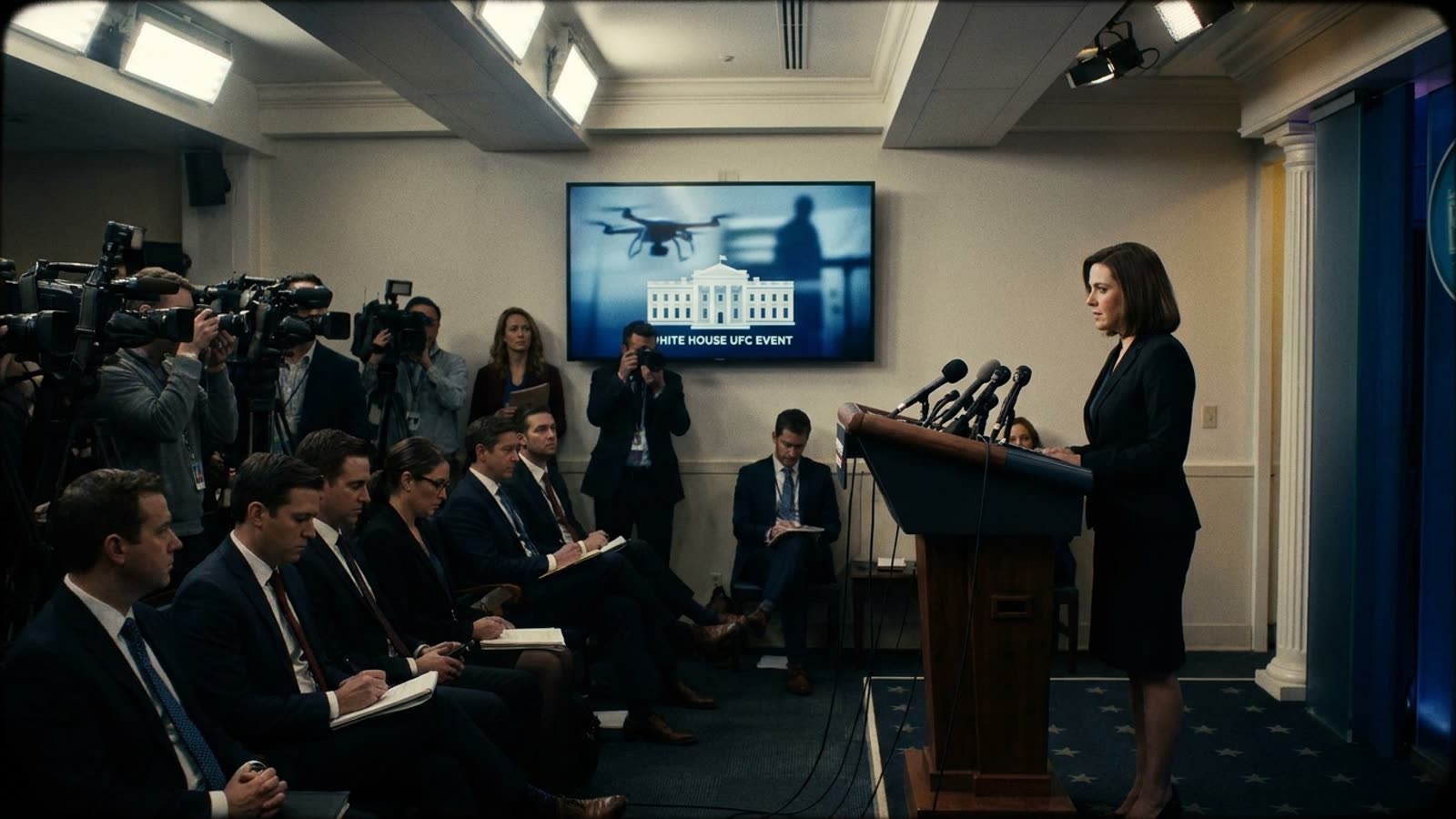
The criminal complaint unsealed Monday describes a plot so audacious it reads like rejected screenplay material: five individuals allegedly conspired to fly explosive-laden drones into the White House South Lawn during President Trump's UFC 315 watch party, an event that drew Dana White, several fighters, and an estimated 400 guests to the executive mansion on June 14. The plan collapsed not because of sophisticated intelligence work or advanced detection systems, but because a 19-year-old suspect's parents found disturbing materials and called the police.
That detail deserves to sit with us for a moment. The most consequential counterterrorism intervention of the month came from a mother and father in what must have been the worst conversation of their lives.
The new threat matrix
Consumer drones have worried security professionals for years, but this case crystallizes the specific vulnerability created by Trump's preference for hosting large, semi-public events at the White House. The UFC viewing party—part of the administration's ongoing relationship with the mixed martial arts organization, which has paid bonuses to fighters in Trump-branded stablecoins—represented exactly the kind of high-profile, predictable gathering that traditional presidential security doctrine would discourage.
The Secret Service has invested heavily in counter-drone technology since the 2022 incursions over the White House complex, but no defensive system is foolproof against coordinated swarm attacks. According to the complaint, the alleged conspirators had acquired commercial drones capable of carrying payloads and had conducted reconnaissance flights in the weeks prior. Federal prosecutors are expected to pursue terrorism enhancement charges.
The family factor
American counterterrorism has long relied on community reporting, but the statistical reality is stark: family members remain disproportionately responsible for preventing attacks. The FBI's post-9/11 tip line receives thousands of calls annually; the ones that matter most often come from people who share a dinner table with the suspect.
This places an extraordinary moral burden on ordinary families. The parents in this case will spend the rest of their lives knowing they sent their child to federal prison—and that the alternative was unconscionable. There is no playbook for that phone call, no training, no support system. They simply did what they believed was right and will live with the consequences.
Our take
The plot's failure is a relief; its existence is a warning. Trump's transformation of the White House into a venue for entertainment spectacles creates security challenges that no amount of technology can fully address. The president has every right to host UFC events on federal property, and the Secret Service will adapt. But somewhere in America, another family is watching the news tonight and wondering whether the strange behavior they've noticed crosses a line worth reporting. The republic's safety depends, in part, on their willingness to make an impossible choice.