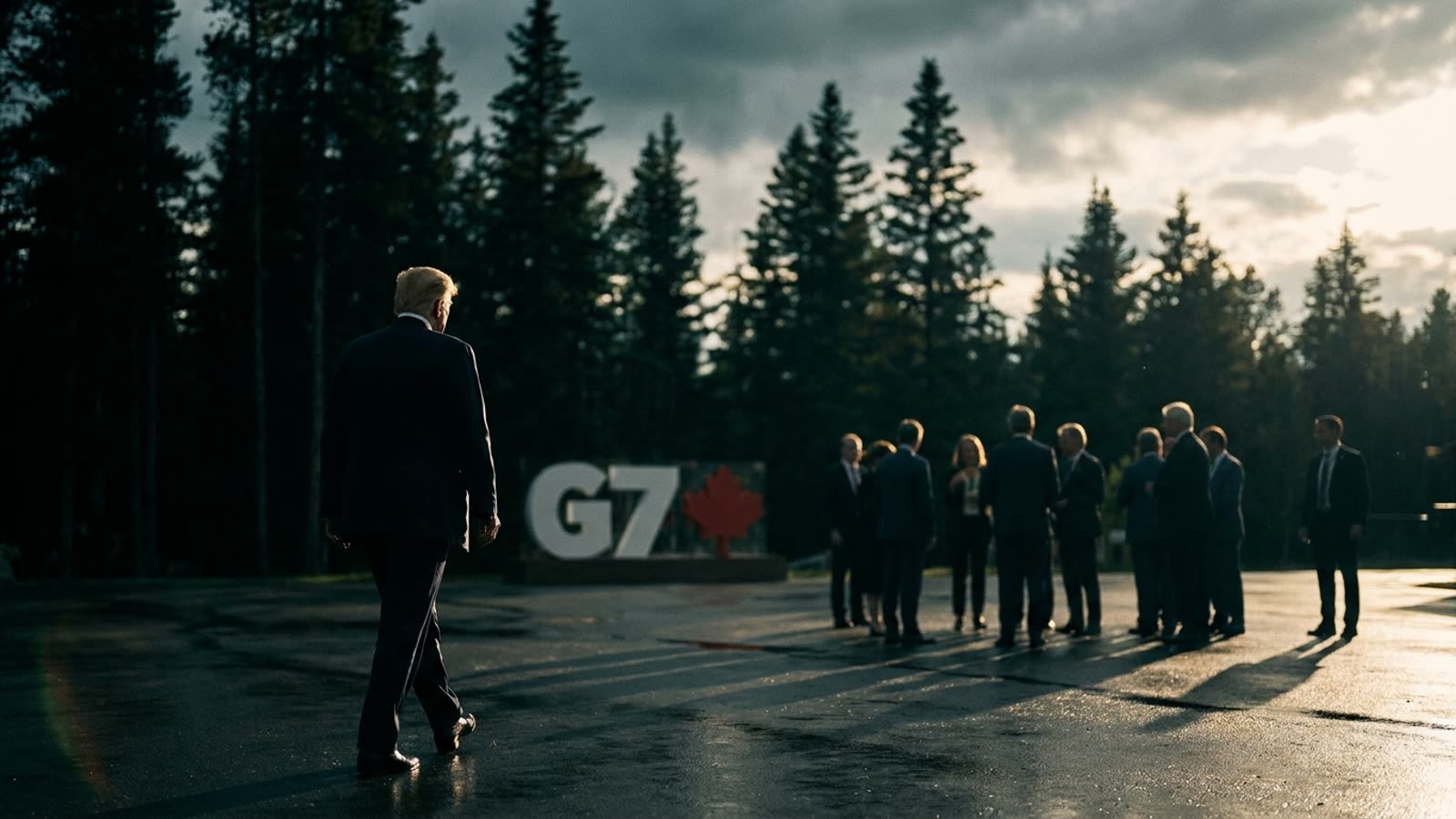
The G7 summit in Charlevoix has always been an exercise in diplomatic theater, but this year's gathering has dispensed with the pretense of collegiality altogether. President Trump arrived in Canada having publicly insulted the host nation's prime minister, questioned Germany's commitment to defense spending, and suggested France's president was more interested in photo opportunities than policy. The remarkable thing is not that these comments were made — Trump has never been accused of excessive tact — but that they were made openly, on the record, in the days immediately preceding a summit designed to project Western unity.
This is not the behavior of a leader who believes he needs something from his counterparts. It is the behavior of someone who has concluded that the transactional value of the G7 has inverted: that America's presence is the favor, not the other way around.
The arithmetic of leverage
Trump's calculus is not entirely irrational. The United States accounts for roughly 40 percent of combined G7 GDP and provides the security umbrella under which European and Japanese prosperity has flourished for seven decades. The recent Iran agreement, negotiated bilaterally between Washington and Tehran, demonstrated that America can reshape Middle Eastern security architecture without consulting its nominal partners. European leaders learned about the ceasefire terms from news reports, not diplomatic cables.
The message is unmistakable: the postwar order in which America traded deference for alliance management is being renegotiated, and the new terms are considerably less favorable to junior partners. German Chancellor Scholz and French President Macron can express displeasure, but their options for meaningful retaliation are limited. They need American security guarantees; America does not need their approval.
The cost of contempt
Yet there is a difference between driving a hard bargain and burning social capital for sport. Trump's pre-summit insults served no obvious strategic purpose — they did not extract concessions or establish negotiating positions. They simply humiliated leaders who must return home and explain to their electorates why they continue to defer to an American president who treats them with open disdain.
This matters because alliances, like all relationships, run partly on sentiment. The NATO commitment to mutual defense is ultimately a promise, and promises are kept by people who feel obligated to keep them. A generation of European leaders who associate America with public humiliation will be less inclined to spend political capital supporting American priorities, less willing to absorb domestic criticism for hosting American bases, less eager to align their foreign policies with Washington's preferences.
The domestic audience
The most plausible explanation for Trump's behavior is that he is not speaking to G7 leaders at all. He is speaking to American voters who enjoy watching their president refuse to kowtow to foreigners. The insults are content, designed for domestic consumption, and if they complicate diplomatic relationships, that is a price Trump has repeatedly shown himself willing to pay.
This interpretation is consistent with the broader pattern of Trump's second term: a presidency that has largely abandoned the pretense of caring about international opinion. The Iran deal was popular at home; European objections were irrelevant. The UFC event at the White House was criticized abroad as undignified; domestic audiences loved it. Trump has discovered that the approval of foreign capitals is not necessary for political success in America, and he has adjusted his behavior accordingly.
Our take
Trump is probably right that America can afford to be ruder to its allies than conventional wisdom suggests. The structural advantages of the American economy and military are not going to evaporate because the president called the Canadian prime minister weak. But there is a difference between what a nation can afford and what it should choose. The G7 exists because collective action problems are real, because climate change and pandemic preparedness and financial stability require coordination, because even the most powerful country benefits from having friends. Trump's insults may play well in Michigan, but they are slowly converting allies into neutrals and neutrals into skeptics. That bill will eventually come due, even if the current president will not be the one to pay it.