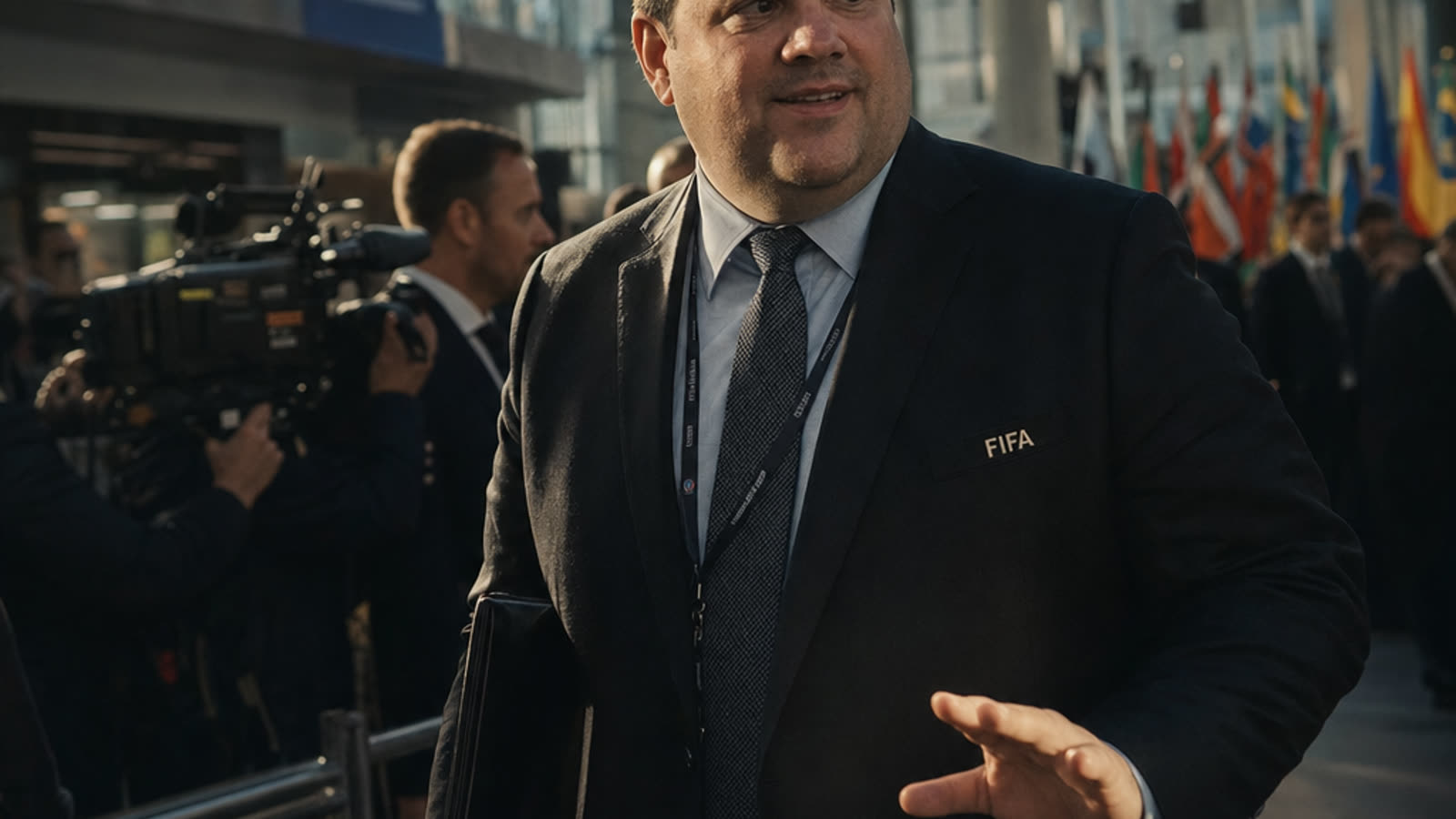
FIFA will hold a presidential election in 2027, but the outcome was effectively decided this week when Victor Montagliani, president of CONCACAF and the only figure with the institutional heft to mount a credible challenge, signaled he would not run against Gianni Infantino. The Canadian's withdrawal is being dressed up as a personal choice, but it reads more like a white flag — and it tells you everything about how power actually works inside football's governing body.
Montagliani, 60, has led the North and Central American confederation since 2016 and sits on FIFA's ruling council. He oversaw the successful joint bid that will bring the 2026 World Cup to the United States, Canada, and Mexico — the largest tournament in the competition's history. By any reasonable measure, he had the credentials and the regional backing to contest the top job. That he chose not to suggests the math was never going to work.
The arithmetic of inevitability
FIFA's one-country-one-vote system theoretically democratizes power, but in practice it concentrates it. Infantino has spent nearly a decade cultivating the smaller federations that dominate the 211-member congress, funneling development money and World Cup expansion slots their way. The 2026 tournament will feature 48 teams, up from 32, a change that guarantees more nations a seat at the table — and more federations grateful to the man who gave it to them. Montagliani could count on CONCACAF's 41 votes; Infantino can count on nearly everyone else.
The Swiss-Italian has also neutralized potential opposition by absorbing it. His council includes representatives from every confederation, and his administration has been notably generous to those who might otherwise cause trouble. The result is a system where challenging the incumbent requires not just ambition but a willingness to sacrifice one's standing within the existing order. Few executives volunteer for exile.
What governance looks like without competition
Infantino's tenure has not been without controversy. The 2022 World Cup in Qatar raised persistent questions about labor conditions and the bidding process. His administration has pushed through an expanded Club World Cup that has drawn objections from players' unions and domestic leagues worried about fixture congestion. And his management style — centralizing authority, marginalizing dissent — has drawn comparisons to his predecessor, Sepp Blatter, whose reign ended in scandal.
Yet none of this has produced a viable challenger. The last contested FIFA election was in 2016, when Infantino himself emerged from a crowded field after Blatter's suspension. Since then, he has run unopposed in 2019 and 2023. A third coronation in 2027 would extend his rule to at least 2031, by which point he will have held power longer than Blatter did before the corruption investigations began.
Our take
Montagliani's decision is rational self-preservation, but it is also a concession that FIFA's electoral process is performative rather than competitive. The organization will stage a vote, count the ballots, and declare a winner whose victory was never in doubt. This is not governance; it is theater with a predetermined script. Football deserves better, but football's rulers have ensured it will not get the chance to demand it.