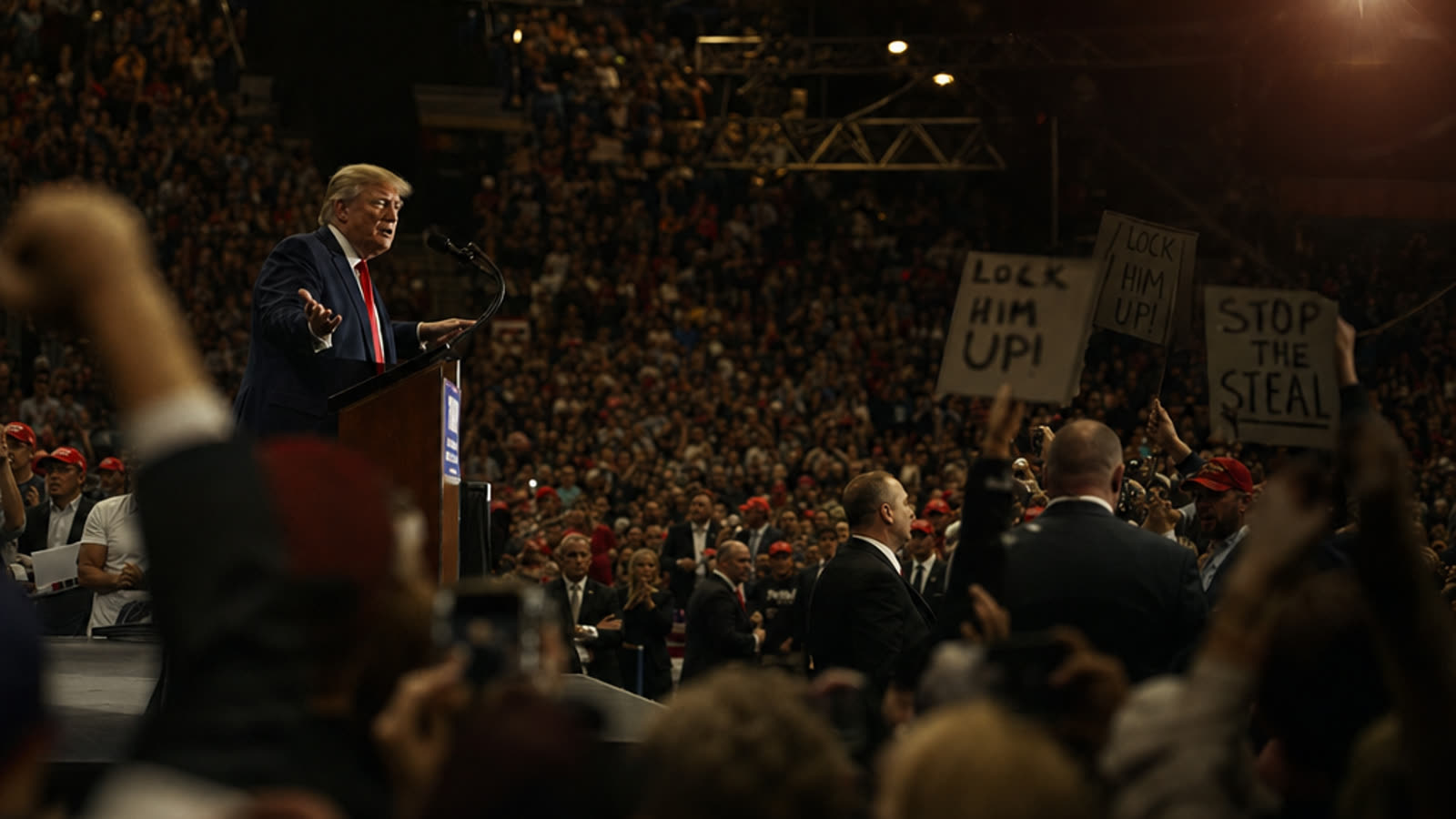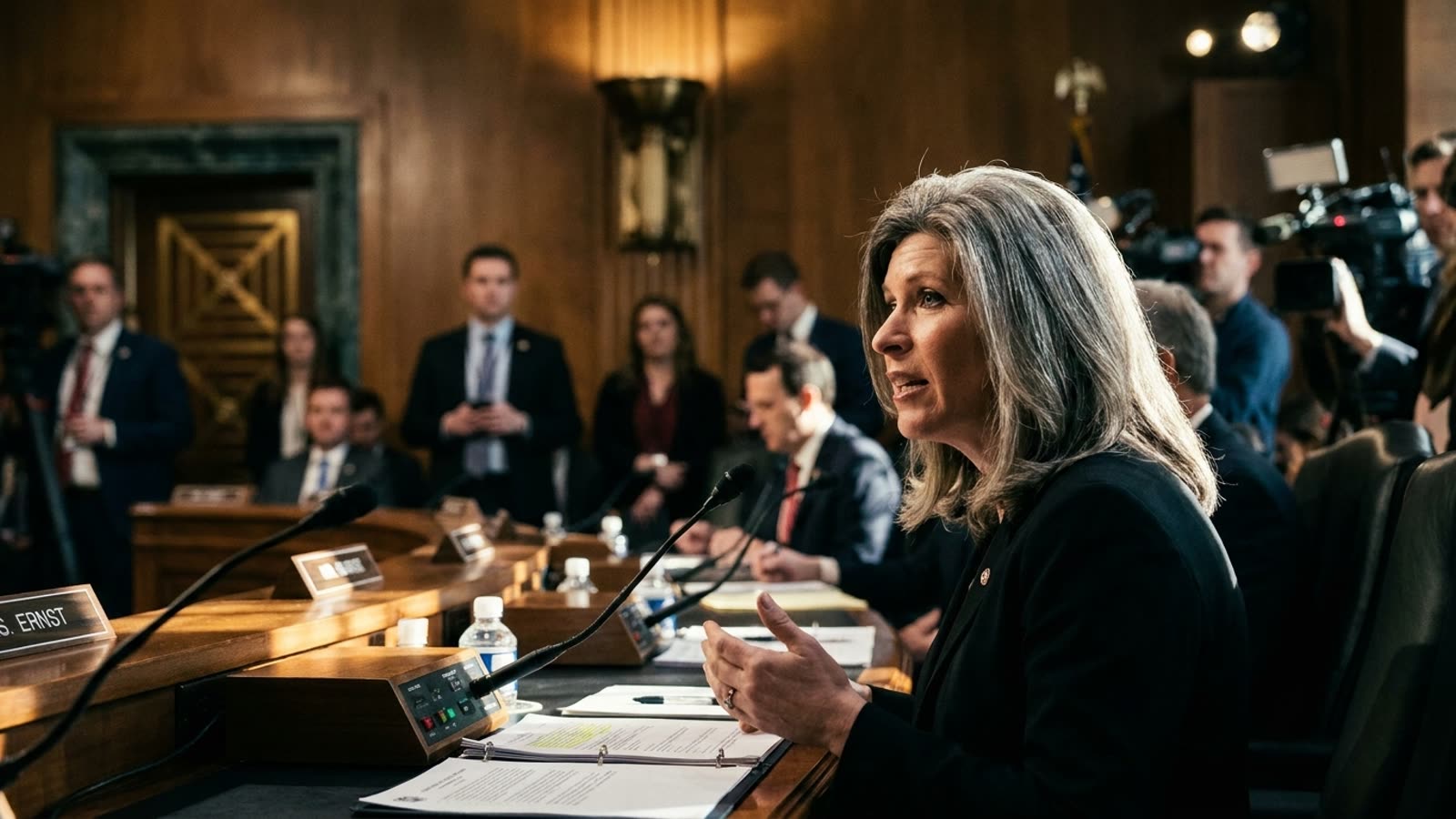
The most revealing moment in Tuesday's Iowa Senate debate was what neither candidate said. For ninety minutes, Republican incumbent Joni Ernst and Democratic challenger Rob Sand circled each other on ethanol mandates, farm subsidies, and abortion access—standard Midwestern fare. What they conspicuously avoided was the man whose face adorns billboards across the state: President Donald Trump.
This is not an accident. It is strategy, and it tells us something important about the fractures running through American politics two years into Trump's second term.
The Republican bind
Ernst's predicament is exquisitely uncomfortable. She needs Trump's base to turn out, but she also needs suburban women in the Des Moines collar counties who have grown weary of presidential chaos. Her solution: radical ambiguity. When moderators asked about the administration's proposed tariff escalation on Chinese agricultural goods—a policy that could devastate Iowa soybean farmers—Ernst praised "the president's negotiating posture" while declining to endorse the specific policy. It was the rhetorical equivalent of standing in two canoes.
The polling explains her contortions. Trump's approval in Iowa sits around 47 percent, strong enough to win a presidential race but dangerous for a senator who cannot afford to alienate anyone. Ernst won her 2020 race by 6.6 points; internal Republican surveys reportedly show this contest within three.
The Democratic calculation
Sand, the state auditor who built his brand on anti-corruption investigations, made an equally deliberate choice. He attacked Ernst on Social Security and Medicare votes but never once uttered the word "Trump." The theory: nationalizing the race helps Ernst consolidate Republican voters who might otherwise stay home. Better to make this about Ernst's record than about tribal allegiance.
This represents a significant evolution in Democratic thinking. In 2018 and 2022, the party ran explicitly against Trump in competitive races, with mixed results. The 2026 playbook in states Trump carried appears to be studied neutrality—neither embracing nor attacking the president, but simply refusing to let him dominate the conversation.
What the silence reveals
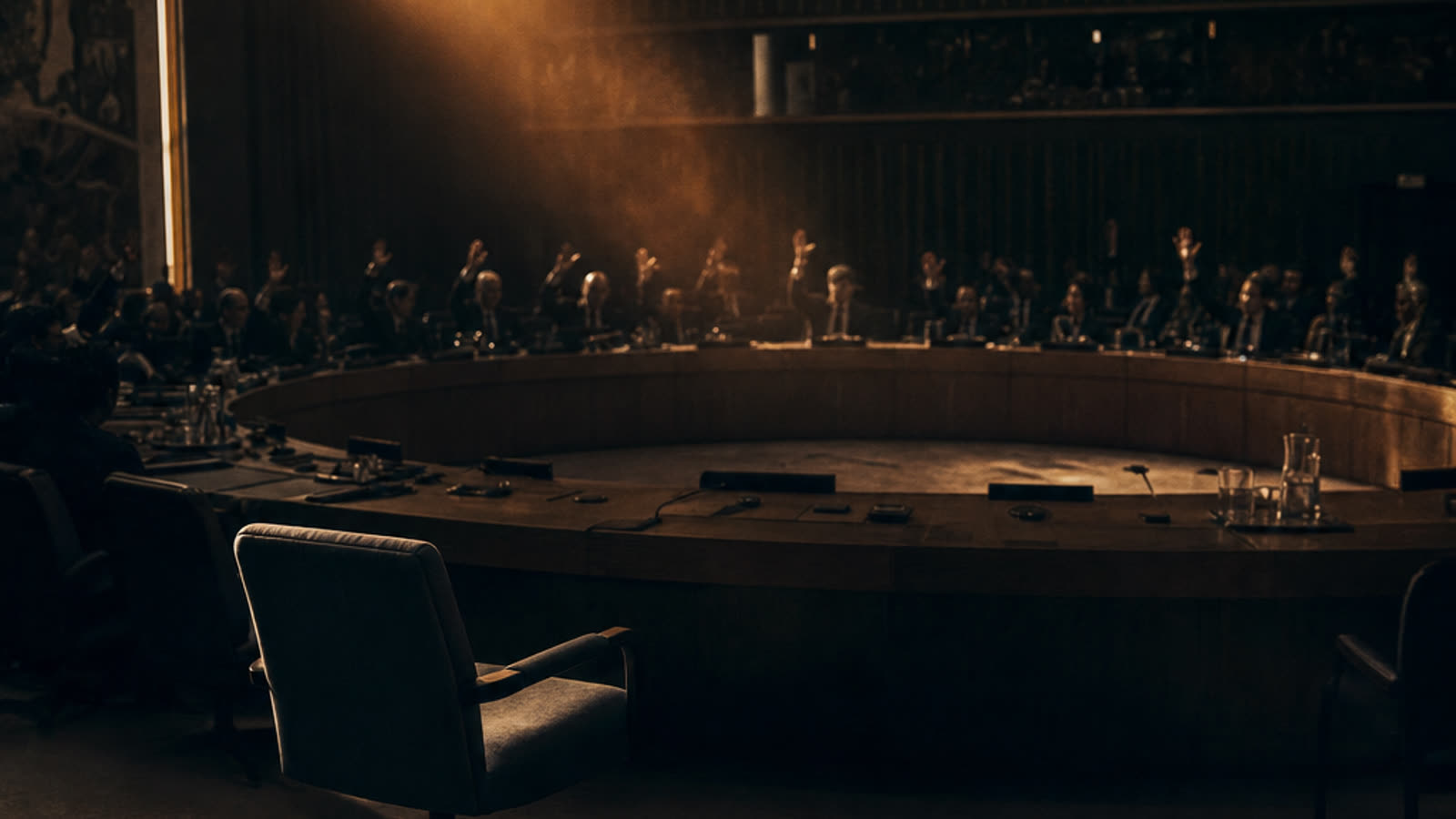
The Iowa debate is a microcosm of a broader phenomenon. In competitive races from North Carolina to Nevada, candidates of both parties are treating Trump like an unstable element—too powerful to ignore, too volatile to engage directly. Republicans fear alienating moderates; Democrats fear activating the MAGA base. The result is a strange political shadowboxing where the most consequential figure in American politics becomes the thing no one will name.
This has consequences beyond electoral tactics. It means voters in these races are getting debates about policy details while the fundamental question—do you support or oppose the direction of this presidency?—goes unasked. The candidates have decided that clarity is too dangerous.
Our take
There is something faintly absurd about two people auditioning to serve in the same legislative body as a president neither will discuss. But the absurdity reflects a genuine dilemma. Trump has so thoroughly scrambled traditional political coalitions that the old playbooks—run toward your base, run toward the center—no longer compute. Ernst and Sand are both making rational choices given the incentives they face. The problem is that rational choices, aggregated across dozens of races, produce a political discourse where the elephant in the room is also the one thing no one will acknowledge. Iowa voters deserve better than ninety minutes of careful omission.