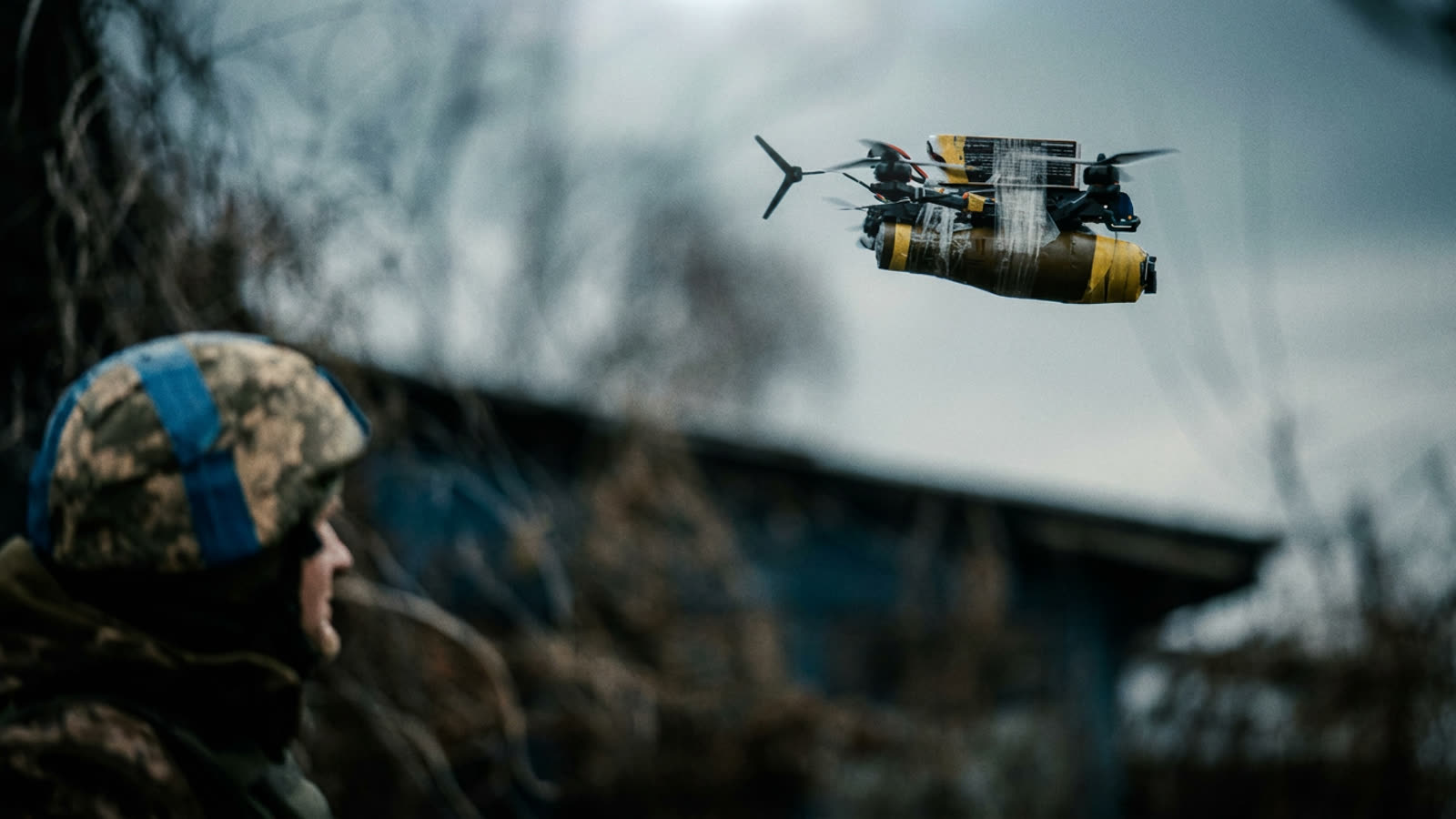
The most consequential military innovation of the decade is not happening in a Pentagon lab or a Chinese research facility — it is being improvised in Ukrainian garages and basements, then deployed at scale against the world's largest nuclear power.
More than three years into the war, Ukraine has transformed itself into the planet's most aggressive adopter of battlefield robotics. The shift is not incremental. Ukrainian forces now operate tens of thousands of first-person-view drones, ground-based autonomous vehicles, and AI-assisted targeting systems that have fundamentally altered the calculus of armored warfare. Russian tank columns that once threatened to overrun Kyiv now advance — when they advance at all — under constant surveillance from systems that cost less than a used car.
The asymmetry that matters
Russia retains enormous advantages in manpower, artillery stockpiles, and industrial depth. None of that has translated into decisive battlefield momentum. The reason is simple: Ukraine has discovered that cheap, disposable robots can neutralize expensive, crewed platforms at exchange ratios that favor the defender catastrophically. A $500 drone destroying a $2 million tank is not a fair trade in any traditional sense — it is an economic rout.
Moscow has responded with electronic warfare, jamming systems, and its own drone programs, but the adaptation cycle favors Ukraine. Kyiv's decentralized innovation ecosystem — part military, part volunteer, part startup — iterates faster than Russian procurement bureaucracies can respond. When one drone design gets jammed, three variants appear within weeks.
What the West is learning
NATO planners are watching closely, and what they see is uncomfortable. Western militaries have spent decades optimizing for small numbers of exquisite, networked platforms — stealth fighters, precision-guided munitions, carrier strike groups. Ukraine suggests that future conflicts may be won by whoever can produce the most disposable systems fastest. The implications for defense budgets, force structures, and industrial policy are profound.
The Pentagon has begun funding "replicator" initiatives aimed at fielding thousands of autonomous systems, but the cultural shift required is immense. American defense contractors are not accustomed to building weapons designed to be destroyed after a single use.
Our take
Ukraine is conducting the largest live experiment in robotic warfare in history, and the results are unambiguous: mass beats exquisite when the mass is smart enough. Russia's inability to adapt is not a failure of will but of system — centralized, corrupt, and slow. The war's outcome remains uncertain, but its lessons are already clear. The next major conflict will be fought by machines in numbers that make today's deployments look quaint. The only question is whether Western democracies will learn that lesson before they need it.