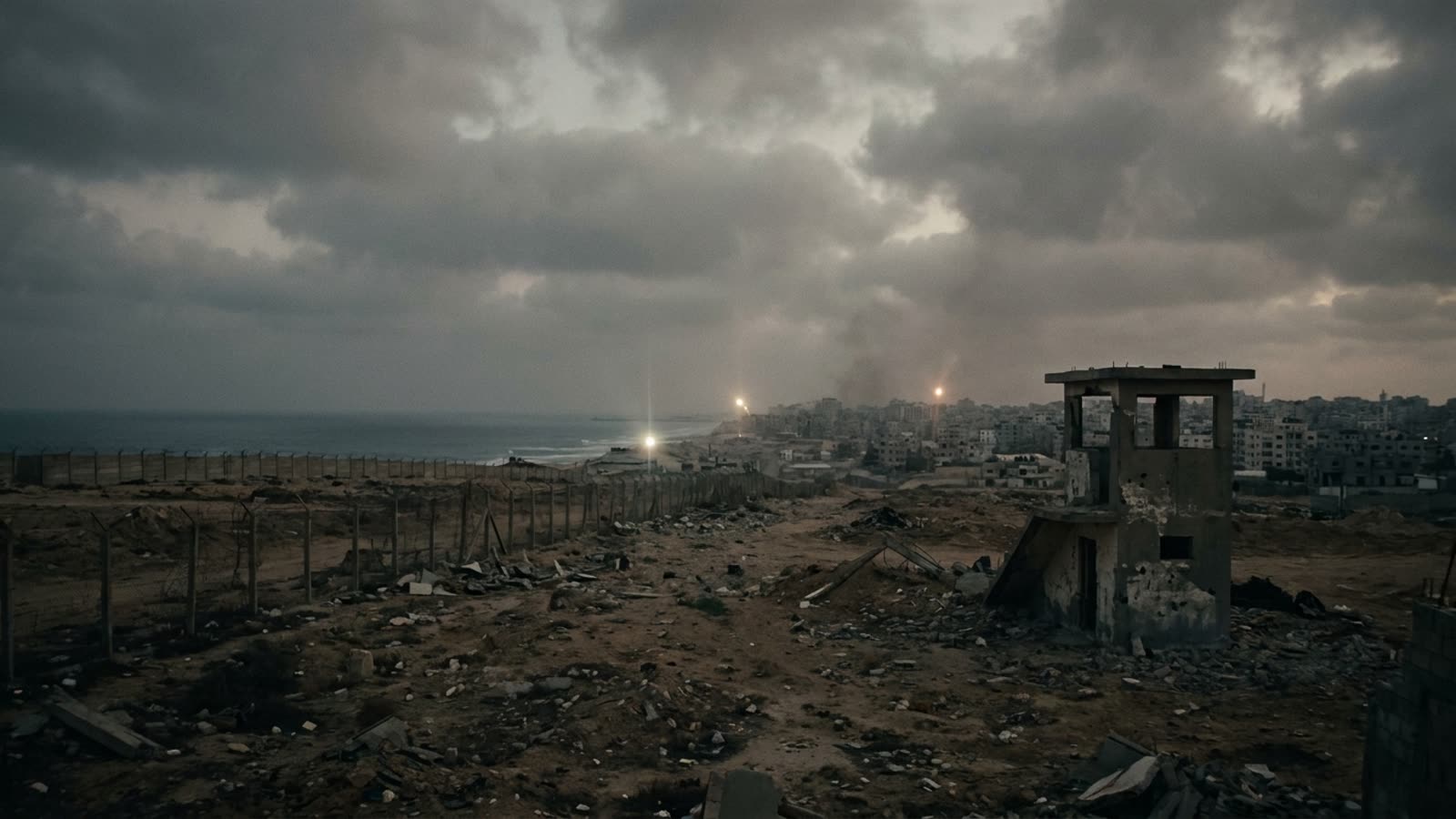
The Israeli government is telegraphing its intention to seize more territory in Gaza, a move that has alarmed diplomats, humanitarian organizations, and—most pointedly—Hamas, which warned this week that any escalation would not go unanswered. The timing is exquisitely poor: with US-Iran nuclear negotiations consuming Washington's attention and regional powers recalibrating their positions, Israel's apparent willingness to expand military operations risks igniting a broader conflict that no party claims to want but several seem unable to avoid.
The calculus in Jerusalem appears straightforward, at least on the surface. Prime Minister Netanyahu's coalition, already the most right-wing in Israeli history, faces domestic pressure to deliver something that looks like total victory. Buffer zones, expanded settlements, permanent military presence—these are the demands of coalition partners who hold the government's survival in their hands. The problem is that what satisfies Itamar Ben-Gvir and Bezalel Smotrich horrifies everyone else.
The humanitarian mathematics
Gaza's population has endured eighteen months of war that has killed tens of thousands and displaced nearly the entire territory. International organizations have described conditions as catastrophic; the UN has warned repeatedly of famine. Against this backdrop, an Israeli push to "take more" of Gaza—the phrasing itself is telling—raises immediate questions about where remaining civilians would go and under what conditions they would live. Egypt has made clear it will not absorb a mass exodus. The humanitarian corridor, such as it exists, is already inadequate.
Hamas's calculated warning
Hamas's statement cautioning against escalation is notable less for its content than for its audience. The militant group is not speaking primarily to Israel, which has demonstrated it will not be deterred by rhetoric. It is speaking to Hezbollah, to Iran, to regional actors who have thus far limited their involvement to symbolic gestures and occasional rocket fire. The message: if Israel expands its operations, we expect you to respond. Whether those actors will comply is the trillion-dollar question of Middle Eastern security.
Washington's divided attention
The Biden administration spent considerable political capital trying to restrain Israeli operations while maintaining the alliance. The Trump administration has shown no such inclination, offering what Israeli officials describe as a green light for expanded operations. But Washington's bandwidth is finite. The Iran nuclear talks have consumed the Situation Room; the emerging deal has already generated accusations that Israel is being "thrown under the bus." In this environment, Israel may calculate that acting boldly now—while American attention is elsewhere—creates facts on the ground that will be difficult to reverse.
Our take
Israel has every right to defend itself against Hamas, an organization that committed atrocities on October 7, 2023, and has never renounced its eliminationist charter. But rights and wisdom are different things. Expanding territorial control in Gaza without a political endgame is not a strategy; it is an invitation to permanent occupation, permanent resistance, and permanent war. Netanyahu's coalition needs military action to survive. The region needs it to stop. These imperatives are irreconcilable, and someone is going to lose.