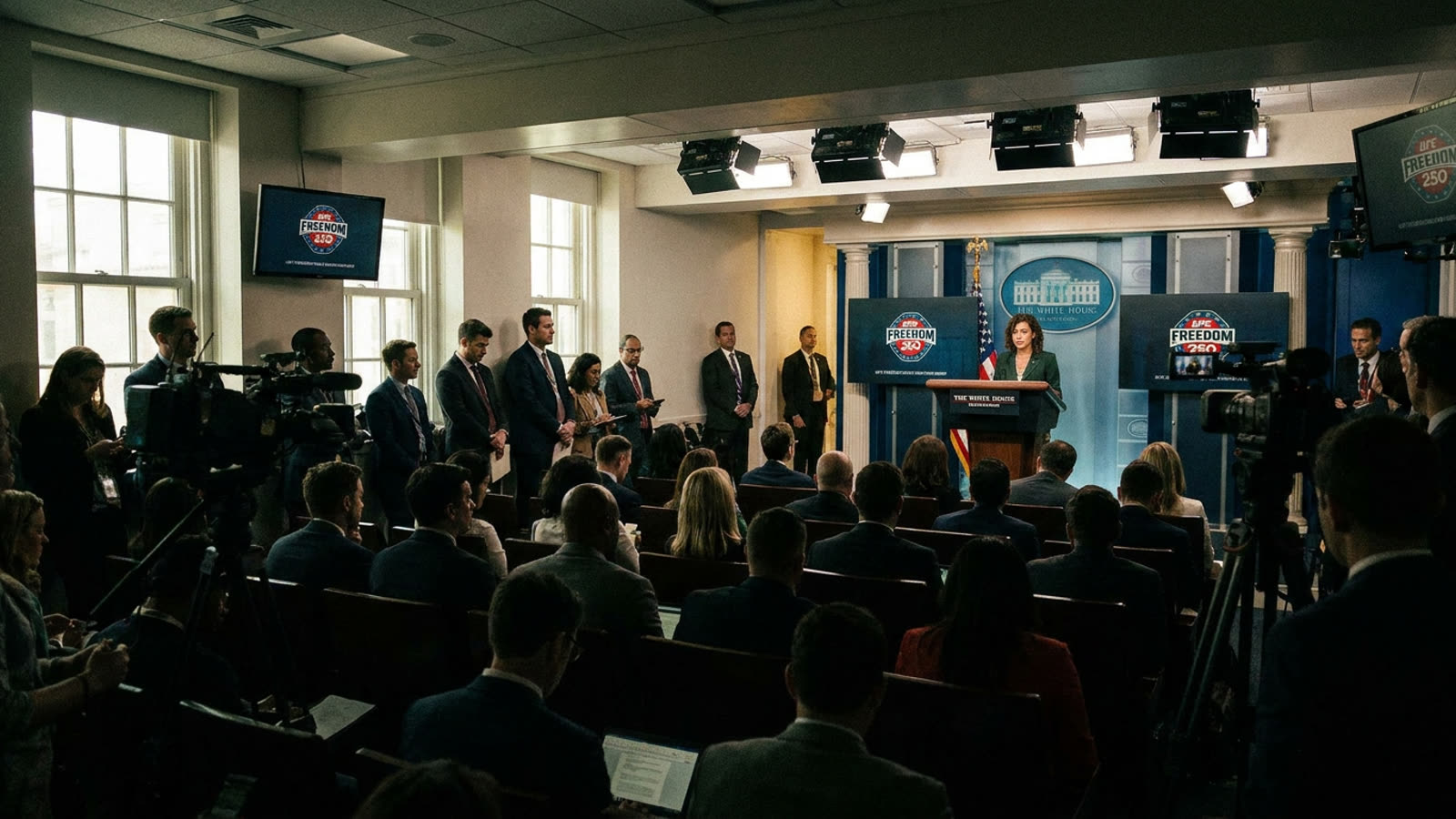
The White House lawn will host an octagon later this month, and the UFC has announced that its ring card models will wear American flag-themed bikinis for the occasion. If you wanted a single image to capture the aesthetic sensibility of the second Trump administration, you could hardly improve upon this one.
The Freedom 250 event—the name itself a masterpiece of unsubtle branding—represents something genuinely novel in American political theater. Previous presidents have invited championship teams for photo opportunities and hosted state dinners for foreign dignitaries. None have transformed the executive mansion into a venue for professional cage fighting, complete with patriotically costumed women circling the ring between rounds.
The normalization machinery
What makes the Octagon Girls announcement noteworthy is not its vulgarity but its ordinariness. The UFC's press release treated the wardrobe decision as routine event logistics, no different from announcing the undercard or the broadcast schedule. The company's willingness to lean into the nationalist pageantry suggests confidence that the audience will receive it as celebration rather than parody.
This confidence is probably well-founded. Combat sports have become the preferred entertainment medium of the Trump coalition, and the UFC in particular has cultivated a relationship with the president that has proven commercially advantageous for both parties. Dana White spoke at the Republican National Convention. The president has attended multiple UFC events. The symbiosis is genuine.
Spectacle as governance
The timing matters. The Freedom 250 card is scheduled while the administration is simultaneously managing a hot conflict with Iran, dismissing inflation concerns, and weathering renewed scrutiny over the Epstein files. The White House fight night offers what all good spectacle offers: something more visually compelling to look at.
This is not to suggest conspiracy or even conscious strategy. The event was planned months ago. But the administration's comfort with the optics—professional fighters exchanging blows on federal property while women in flag bikinis parade between rounds—tells us something about how this White House understands its relationship with the public. Entertainment and governance have merged into a single content stream.
The opposition's silence
Perhaps most striking is the muted response from Democratic critics, who have largely declined to make the White House fight card a line of attack. The calculation appears to be that objecting to the event would read as elitist pearl-clutching, confirming the cultural divide that benefits Trump. So the spectacle proceeds without meaningful opposition, which is itself a form of normalization.
Our take
There is nothing illegal about hosting a UFC event at the White House, and nothing unconstitutional about Octagon Girls wearing flag bikinis. The question is not one of legality but of what we have collectively decided is appropriate for the seat of executive power. The answer, apparently, is this. Future historians attempting to understand the texture of American political life in 2026 could do worse than to study the Freedom 250 promotional materials. They capture something that policy papers and approval ratings cannot: the specific flavor of a moment when the presidency became, above all else, content.