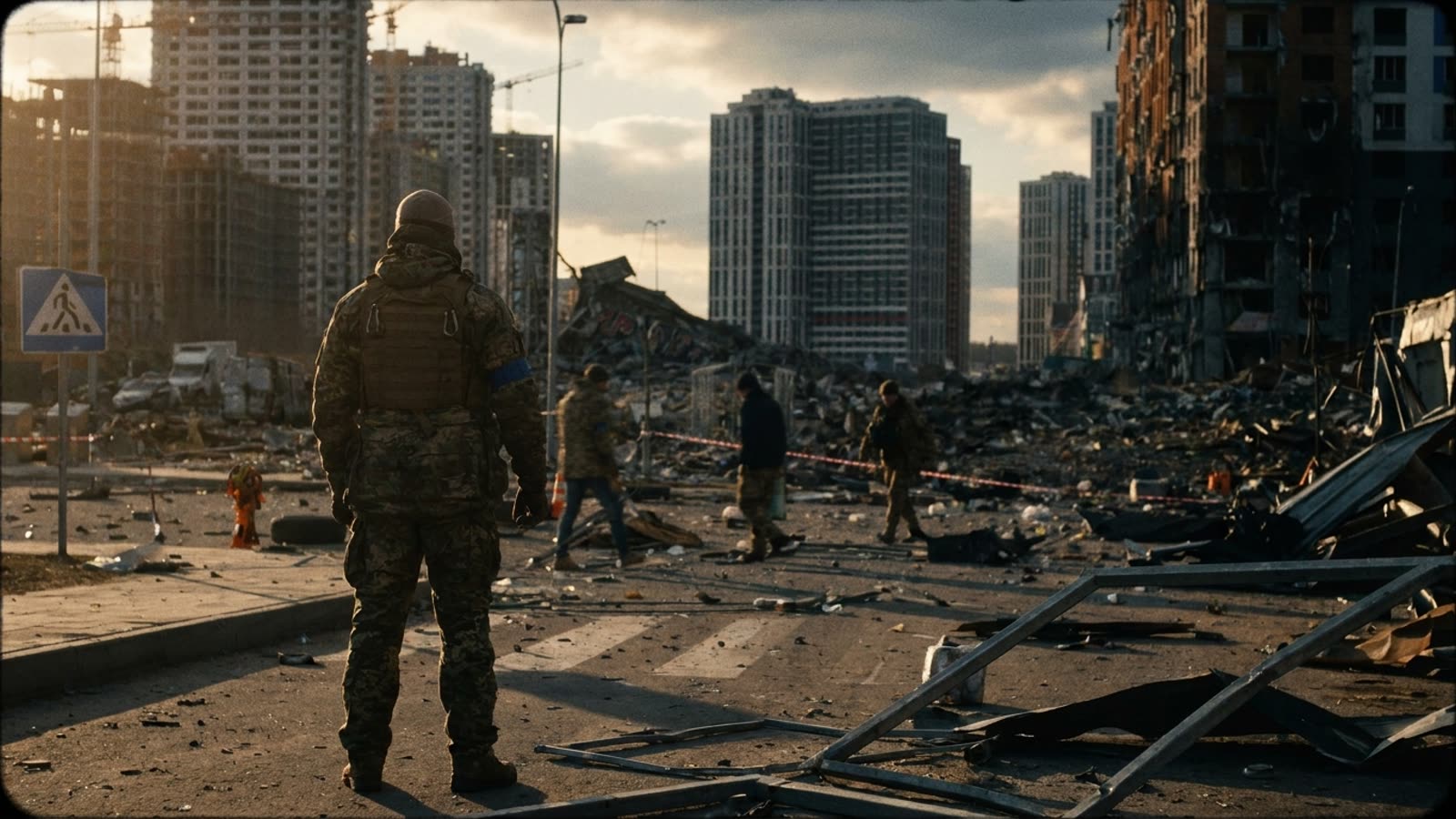
The maps barely move anymore. What was once a war of dramatic territorial swings — Kyiv's survival, Kherson's liberation, Bakhmut's grinding fall — has settled into something grimmer: a 1,200-kilometer front line that shifts by meters, not miles, while both nations hemorrhage a generation.
Ukraine's much-anticipated 2024 counteroffensive failed to break through Russian defenses. The 2025 fighting season brought marginal gains at catastrophic cost. Now, in the summer of 2026, military analysts have largely stopped predicting breakthroughs. The question is no longer who will win but how long both sides can sustain losses that would have been unthinkable in any European conflict since 1945.
The arithmetic of attrition
Russia's advantage has always been demographic — it can absorb casualties that would collapse smaller nations. But even Moscow's tolerance has limits. Credible estimates suggest Russian military deaths have exceeded 200,000, with perhaps three times that number wounded. The Kremlin has responded with prison recruitment, migrant conscription, and wages that now exceed average Russian salaries by multiples.
Ukraine's losses, while smaller in absolute terms, represent a proportionally devastating blow to a nation of 37 million (pre-war). The median age of Ukrainian soldiers has crept upward as the pool of volunteers has thinned. Mobilization remains politically toxic, yet militarily unavoidable.
The Western fatigue factor
American support, once bipartisan, has become a partisan football. The Trump administration's return brought immediate uncertainty — aid packages delayed, rhetoric shifted toward "negotiated settlements" that Kyiv views as capitulation. European allies have increased their share, but the continent lacks the defense industrial capacity to replace American ammunition supplies.
The result is a war fought increasingly on credit, with Ukraine rationing shells while Russia draws on stockpiles and Iranian drones. Western sanctions have hurt but not crippled the Russian economy, which has adapted through Chinese trade and a wartime production surge.
The peace that nobody wants
Peace talks remain performative. Russia's minimum demands — recognition of annexed territories, Ukrainian neutrality, limits on military capability — amount to surrender terms. Ukraine's position — restoration of 1991 borders, including Crimea — requires a military victory it cannot achieve with current resources.
The most likely outcome is the ugliest: a frozen conflict that leaves Russia occupying roughly 20 percent of Ukrainian territory, with no formal peace, no reconstruction, and no security guarantees. A Korean-style armistice without a Korean-style economic miracle.
Our take
The war in Ukraine has become the geopolitical equivalent of background noise — too important to ignore, too intractable to solve, too costly to sustain. Western capitals have quietly accepted that this will not end with Ukrainian flags over Sevastopol. The question now is whether they will admit it publicly, and what they are prepared to offer Kyiv in exchange for acknowledging a reality that Ukrainian soldiers have been dying to deny. The war is not over. It has simply stopped being a war anyone believes can be won.