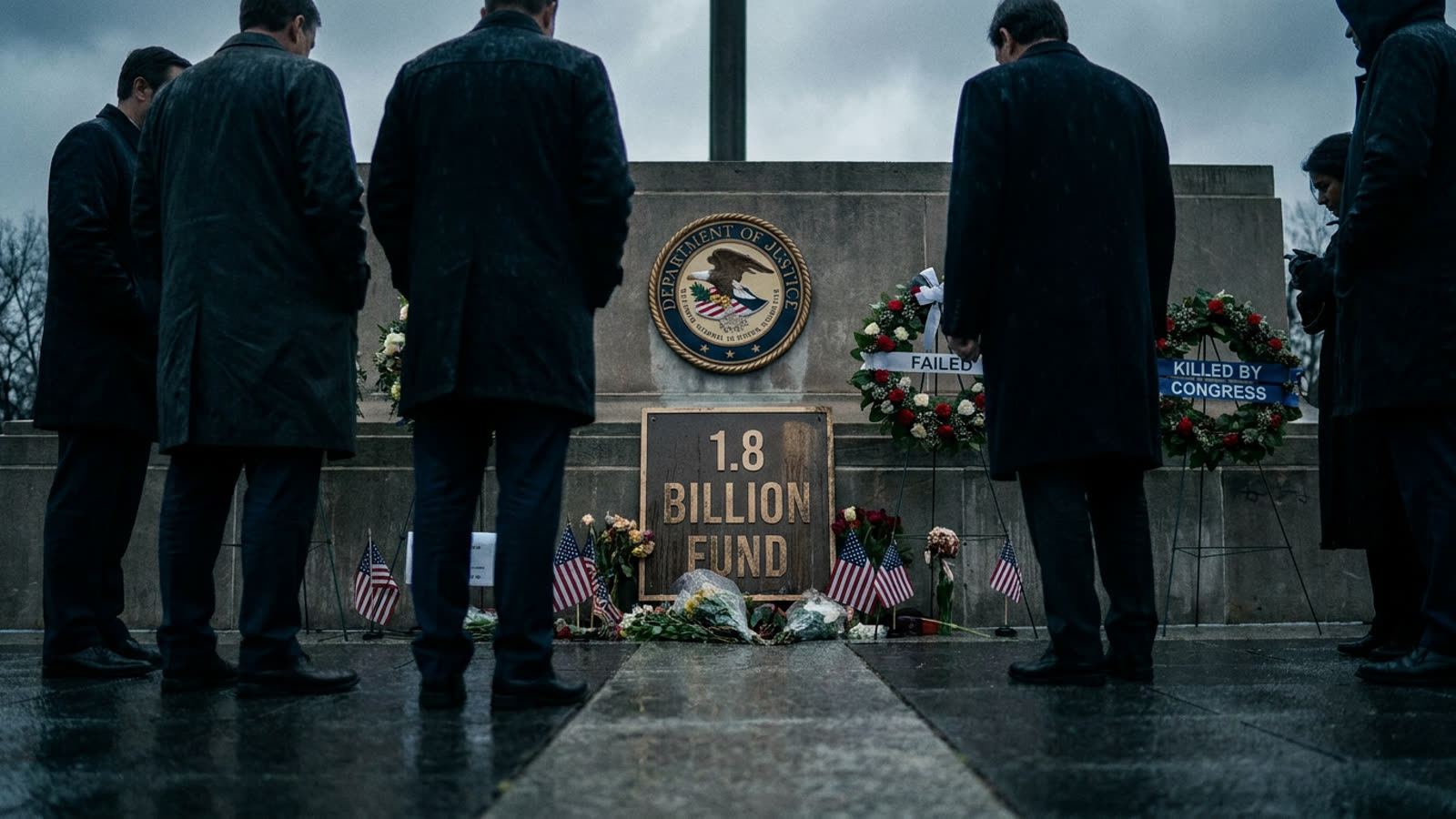
The Trump administration has abandoned its push for a $1.8 billion "anti-weaponization" fund after fierce opposition from congressional Republicans, a capitulation that reveals the limits of executive ambition even within a unified government.
The fund, which would have given the White House broad discretion to pursue legal action against perceived political enemies and shield allies from prosecution, was positioned as a cornerstone of Trump's second-term agenda. Its quiet death—confirmed by administration signals to GOP leadership—represents one of the most significant legislative defeats of Trump's return to power.
The rebellion nobody expected
What makes this retreat remarkable is its source. This wasn't Democratic obstruction or judicial intervention. Republican members, including those who built their brands on MAGA loyalty, concluded that a slush fund for politically motivated litigation was a bridge too far. The concerns were practical as much as principled: members worried about setting precedents that could be weaponized against them in future administrations, and about the optics of explicitly funding what critics called a "revenge budget."
Senate Republicans, in particular, proved unwilling to spend political capital defending a proposal that polled poorly even among the base. The fund's vague mandate—covering everything from defunding investigations to financing counter-suits—made it impossible to message cleanly.
What the White House miscalculated
The administration appears to have believed that post-election momentum and Trump's grip on the party would steamroll internal dissent. That assumption proved faulty. Congressional Republicans, facing their own re-election math, recognized that voting for an explicit weaponization fund would hand Democrats a devastating attack ad. The calculation was simple: the president's approval rating doesn't transfer to down-ballot races the way his disapproval does.
The retreat also signals that Trump's leverage over Congress has natural limits. Members will tolerate—even embrace—combative rhetoric, but they remain sensitive to proposals that expose them to institutional criticism. A fund designed to circumvent prosecutorial independence crossed that threshold.
Our take
This is a useful reminder that American government still contains friction points, even in an era of partisan consolidation. Trump's defeat here wasn't ideological—most of these Republicans share his grievances about prosecutorial overreach. It was structural. Congress protected its prerogatives and its members' electoral prospects. That's not heroism; it's self-interest. But self-interest, properly channeled, can serve as a guardrail. The weaponization fund is dead because enough Republicans decided their careers mattered more than the president's vendetta budget. Sometimes that's how the system is supposed to work.