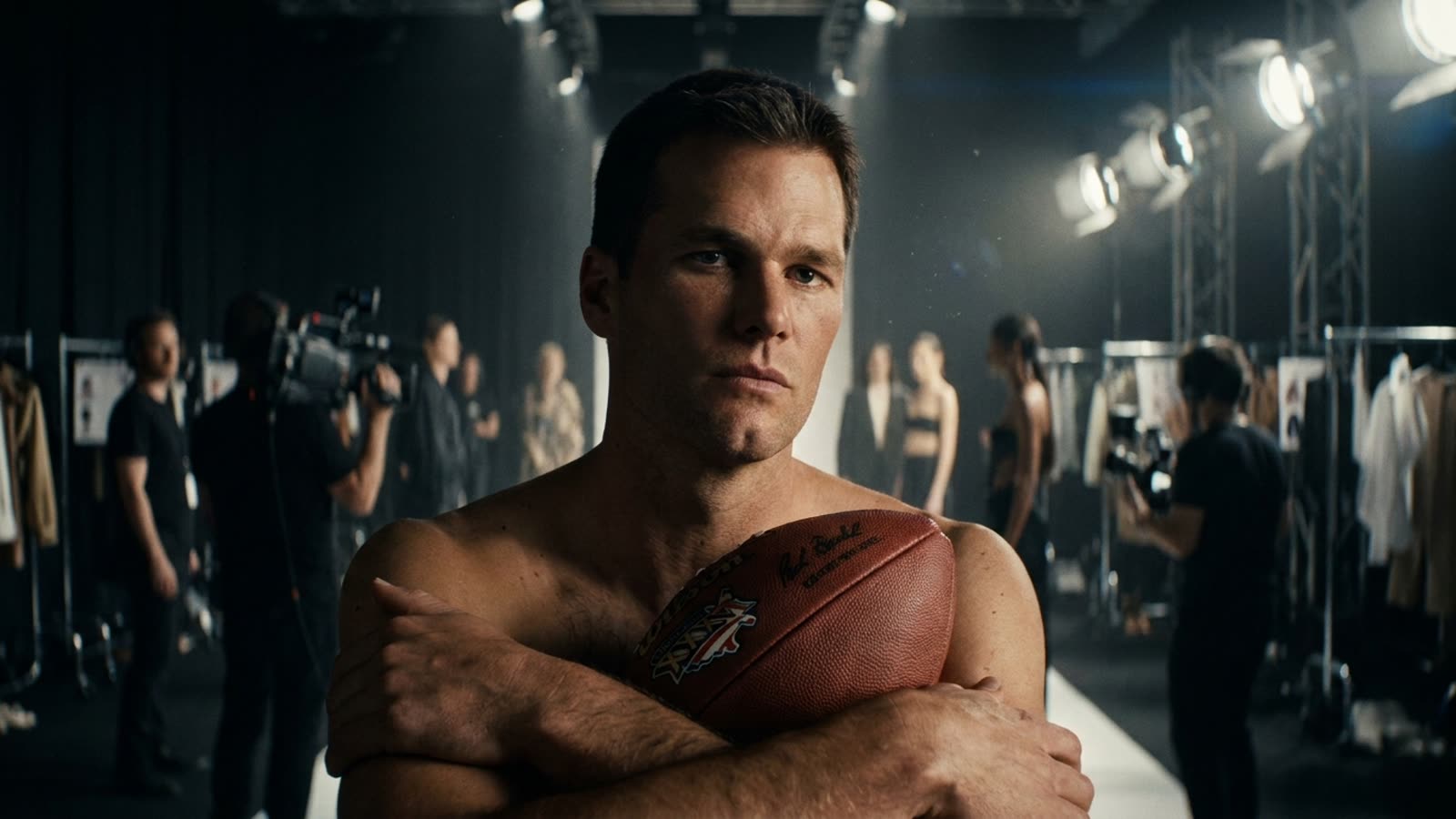
When Tom Brady strode down the catwalk at Gucci's Resort 2027 presentation in New York on Saturday, he wasn't there to wave from the front row or collect a gift bag. He was working—shoulders back, gaze fixed, wearing the clothes the way the house intended them to be seen. The 48-year-old quarterback-turned-broadcaster has now added runway model to a CV that already includes NFL legend, cryptocurrency pitchman, and owner of a minor league football team. Fashion, apparently, was the only conquest left.
The appearance wasn't entirely surprising. Brady has cultivated a relationship with luxury brands for years, most notably through his TB12 wellness empire and his marriage to Gisele Bündchen, one of the most successful supermodels in history. But walking a show—actually walking, not just attending—represents a different level of commitment. It suggests that Gucci creative director Sabato De Sarno sees something in Brady beyond celebrity wattage: a physical presence that can sell tailoring to men who might otherwise never consider a fashion house's vision of masculinity.
The athlete industrial complex
Brady's runway turn is the logical endpoint of a trend that's been building for a decade. LeBron James has long been a fixture at fashion weeks. Odell Beckham Jr. appeared in campaigns for Calvin Klein. Soccer players from David Beckham to Héctor Bellerín have leveraged their physiques and Instagram followings into fashion legitimacy. What's changed is the direction of the transaction. Athletes used to borrow credibility from fashion; now fashion borrows relevance from athletes.
The economics are straightforward. Gucci's core luxury consumer is aging, and the brand needs to speak to younger audiences who care more about sports culture than traditional fashion hierarchies. Brady, despite his age, carries a particular kind of American mythology—the relentless winner, the disciplined body, the man who refused to decline gracefully. That narrative sells watches, cars, and apparently, Italian ready-to-wear.
Why resort, why now
Resort collections have always been fashion's experimental playground, shown outside the official calendar and often in unconventional locations. They're where houses take risks that might feel too bold for the main collections. Casting Brady fits that logic. A Resort show in New York, rather than Milan, already signals a desire to court American attention. Adding the most decorated player in NFL history guarantees that sports media—ESPN, Fox, the entire broadcast apparatus—will cover a fashion show they'd otherwise ignore entirely.
De Sarno, who took over Gucci in 2023, has been steadily moving the house away from Alessandro Michele's maximalist fever dreams toward something cleaner and more commercially direct. Brady, with his all-American bone structure and quarterback's posture, embodies that shift. He's not weird. He's not subversive. He's aspirational in the most traditional sense, which is precisely what Gucci seems to want right now.
Our take
There's something faintly absurd about a man who spent two decades being tackled by 300-pound linemen now pivoting to the delicate business of selling $3,000 jackets. But absurdity has never stopped fashion before, and Brady has always understood that longevity requires reinvention. The runway won't remember him the way the NFL will, but it doesn't need to. He showed up, he walked, he proved that the space between athlete and model has collapsed entirely. The next generation of stars won't have to choose.