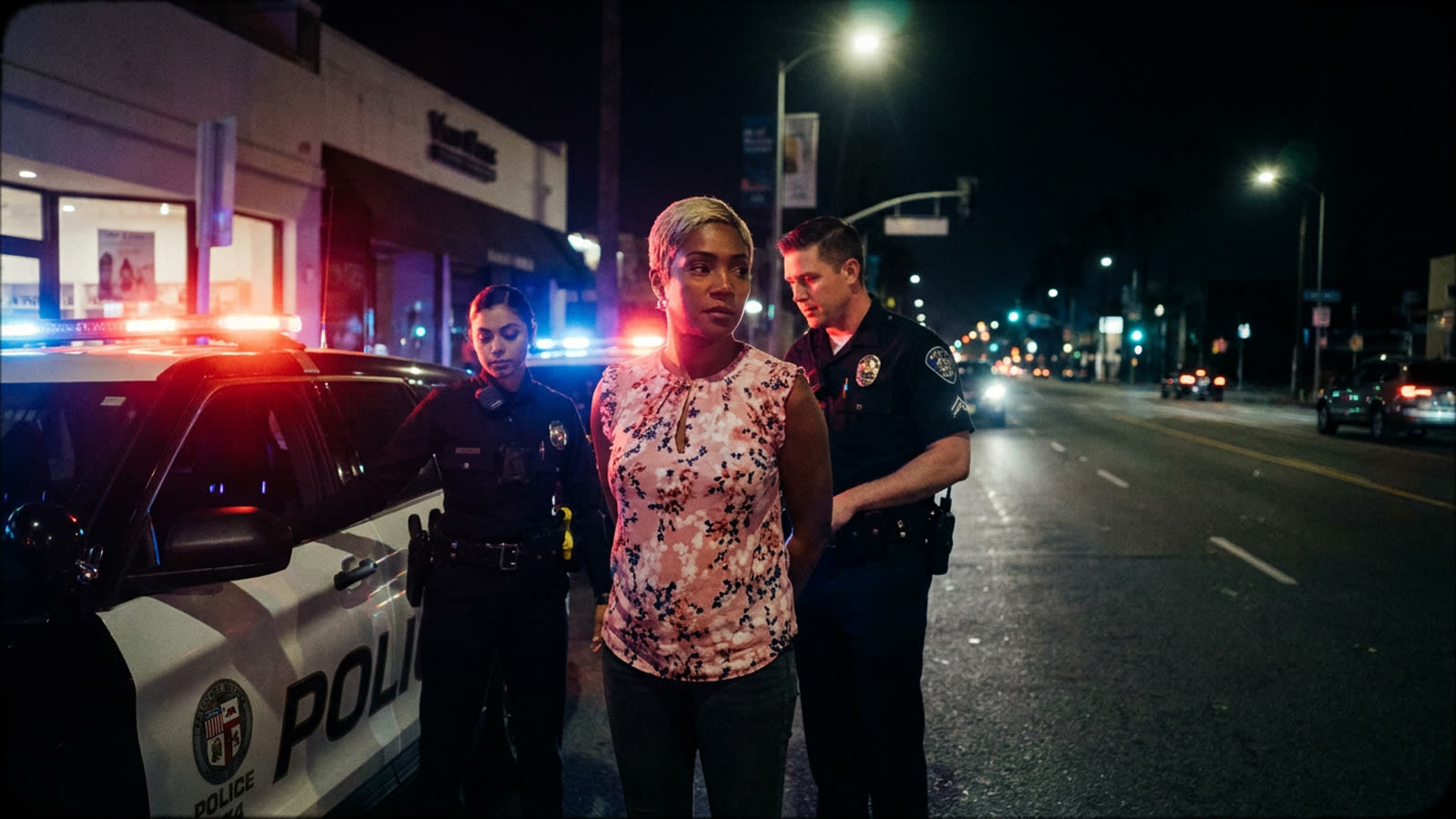
Tiffany Haddish's legal team is celebrating a procedural victory in her ongoing Georgia DUI case: a judge has ruled that one of the field sobriety tests administered during her arrest cannot be used as evidence. The decision, while technically favorable, does little to alter the fundamental calculus of a case that has become emblematic of a career in freefall.
The comedian, who burst into the mainstream with her scene-stealing turn in "Girls Trip" nearly a decade ago, was arrested in late 2024 after police found her asleep at the wheel of her vehicle. This was not, notably, her first such encounter with law enforcement—a pattern that has transformed what might have been a single embarrassing incident into something that looks increasingly like a serious problem.
The limits of legal maneuvering
Field sobriety tests are notoriously unreliable, and defense attorneys routinely challenge their admissibility. The exclusion of one test—the specifics of which have not been publicly detailed—represents competent lawyering rather than exoneration. Prosecutors typically build DUI cases on multiple pillars: officer observations, chemical tests, dashcam footage, witness statements. Removing one brick does not collapse the structure.
Haddish's attorneys will undoubtedly continue to chip away at the evidence, and they may secure additional favorable rulings. But the court of public opinion operates on different evidentiary standards, and there the verdict has largely been rendered.
The career arithmetic
Hollywood's tolerance for personal turbulence has always been selectively applied, and Haddish has found herself on the wrong side of that calculus. Her trajectory since "Girls Trip" has been marked by diminishing returns: smaller projects, fewer prestige opportunities, a gradual drift from leading roles to cameos. The DUI arrests have accelerated a decline that was already underway.
The entertainment industry's memory is short when stars are ascending and punishingly long when they're not. Haddish, at 46, faces the particular challenge of being a Black woman in comedy—a space where second chances are distributed unevenly and where the pipeline of younger talent is always threatening to make yesterday's breakthrough star today's cautionary tale.
Our take
There's something genuinely sad about watching a performer of Haddish's evident gifts navigate a series of self-inflicted wounds in public. The legal system will eventually resolve her Georgia case one way or another. The harder question—whether she can arrest the broader decline and reclaim the momentum that once seemed so inevitable—has no judge to appeal to and no procedural victories to be won. She needs help, not headlines, and the former is considerably harder to obtain in the glare of the latter.