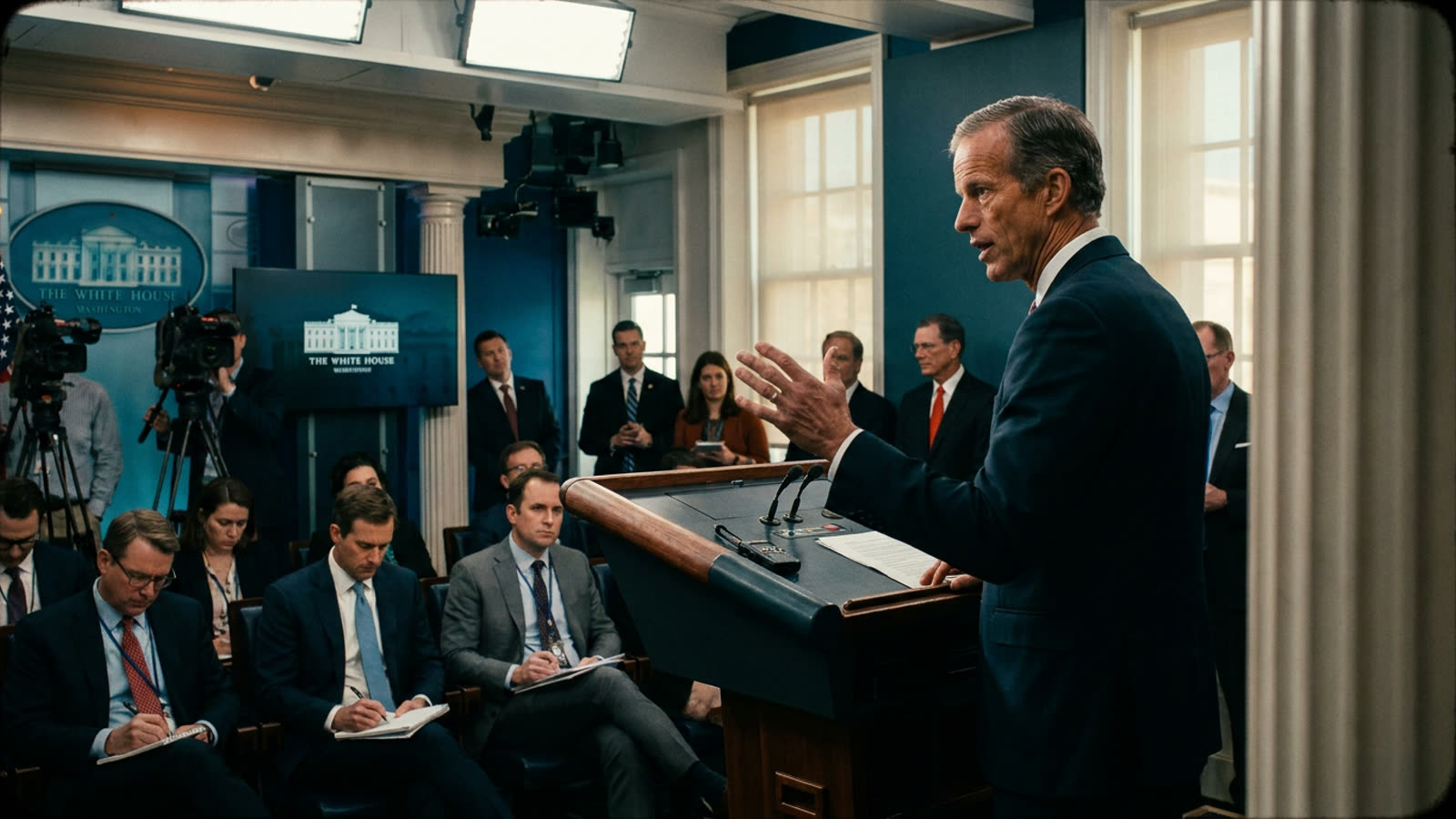
The most powerful Republican in the Senate has publicly advised the Trump administration to abandon one of its signature domestic initiatives—and in Washington terms, that is not advice but ultimatum.
Senate Majority Leader John Thune's call for the White House to shut down its controversial $1.8 billion "anti-weaponization" fund represents a fracture that neither party can paper over with talking points. The fund, designed to compensate individuals the administration claims were targeted by federal law enforcement for political reasons, has been frozen by court order after bipartisan congressional opposition. Now the man who controls the Senate floor is telling his own president to walk away.
The fund that united Washington against itself
The anti-weaponization fund emerged from the administration's broader narrative about prosecutorial overreach during the Biden years—a grievance that animated Trump's campaign and his earliest executive actions. The concept was simple enough: identify Americans supposedly persecuted by a politicized Justice Department and make them whole with taxpayer money.
But the execution proved radioactive. Critics from both parties questioned the legal basis for executive-branch reparations without congressional appropriation, the criteria for determining who qualifies as a victim of "weaponization," and the uncomfortable precedent of a sitting president distributing funds to political allies. The DOJ has already indicated it will comply with the court's pause, but Thune's intervention suggests Republicans see the fight as unwinnable—and worse, a distraction from immigration legislation they actually want to pass.
Why Thune is breaking now
The timing is instructive. Thune explicitly linked his criticism to the stalled immigration agenda, framing the anti-weaponization fund as an obstacle to priorities that enjoy genuine Republican consensus. This is legislative triage dressed as principle: the Senate leader is telling the White House that its culture-war trophy is consuming political oxygen needed for border policy.
Thune's position also reflects institutional self-interest. The fund bypasses congressional spending authority, and even senators sympathetic to the administration's grievances have little appetite for ceding the power of the purse. When a president's own party leadership tells him to retreat, the calculation has shifted from "can we win this fight" to "is this fight worth having."
Our take
Thune is not staging a rebellion; he is performing damage control. The anti-weaponization fund was always more useful as a campaign applause line than as policy, and its legal vulnerabilities were apparent from inception. What matters now is whether the White House reads Thune's public break as a warning or a challenge. The smart move is quiet capitulation—declare victory, pocket the grievance for future use, and let the immigration bills move. The risky move is doubling down and discovering exactly how far Senate Republicans will go to protect their own prerogatives. Thune just told us which outcome he expects.