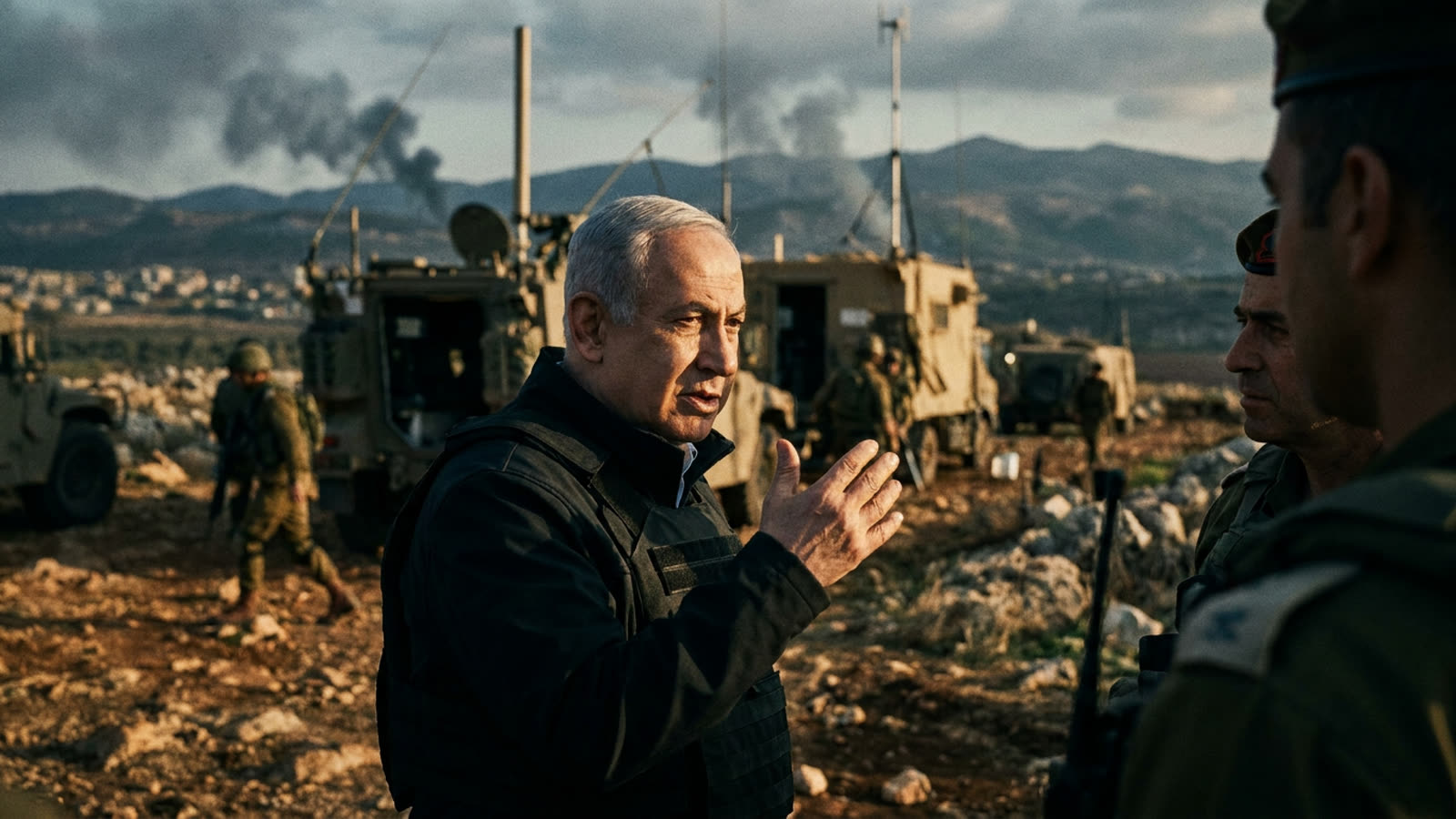
The Israeli Defense Forces are now operating deeper inside Lebanese territory than at any point since the 2006 war, following Prime Minister Benjamin Netanyahu's order to expand operations against Hezbollah positions north of the Litani River. What Israeli officials initially framed as targeted, defensive strikes has evolved into something far more ambitious—and far more dangerous.
The escalation follows months of cross-border exchanges that intensified after Hezbollah's solidarity operations with Hamas in Gaza. But Netanyahu's latest directive represents a qualitative shift: Israeli forces are no longer simply responding to rocket fire but actively pursuing Hezbollah infrastructure deep inside sovereign Lebanese territory, with authorization to hold ground rather than withdraw after raids.
The strategic gamble
Netanyahu's calculus appears straightforward on the surface. Hezbollah's arsenal—estimated at well over 100,000 rockets and missiles before the current conflict—poses an existential threat to Israeli population centers. The group's precision-guided munitions can now reach any point in Israel, a capability it lacked two decades ago. Degrading this threat while Hezbollah is already weakened from months of attrition seems logical.
But the 2006 war offers a cautionary template. Israel's month-long campaign failed to destroy Hezbollah and instead transformed the group into a more formidable force. The difference now is that Netanyahu faces no domestic political pressure to conclude operations quickly—his coalition partners have tied their political fortunes to demonstrating overwhelming force.
Washington's uncomfortable position
The Biden administration's successors in Washington have maintained the traditional posture of supporting Israel's right to self-defense while privately urging restraint. But "restraint" becomes meaningless when the operation has already expanded beyond any reasonable definition of defensive action. American officials are now in the awkward position of providing diplomatic cover for a campaign they cannot control and did not authorize.
The timing compounds the difficulty. With American attention divided between domestic priorities and the ongoing situation in Ukraine, there is limited bandwidth for the kind of intensive shuttle diplomacy that might produce a ceasefire. Netanyahu knows this.
Regional reverberations
Iran faces its own dilemma. Hezbollah is Tehran's most valuable strategic asset—the crown jewel of its "axis of resistance." Allowing Israel to systematically dismantle the group's capabilities would represent a catastrophic loss. Yet direct Iranian intervention risks the broader confrontation that regime survival depends on avoiding.
The Gulf states, meanwhile, are watching carefully. The Abraham Accords normalization process has stalled indefinitely, and Saudi Arabia's much-discussed potential recognition of Israel now seems further away than ever. Whatever diplomatic architecture existed for regional de-escalation has collapsed.
Our take
Netanyahu has made a bet that overwhelming force can achieve what diplomacy and deterrence could not: the permanent neutralization of Hezbollah as a strategic threat. History suggests otherwise. Israel possesses the military capability to inflict enormous damage on Hezbollah, but "damage" is not the same as "defeat," and occupation of southern Lebanon would create precisely the conditions that allowed Hezbollah to emerge in the first place. The prime minister is not solving a problem; he is transforming it into a larger one that his successors will inherit.