The wireless industry has a loyalty problem, and T-Mobile thinks the solution is a velvet rope.
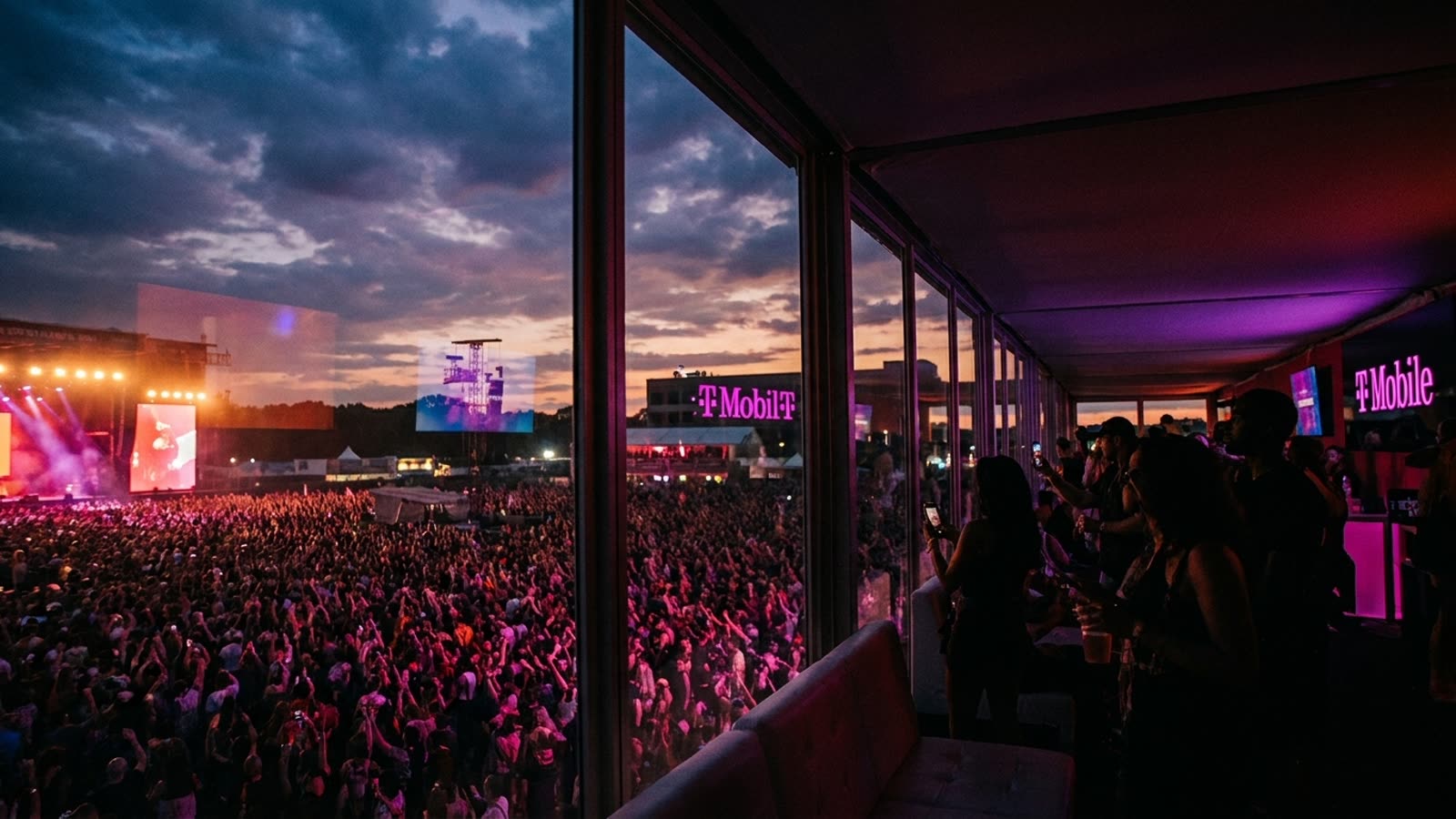
The carrier has quietly rolled out customer-exclusive event lounges at major concerts, sporting events, and music festivals across the United States, offering premium sightlines, complimentary food and beverages, and the kind of VIP treatment that typically requires either a corporate sponsor or a willingness to spend four figures on tickets. The play is obvious but significant: in a market where network quality has converged to near-parity and price competition is a race to the bottom, T-Mobile is attempting to make your wireless provider feel less like a utility and more like a membership club.
The unbundling of everything, reversed
For the past decade, consumer technology has been defined by unbundling—streaming services carved up cable, fintech apps disaggregated banking, and your phone became a remote control for dozens of single-purpose subscriptions. T-Mobile's lounges represent the counter-trend: rebundling, where companies attempt to lock in customers not through superior core products but through an accumulation of adjacent benefits. Amazon Prime pioneered this with shipping-plus-streaming-plus-groceries. Credit cards followed with airport lounges and statement credits. Now wireless carriers, facing historically high churn rates and a saturated market, are borrowing from the same playbook.
The economics make a certain brutal sense. Customer acquisition in wireless costs hundreds of dollars per subscriber; keeping an existing customer happy costs far less, even if "happy" means free beer at a Taylor Swift concert. T-Mobile's parent company has been explicit that these experiential investments are designed to reduce churn among high-value postpaid customers, the segment that actually generates meaningful margins.
The experience economy comes for telecom
What's notable is how far T-Mobile has pushed beyond the traditional carrier perk—the occasional ticket giveaway, the branded hashtag at a halftime show. The new lounges are permanent or semi-permanent installations at venues, staffed and stocked, positioned as genuine hospitality rather than marketing stunts. It's a tacit admission that network coverage maps and 5G speed tests have lost their power to differentiate. When every carrier can credibly claim "best network" in some context, the tiebreaker becomes which one makes you feel like a VIP at Coachella.
AT&T and Verizon have dabbled in similar territory—stadium naming rights, exclusive content deals—but neither has committed to the physical, recurring presence that T-Mobile is now building. The question is whether this becomes table stakes or remains a niche advantage. If competitors match the investment, we may be entering an era where choosing a phone plan feels uncomfortably similar to choosing an airline loyalty program: a maze of tiers, perks, and fine print that obscures the fact that the core product is largely interchangeable.
Our take
There's something faintly absurd about selecting your cellular provider based on access to a lounge at a Zach Bryan concert, but absurdity has never stopped a consumer trend. T-Mobile is making a rational bet that in a commoditized market, the winners will be those who make customers feel special rather than those who deliver marginally faster downloads. It's a strategy that works until everyone copies it—at which point we'll all be back to comparing coverage maps, just with nicer drink tickets in our pockets.