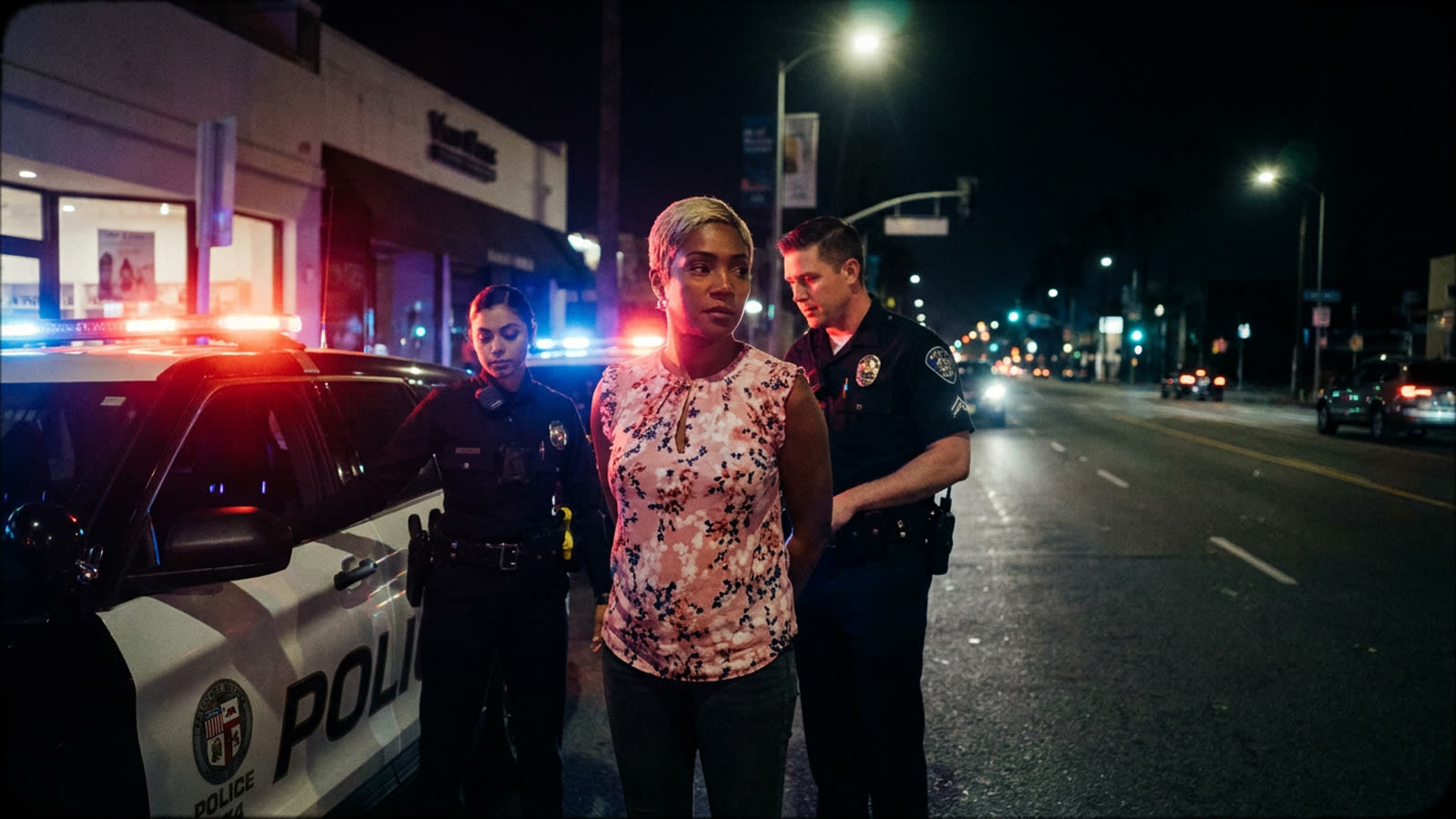
The image of Sugar Ray Leonard remains frozen in the American imagination: the 1976 Olympic gold, the welterweight dominance, the smile that sold Coca-Cola and 7UP to a nation. What arrived at his Los Angeles-area home this week was considerably less telegenic—police cruisers responding to reports that his son had violated a restraining order, culminating in an arrest that strips away whatever privacy the Leonard family had managed to preserve.
The incident underscores an uncomfortable truth about dynastic fame: it protects no one from domestic chaos, and often amplifies it. When your father is a household name, your worst moments become public record.
The arrest and what we know
Authorities responded to the Leonard residence after receiving a call indicating a restraining order had been breached. The son—whose specific circumstances regarding the protective order have not been fully detailed—was taken into custody without incident. Sugar Ray Leonard himself has not issued a public statement, nor has his representatives offered comment beyond confirming the basic facts. The silence is understandable; there is no media training for this particular crisis.
Restraining orders exist because someone, at some point, felt unsafe. The legal mechanism is blunt but necessary, and its violation is treated seriously by California courts. What precipitated the original order remains unclear, but the violation itself suggests an escalation that the family could not contain privately.
The burden of the Leonard name
Sugar Ray Leonard, now in his late sixties, has been candid in recent years about his own struggles—cocaine addiction, infidelity, the psychological toll of a career built on absorbing punishment. His 2011 memoir laid bare a life far messier than the highlight reels suggested. That honesty won him a measure of respect, but it also established a family narrative defined by recovery and relapse, triumph and turbulence.
For children of the famous, the inheritance is complicated. The name opens doors but also invites scrutiny. Every stumble is magnified, every failure contextualized against a parent's achievements. The Leonard son now faces legal consequences that would be unremarkable in a local police blotter but become national news because of who his father once was.
Our take
There is no schadenfreude to be extracted here, only the grim reminder that celebrity wealth cannot purchase family peace. Sugar Ray Leonard gave Americans countless reasons to cheer; his family deserves the dignity of working through this crisis without becoming content. The arrest is news because of the name attached to it, but the underlying story—a protective order, a violation, a family in distress—is depressingly ordinary. Fame, it turns out, is a terrible therapist.