Forty-five years after John Lennon was shot outside the Dakota, we finally have a film that captures him not as myth but as man—talkative, self-satisfied, occasionally insufferable, and radiantly happy.
Steven Soderbergh's John Lennon: The Last Interview, which premiered out of competition at Cannes this week, is constructed around an unlikely foundation: the audio from a lengthy conversation Lennon and Yoko Ono gave to journalist Jonathan Cott on December 8, 1980, mere hours before Mark David Chapman pulled the trigger. The tape has circulated among Lennon obsessives for decades, but Soderbergh—ever the formalist—treats it not as historical curiosity but as raw material for something closer to séance.
The architecture of intimacy
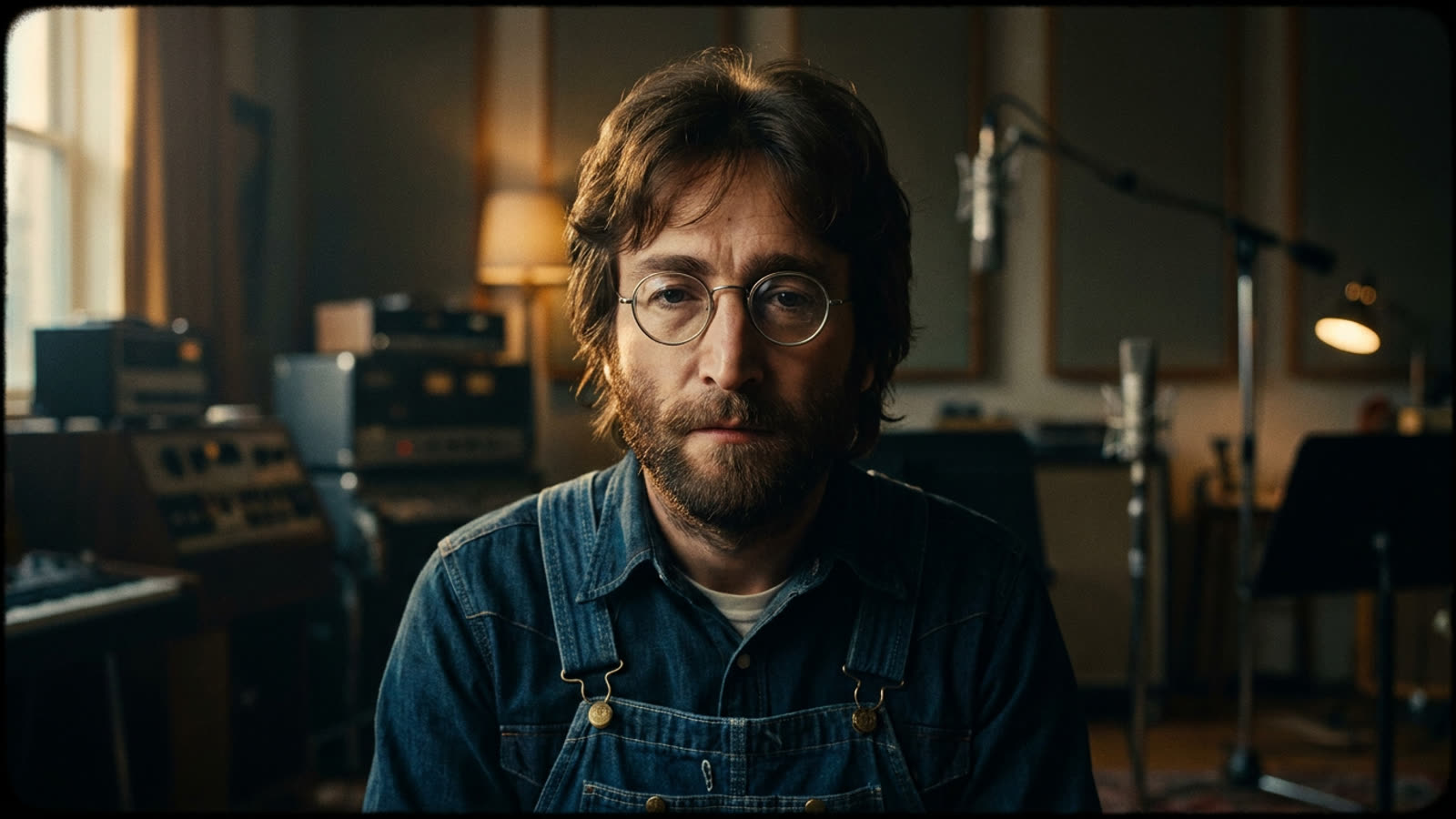
The film layers the Cott interview over a kaleidoscope of archival footage, photographs, and Soderbergh's characteristic visual flourishes. There are no talking heads, no contextualizing experts, no "and then he wrote 'Imagine'" narration. Instead, Lennon's voice carries the entire runtime, occasionally joined by Ono's quieter interjections. The effect is disorienting in the best sense: you're eavesdropping on a man who doesn't know he has six hours left to live, and the dramatic irony is almost unbearable.
What emerges is a Lennon at peace with himself in ways he rarely was during the Beatles years or the primal-scream period that followed. He speaks about domesticity with genuine wonder, about baking bread and watching Sean grow, about stepping away from music not as retreat but as choice. He is, by all accounts, the happiest he's ever been.
The messiah problem
But happiness, in Lennon's case, came with a side of grandiosity. The man who once claimed the Beatles were bigger than Jesus hadn't entirely shed his prophetic tendencies. In the interview, he positions himself as a kind of spiritual guide for the coming decade, dispensing wisdom about consciousness and creativity with the certainty of someone who has figured it all out. It's charming and exhausting in roughly equal measure—vintage Lennon, in other words.
Soderbergh doesn't editorialize, but he doesn't need to. The juxtaposition of Lennon's cosmic optimism against the knowledge of what's coming does all the work. Every pronouncement about the future lands differently when you know there won't be one.
Our take
This is not a documentary for casual fans looking for a greatest-hits recap of Lennon's career. It's a formal experiment that happens to have one of the twentieth century's most famous voices at its center. Soderbergh has always been interested in the space between what we see and what we know, and here he's found the perfect subject: a man frozen in amber at the exact moment before tragedy, speaking freely about a future he'll never see. It's haunting, occasionally tedious, and utterly unlike any music documentary you've encountered. Whether that's a recommendation depends entirely on your tolerance for Lennon at his most Lennon.