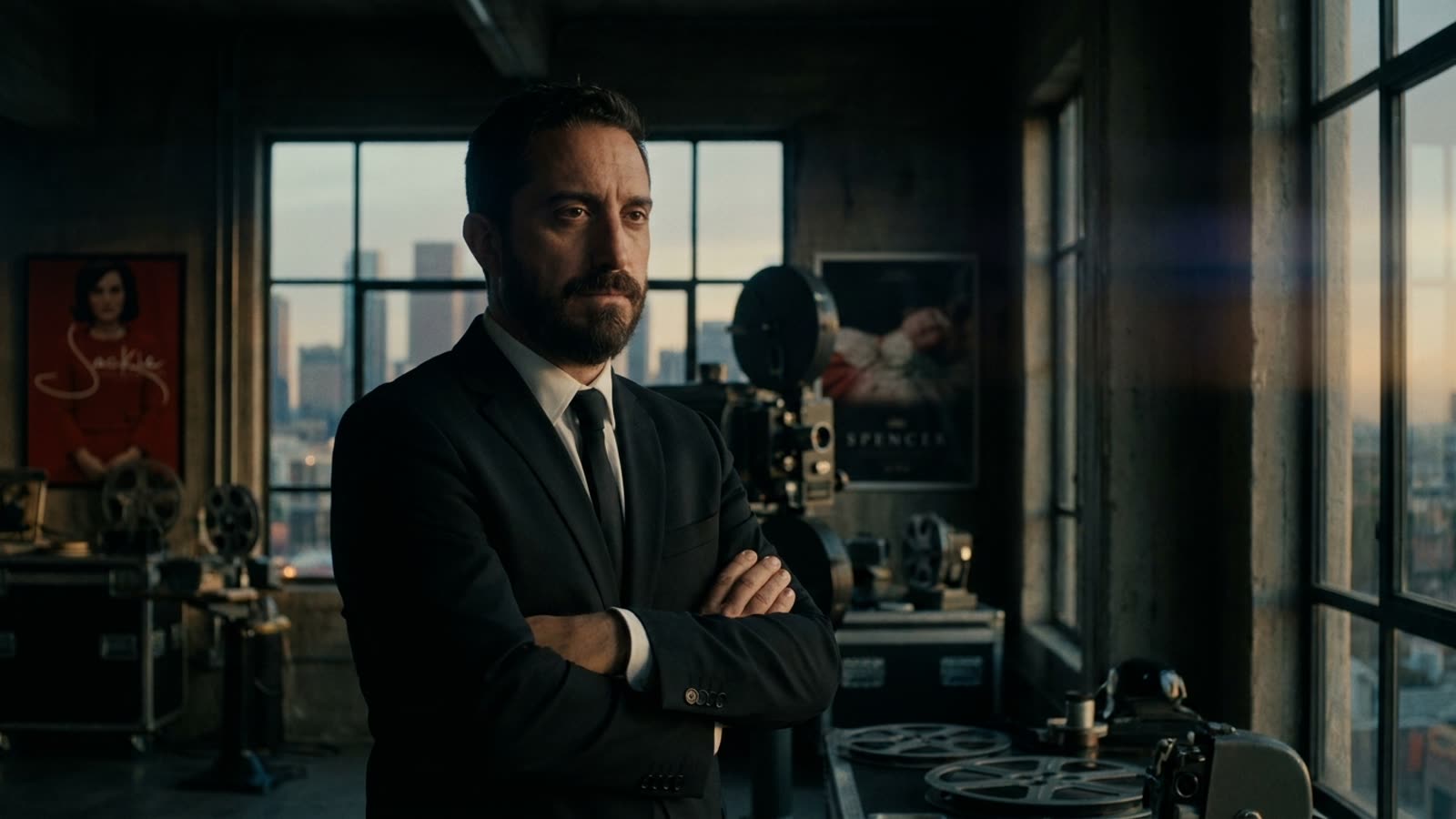
The most interesting development at Cannes this year isn't a film—it's a business model. Pablo Larraín, the Chilean director whose portraits of Jacqueline Kennedy and Princess Diana earned him Hollywood's respect and several Oscar nominations, has quietly launched Pijama, a transactional video-on-demand platform designed to give auteur filmmakers direct access to paying audiences. The first major commercial deals, announced at the festival with MK2, Alpha Violet, Visit Films, Les Films du Losange, and Electric Films, suggest this isn't a vanity project. It's an attempt to rewire how serious cinema reaches viewers.
The premise is deceptively simple: rather than licensing films to Netflix or Amazon at flat fees that rarely reflect a movie's actual audience, directors and producers can offer their work directly to consumers at premium rental prices, keeping a larger share of revenue. Larraín, working with his producer brother Juan de Dios, is positioning Pijama as a kind of Criterion Channel meets Bandcamp—a curated destination where cinephiles pay more because they trust the curation and want to support the artists directly.
The streaming problem for serious film
The economics of art-house distribution have been quietly catastrophic for years. Theatrical runs for non-franchise films have shrunk to near-irrelevance in most markets. Streaming platforms, which once seemed like salvation, have proven fickle patrons—buying films at festivals for sums that look generous until you realize the filmmaker will never see another dollar regardless of how many millions stream the work. The algorithm buries what it cannot easily categorize. A Pablo Larraín film might sit on Netflix's servers forever, technically available but practically invisible, generating no additional income for its creators.
Pijama's bet is that a meaningful subset of global viewers—perhaps a few hundred thousand, perhaps a few million—will pay €8 or €10 to rent a film they trust, if the experience feels intentional rather than algorithmic. The partnerships announced at Cannes are crucial: MK2 and Les Films du Losange represent decades of accumulated prestige and catalog depth. Alpha Violet and Visit Films bring contemporary festival favorites. This isn't a platform launching with three movies and a dream.
Why Cannes matters for the pitch
Launching at Cannes is strategic in ways that extend beyond press coverage. The festival remains the global film industry's most concentrated marketplace, where buyers, sellers, critics, and filmmakers converge for twelve days of deals and positioning. By announcing partnerships here, Larraín signals to other directors that Pijama is serious infrastructure, not a side project. The implicit message to his peers: you don't have to take the Netflix check. There's another path, and it's being built by someone who understands your work because he makes it too.
The timing also reflects a broader shift in how creative industries think about direct-to-consumer relationships. Musicians learned a decade ago that Spotify's per-stream payments would never sustain careers; Bandcamp and Patreon emerged as alternatives. Writers have fled traditional media for Substack. Filmmakers, constrained by the capital intensity of their medium, have been slower to follow. Pijama suggests the tools are finally catching up.
Our take
Whether Pijama succeeds will depend on execution details that remain unclear—pricing strategy, user experience, marketing to audiences who don't attend Cannes. But the attempt matters regardless. Larraín is articulating something the industry has been reluctant to say aloud: the streaming revolution has been, for most serious filmmakers, a bad deal dressed up as democratization. If a director with his stature and connections can't make the alternative work, no one can. If he can, the implications ripple far beyond his own films.