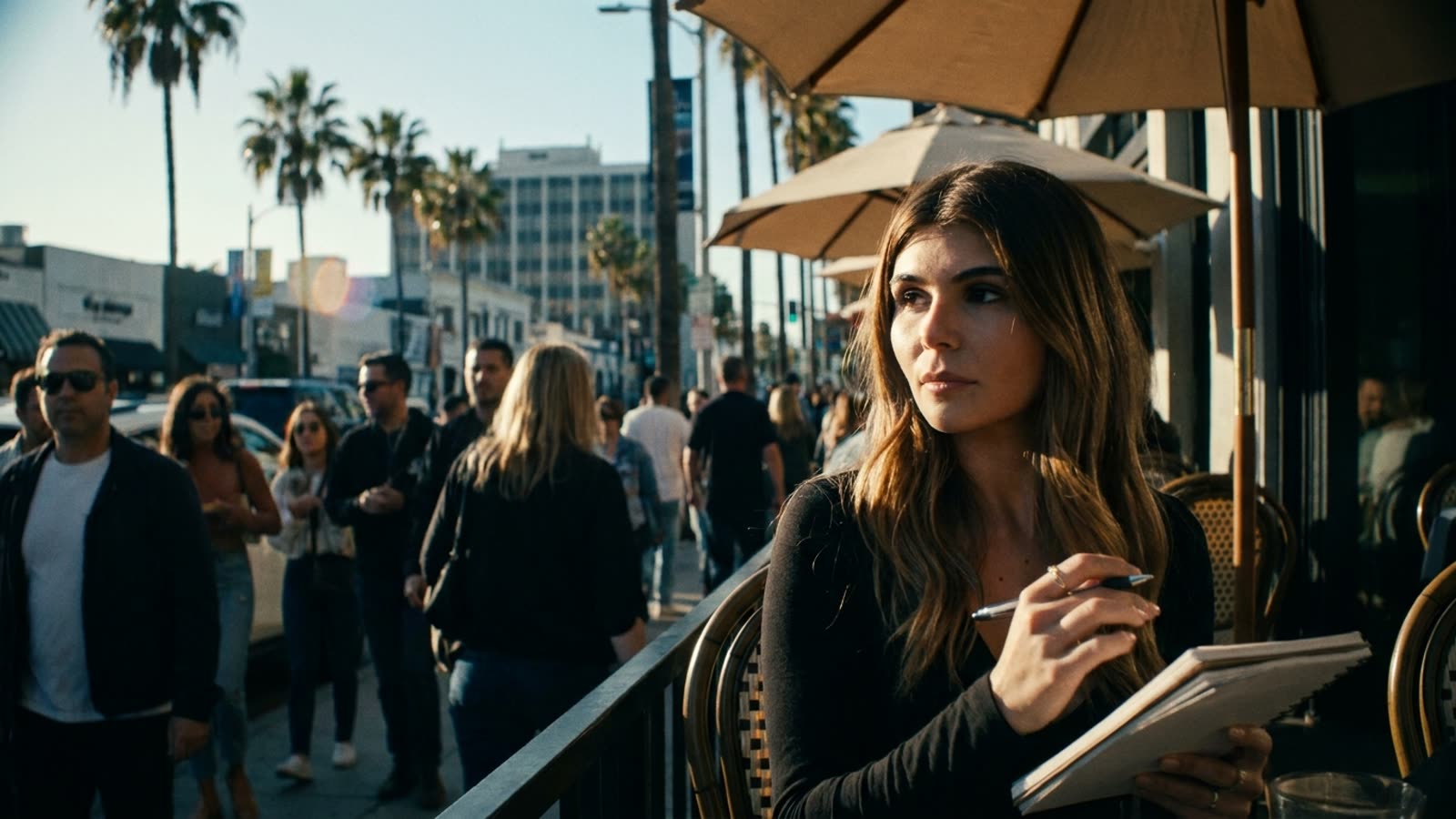
Seven years after federal agents arrested her mother for bribing her way into USC, Olivia Jade Giannulli is celebrating her 27th birthday with the kind of untroubled glamour that once made her a target. The hot shots circulating online show a young woman entirely at ease — tanned, polished, professionally lit — and conspicuously unbothered by the scandal that once threatened to end her career before it properly began.
This is not an accident. It is the result of one of the more disciplined reputation rehabilitations in recent influencer history.
The long road from pariah to passable
When Operation Varsity Blues broke in March 2019, Olivia Jade was a 19-year-old beauty YouTuber with over a million subscribers and lucrative partnerships with Sephora, TRESemmé, and Amazon. Within weeks, she had lost all of them. Her mother, Lori Loughlin, and father, fashion designer Mossimo Giannulli, eventually pleaded guilty to conspiracy charges; Loughlin served two months in federal prison. Olivia Jade, who had posed on a rowing machine for a fake athletic profile despite never having rowed competitively, became the human face of a system rigged for the already-privileged.
The smart money said she was finished. The smart money was wrong.
Strategic silence, then strategic visibility
Olivia Jade's comeback followed a textbook crisis-management playbook: disappear, wait for the news cycle to exhaust itself, then re-emerge on sympathetic terrain. Her December 2020 appearance on Red Table Talk — Jada Pinkett Smith's Facebook Watch show — was the pivot point. She did not apologize for being wealthy; she apologized for not understanding what her wealth meant. It was calibrated, but it was also effective.
Since then, she has competed on Dancing with the Stars (finishing fifth), relaunched her YouTube presence with a more self-aware tone, and cultivated a lower-wattage but steadier following on Instagram. She no longer pretends to be a relatable college student. She is, instead, a rich girl who knows she is a rich girl — and who has learned that acknowledging privilege can itself become a brand.
The economics of second chances
The influencer economy has a short memory and an insatiable appetite for content. Olivia Jade's 1.3 million Instagram followers may be a fraction of the mega-influencer tier, but they are enough to sustain a comfortable living through sponsored posts and affiliate deals. More importantly, she has outlasted the discourse. The people who hated her in 2019 have moved on to newer villains; the people who follow her now either forgave her or never cared in the first place.
Her 27th birthday, marked with the kind of aspirational imagery that built her original audience, is a quiet declaration of victory. She is no longer the scandal. She is just another influencer posting hot shots.
Our take
Olivia Jade Giannulli's rehabilitation is neither inspiring nor outrageous — it is simply instructive. The scandal revealed how easily the wealthy can game institutions designed to reward merit; her comeback reveals how easily the same dynamics apply to public memory. She did not earn her second chance through exceptional talent or genuine contrition. She earned it by waiting, staying visible enough to remain relevant, and trusting that the internet's attention span is shorter than its indignation. At 27, she is proof that in the influencer economy, survival is its own form of success.