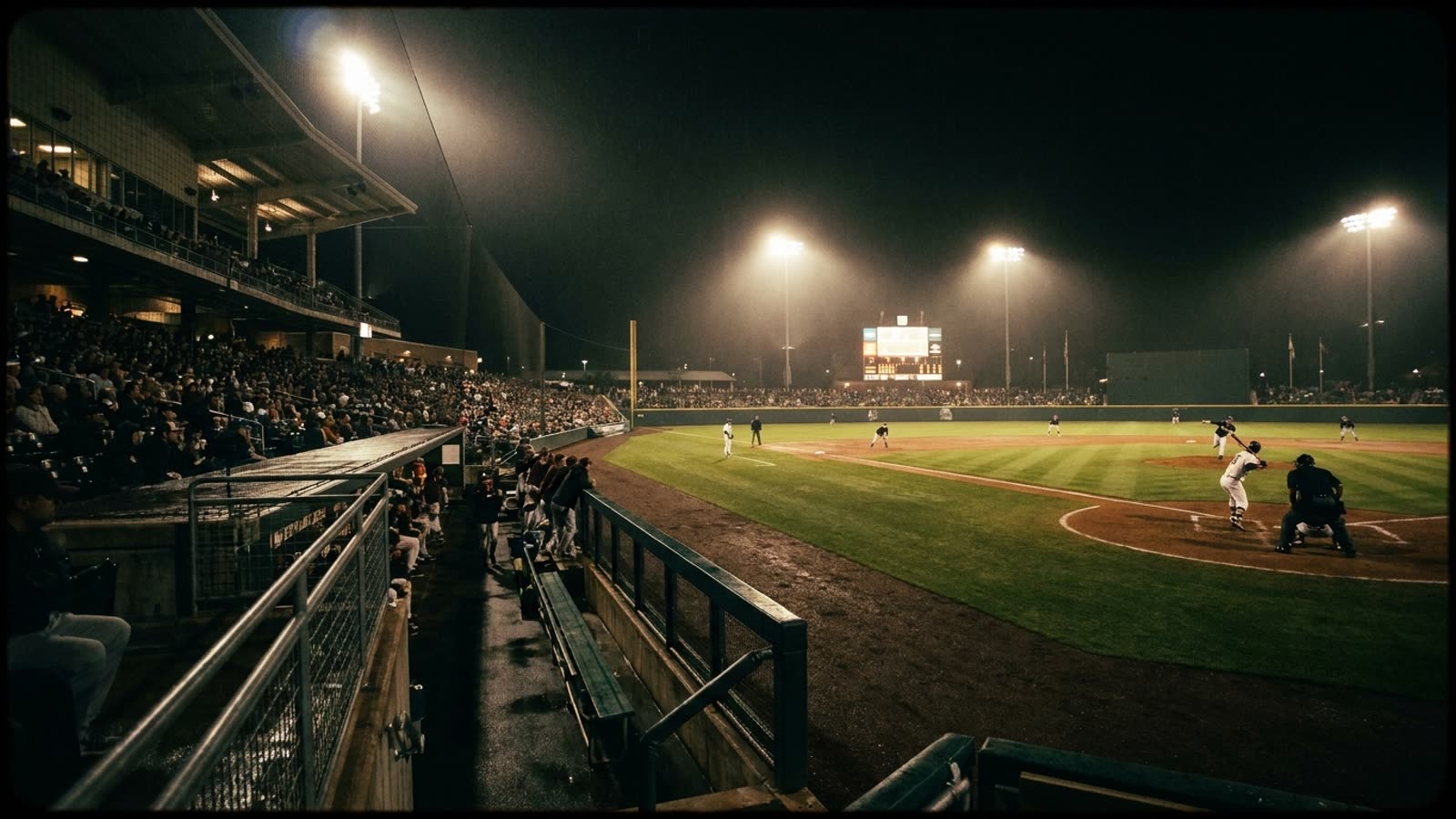
The NCAA baseball tournament has reached its most volatile inflection point: super regionals, where best-of-three series determine which eight programs advance to Omaha and which go home wondering what might have been. It is the stage where favorites die with alarming regularity and where programs that barely squeaked into the field suddenly look like destiny's chosen.
This weekend's matchups will unfold across the country, each series carrying its own narrative weight. The format—two wins to advance, hosted by the higher seed—creates a crucible that rewards neither pure talent nor home-field advantage as reliably as one might expect. College baseball's postseason has always been a humbling exercise for prognosticators.
The format's beautiful cruelty
Unlike the NFL's single-elimination drama or college basketball's one-and-done madness, baseball's super regionals occupy a peculiar middle ground. Three games is enough to let the better team assert itself—but also just enough rope for an underdog to steal two close ones and vanish into the Nebraska night. The sport's inherent randomness, where a single pitcher's hot weekend can neutralize months of offensive dominance, makes these series genuinely unpredictable.
The programs that thrive in this environment tend to share certain characteristics: deep pitching staffs that can absorb the compressed schedule, experienced rosters that have survived regional chaos before, and coaches who understand when to ride a hot hand versus when to stick to the plan. None of these qualities guarantee anything.
What Omaha means in 2026
The College World Series remains one of American sports' more peculiar institutions—a double-elimination tournament held in a mid-sized Nebraska city that somehow captures the attention of baseball purists every June. For the programs that reach it, the experience often defines careers. For the ones that fall short this weekend, the what-ifs will linger.
The super regional round also serves as a useful reminder of college baseball's strange economic reality. These are not revenue-generating juggernauts like football or basketball programs. Most exist in a perpetual state of budget anxiety, which makes the sport's competitive balance—genuine parity born partly of financial constraints—one of its more appealing features.
Our take
College baseball's postseason format is the best in amateur athletics precisely because it refuses to guarantee anything. The super regional round will produce heartbreak and euphoria in roughly equal measure, and by Sunday night, eight fan bases will be booking flights to Omaha while eight others will be left to contemplate the cruelty of a sport where one bad inning can erase an entire season's work. That is not a bug; it is the entire point.