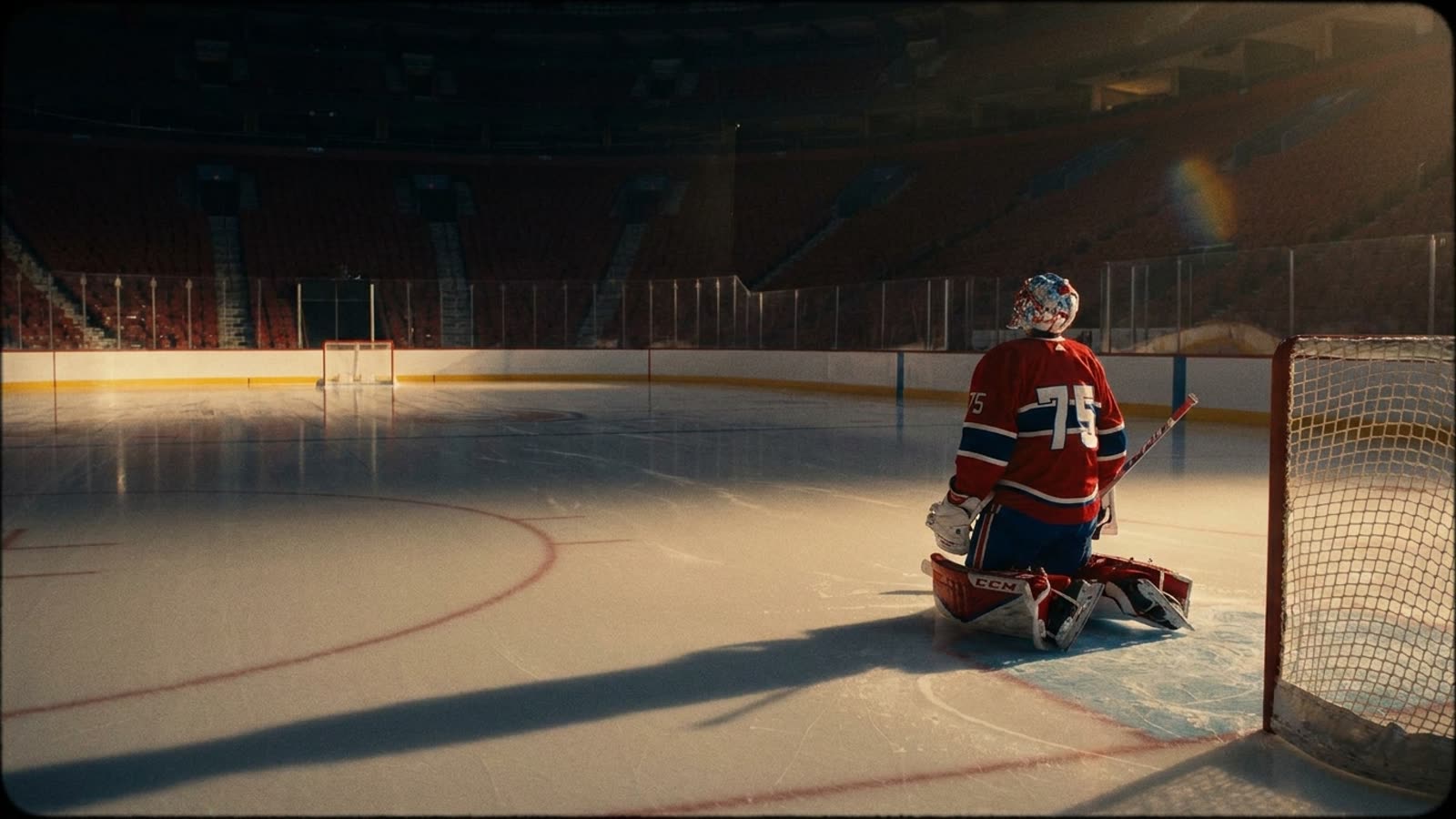
Two franchises that spent decades as afterthoughts in traditional hockey markets now meet for the sport's ultimate prize, and both arrived here the same way: by trusting their netminders to steal games their skaters couldn't.
The Panthers and Hurricanes represent a stylistic convergence that would have seemed improbable a generation ago. Neither roster features a generational offensive talent. Neither plays the grinding, board-battle hockey that defined championship teams of the early 2000s. Instead, both clubs have built around transition speed, defensive structure, and—most critically—goaltenders who have elevated their games precisely when elimination loomed.
The Bobrovsky question
Sergei Bobrovsky's career has been defined by inconsistency at the moments that matter most. Two Vezina Trophies established his regular-season brilliance, but playoff disappointments in Columbus and early struggles in Florida created a narrative he seemed destined never to escape. Last year's Cup run began to rewrite that story; this postseason has continued the revision. The 37-year-old has posted a .921 save percentage through three rounds, including a 42-save performance in the Eastern Conference semifinal clincher against the Rangers. Age has not diminished his athleticism so much as refined his positioning—he is playing smaller, more economical hockey, trusting his angles rather than relying on desperation athleticism.
Carolina's structure
The Hurricanes counter with a system designed to minimize high-danger chances before they develop. Rod Brind'Amour's defensive scheme funnels shots to the perimeter, and Andersen has been ruthlessly efficient at stopping what reaches him. Carolina allowed the fewest scoring chances per game of any remaining playoff team, a testament to a blue line that includes Jaccob Slavin and Brent Burns operating at peak effectiveness. The question is whether Florida's speed can disrupt that structure—the Panthers generated more odd-man rushes than any team in the Western Conference bracket, a weapon that could prove decisive if Carolina's forwards cannot match their pace through the neutral zone.
Historical stakes
For Florida, a second consecutive championship would cement the franchise's transformation from perpetual also-ran to legitimate dynasty. For Carolina, a title would validate a decade of patient rebuilding and represent the organization's first Cup since 2006. The markets may lack the television appeal of Original Six matchups, but the quality of play promises to compensate. Both teams finished the regular season in the top five in expected goals percentage; both have navigated the playoffs without a seven-game series.
Our take
This is the final the NHL should want even if it is not the final NBC executives dreamed of. Two well-constructed rosters, two excellent coaches, two goaltenders playing their best hockey at the right time. The Panthers are slight favorites by virtue of experience and Bobrovsky's recent form, but Andersen has been the better statistical performer this postseason. Expect a low-scoring, tightly contested series that rewards whichever team can generate one or two more quality chances per game. Goaltending will not merely influence this series—it will define it.