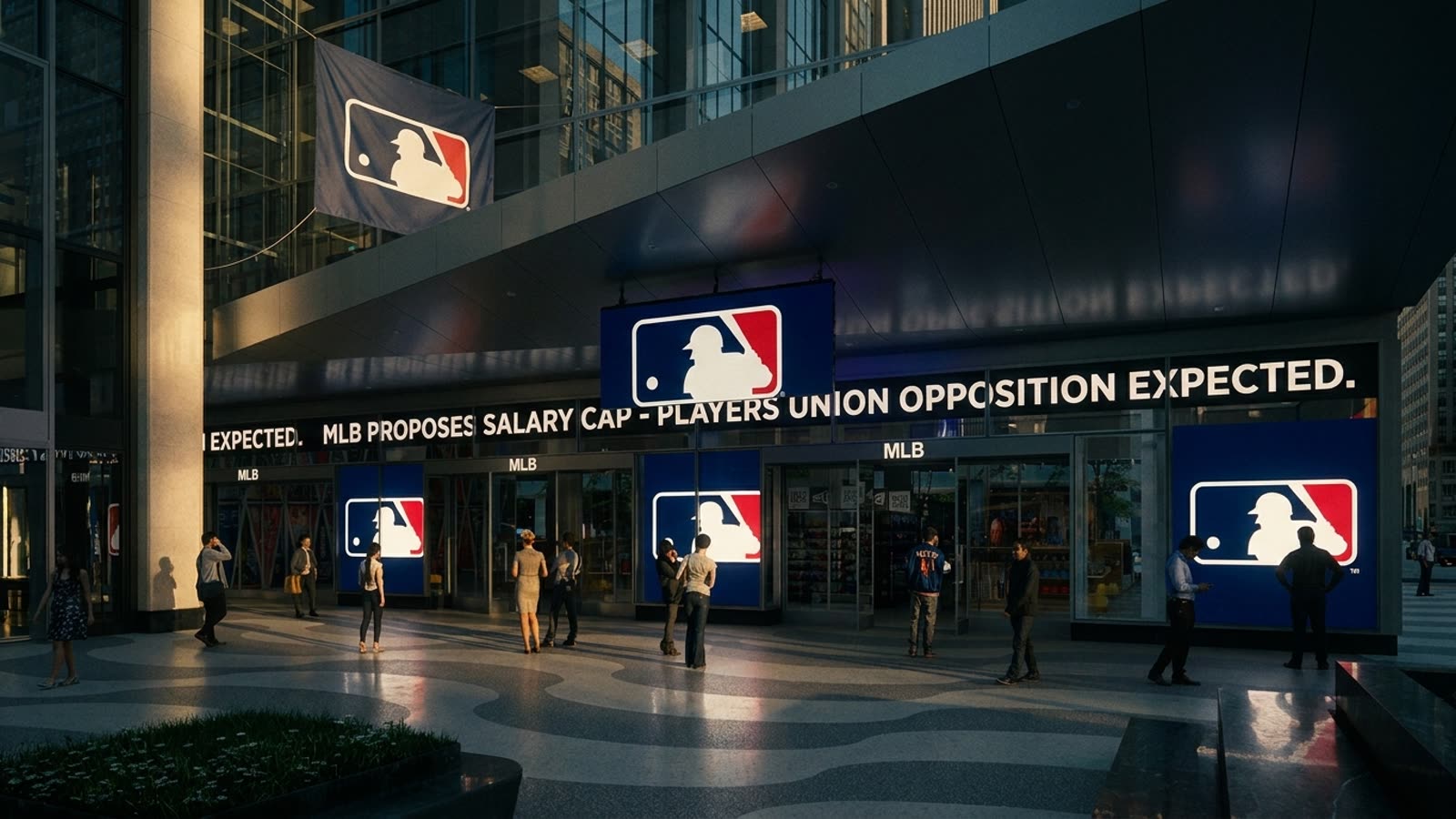
Major League Baseball has floated a salary cap proposal to the Players Association, marking the first formal attempt to impose hard spending limits since the catastrophic 1994 strike that wiped out a World Series and nearly broke the sport. The timing is curious: revenues are at record highs, franchise valuations have never been stronger, and the luxury tax already functions as a soft cap that most teams treat as a ceiling. So why are owners picking this fight now?
The answer lies in the widening chasm between baseball's haves and have-nots. The Dodgers, Yankees, and Mets operate in a different financial universe than the Athletics, Rays, and Guardians. Revenue sharing and the competitive balance tax were supposed to narrow that gap; instead, they've become line items that big-market teams budget around while small-market clubs pocket the checks and cry poor. A hard cap, the owners argue, would force competitive balance by preventing the richest franchises from simply outspending everyone else.
The union's institutional memory
The MLB Players Association has rejected salary caps for half a century, and that institutional memory runs deep. The 1994 strike lasted 232 days precisely because players refused to accept spending limits, and they eventually won when owners capitulated without extracting the cap they'd demanded. Every subsequent CBA negotiation has featured some version of this dance, and every time the union has held firm. The current leadership under Tony Clark has shown no appetite for concessions on core economic issues.
What makes this proposal particularly provocative is the backdrop: players have watched their share of league revenue decline even as the overall pie has grown. The luxury tax threshold has risen, but so have revenues, meaning owners are capturing an ever-larger slice. A hard cap would formalize that dynamic, locking in a fixed percentage for labor while owners retain the upside of future growth.
Why now?
The current CBA runs through 2026, meaning any cap proposal is positioning for the next round of negotiations. Owners may be testing the waters, gauging public reaction and union resolve before the real bargaining begins. They may also be responding to pressure from smaller-market owners who feel they're subsidizing the Dodgers' payroll without any realistic chance of competing.
There's also a generational shift underway. Many current players weren't born when the 1994 strike happened. The union's institutional memory is strong, but individual players may be more amenable to cap structures if they come with guaranteed revenue floors and expanded rosters. The NBA and NFL have demonstrated that caps can coexist with robust player compensation—though both leagues also have far more extensive revenue sharing than baseball currently employs.
Our take
This proposal will go nowhere in its current form, and everyone involved knows it. But that's not really the point. Owners are establishing a negotiating position, signaling to their smaller-market partners that they're willing to fight, and perhaps hoping to extract lesser concessions by starting with an extreme ask. The union will reject it loudly, invoke the ghost of 1994, and prepare for what promises to be a contentious CBA negotiation. Baseball's labor peace has held for three decades precisely because both sides remember what happened when it didn't. That memory is about to be tested.