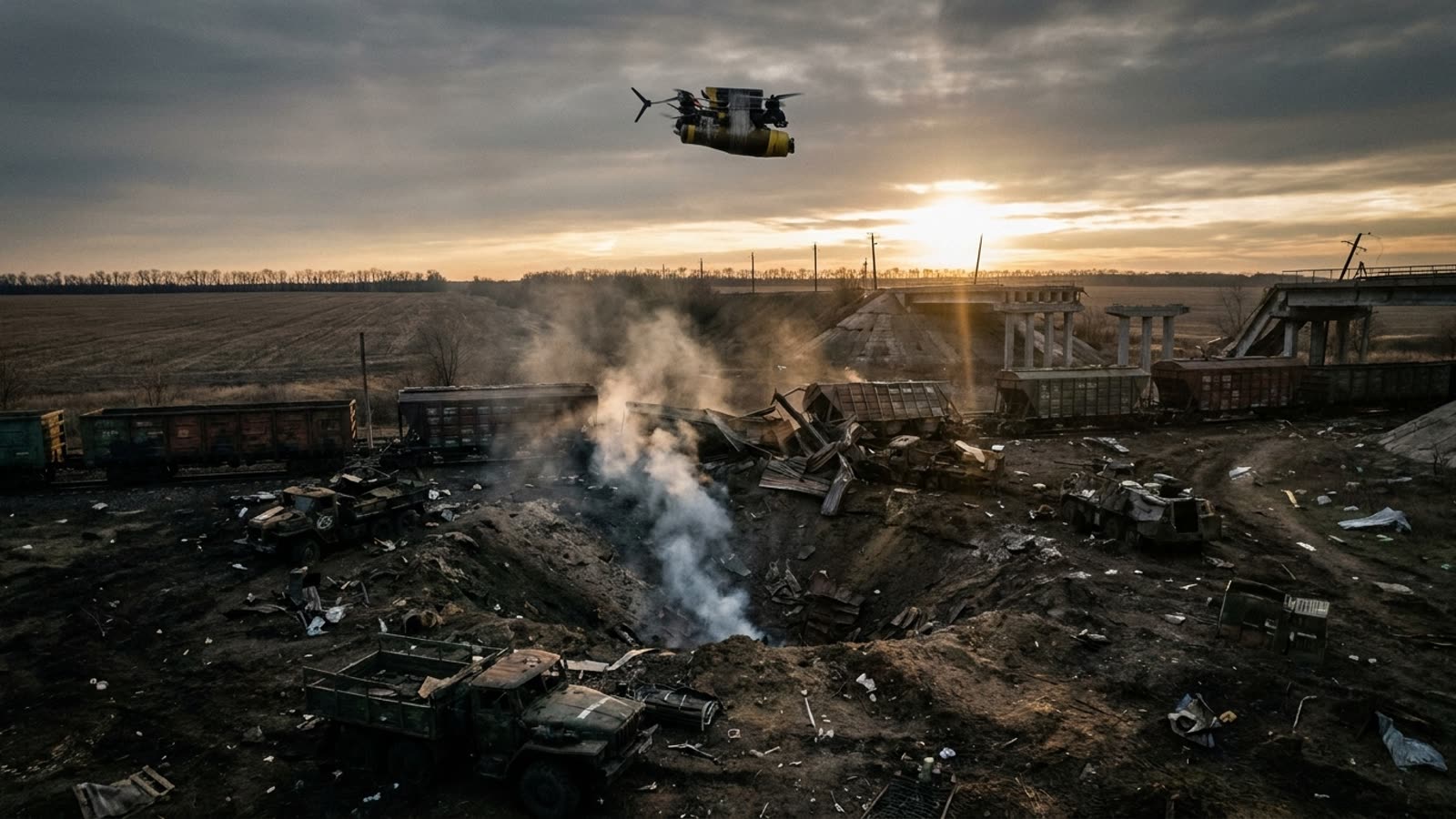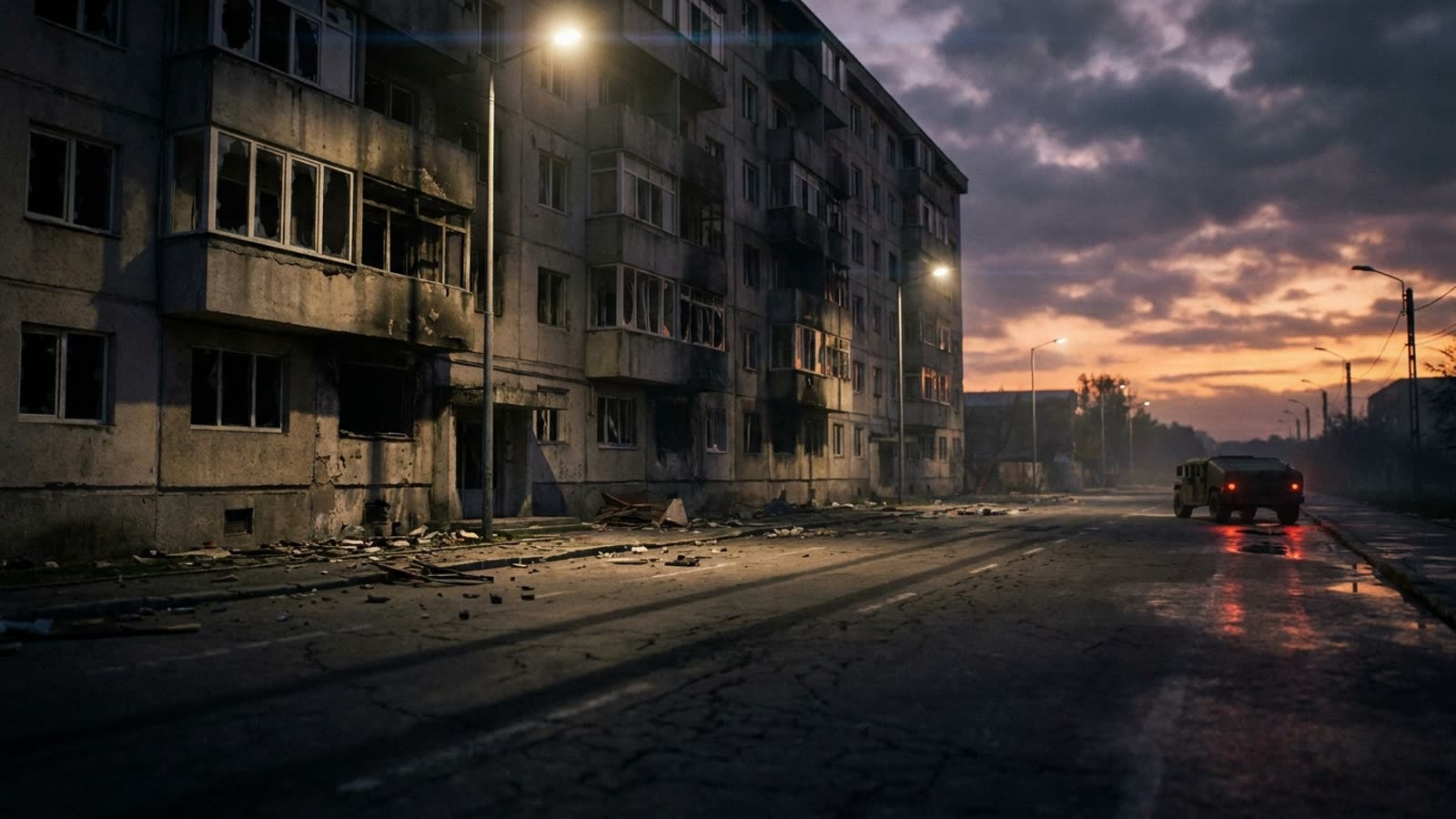
A Russian drone slammed into an apartment building in Romania early Thursday, wounding two civilians and marking what appears to be the first direct Russian strike causing casualties on NATO territory since the war began. The alliance's response—condemnation without consequence—reveals how thoroughly the West has recalibrated its tolerance for Russian aggression.
The incident occurred in the Romanian town of Plauru, near the Ukrainian border, where stray ordnance from Russia's relentless drone campaigns has become an increasingly regular hazard. NATO members issued a joint statement condemning Russia "in the strongest terms," but stopped well short of invoking Article 5 or announcing any material response. Romania summoned the Russian ambassador. That appears to be the extent of it.
The normalization problem
This is not the first time Russian munitions have crossed into NATO airspace—drones and missiles have landed in Poland and Romania multiple times since 2022—but it is the first confirmed instance of civilian casualties on alliance soil. The distinction matters, or at least it should. NATO's founding treaty commits members to treat an attack on one as an attack on all. The language does not include caveats for accidents, proximity to active war zones, or the inconvenience of escalation.
Yet the alliance has developed an informal doctrine of strategic ambiguity around such incidents. Each incursion is treated as an isolated event, investigated thoroughly, condemned appropriately, and then filed away. The cumulative effect is a slow erosion of deterrence. Moscow learns that the cost of imprecision—or perhaps precision disguised as imprecision—is diplomatic theater rather than military response.
Romania's difficult position
Bucharest finds itself in an unenviable spot. The country has been a reliable NATO partner, hosting Aegis Ashore missile defense installations and serving as a crucial logistics hub for Western support to Ukraine. Its Black Sea coastline makes it strategically vital and geographically vulnerable. Romanian officials have repeatedly called for enhanced allied presence, but the response has been incremental at best.
The domestic politics are delicate. Romania's population broadly supports NATO membership but has limited appetite for direct confrontation with Russia. The government must balance its alliance obligations against a public that did not sign up to have its apartment buildings struck by foreign ordnance. Thursday's incident will intensify calls for better air defense coverage, but whether NATO delivers remains uncertain.
The Article 5 question nobody wants to answer
The treaty's collective defense provision was designed for a different era—one of clear-cut invasions rather than hybrid warfare, plausible deniability, and weaponized ambiguity. Russia has become expert at operating in the gray zones, and NATO has not developed a coherent framework for responding. Each drone strike that goes unanswered raises the threshold for what would actually trigger a unified response.
Alliance officials will argue, correctly, that invoking Article 5 over a wayward drone could lead to catastrophic escalation. But the alternative—treating repeated violations as unfortunate accidents—creates its own escalation ladder. It signals that NATO's eastern flank is a buffer zone where the rules are negotiable.
Our take
NATO was built on the premise that an attack on Lisbon would be treated the same as an attack on Washington. Thursday's strike on Plauru suggests the premise no longer holds, if it ever did. The alliance's credibility rests not on its ability to win a war with Russia—that outcome was never in doubt—but on its willingness to define and defend clear boundaries. Two wounded Romanian civilians just learned where those boundaries actually are, and they are considerably further east than the treaty text suggests.