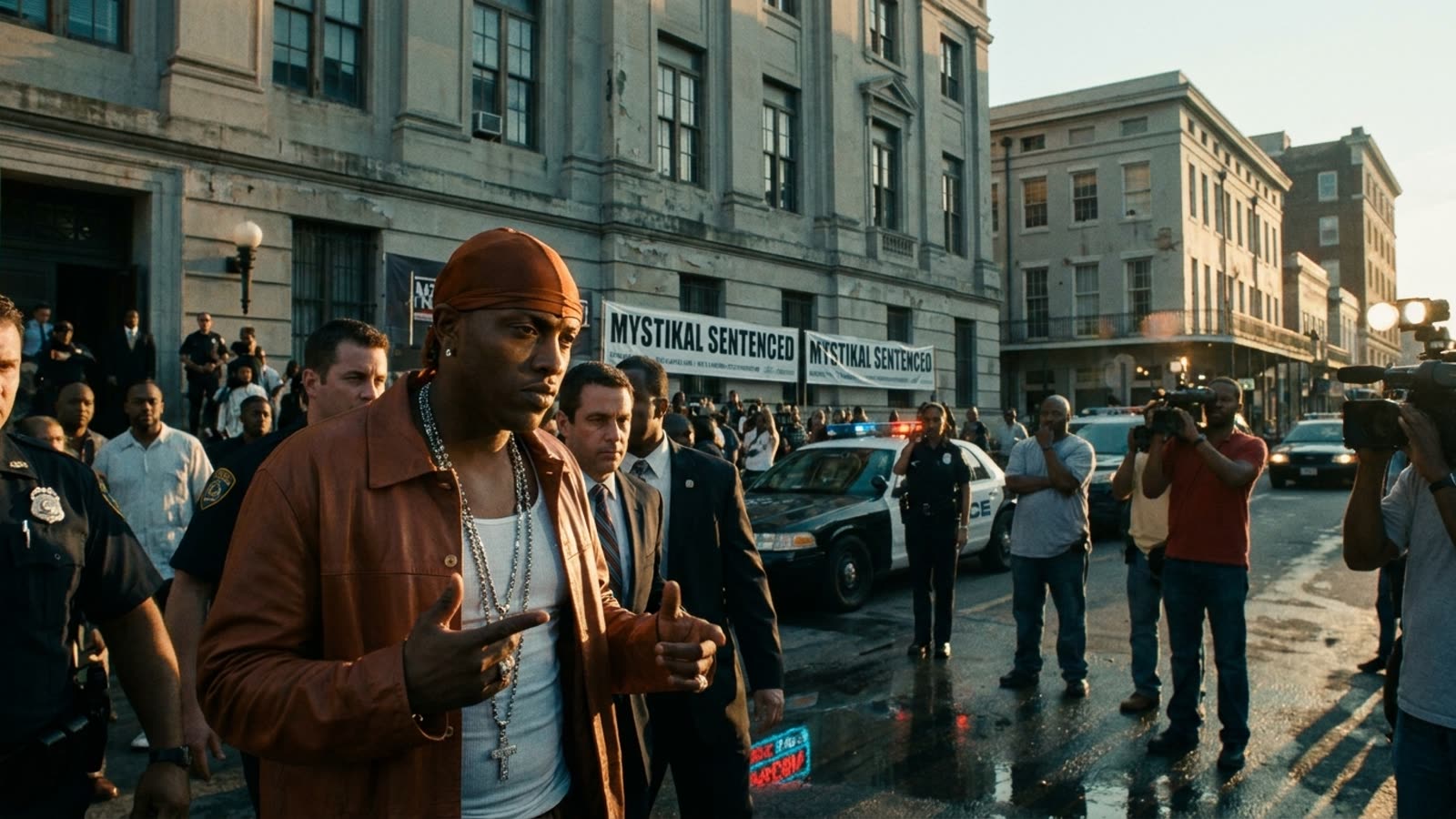
The math on Mystikal's career has always been brutal: for every platinum plaque, there has been a corresponding legal catastrophe. On Monday, a Louisiana judge made the arithmetic permanent, sentencing the 54-year-old rapper—born Michael Tyler—to twenty years in prison for first-degree rape, a conviction that effectively ends any prospect of a late-career revival.
The sentence arrives more than four years after Tyler's 2022 arrest in Ascension Parish, Louisiana, on charges of first-degree rape, domestic abuse battery, and other offenses. He had been free on bond while the case crawled through the system, occasionally surfacing at festivals and on features, his presence a reminder of how selectively the music industry enforces its stated values.
A pattern the industry chose to ignore
This is not Tyler's first conviction for sexual violence. In 2003, he pleaded no contest to sexual battery in a separate case and served six years in prison. Upon release, he was welcomed back with open arms—festival bookings, guest verses, a general willingness to treat his past as ancient history. The "Shake Ya Ass" hitmaker's rehabilitation was framed as a redemption story, even as the underlying conduct was never meaningfully addressed.
The entertainment industry's appetite for second chances is, in theory, admirable. In practice, it often functions as a selective clemency program, extended generously to those whose catalogs remain commercially viable and withheld from those who lack leverage. Tyler's case is instructive: his nineties hits retained nostalgic value, and that value translated into continued access.
What the sentence means for legacy acts
Twenty years is a de facto life sentence for a man in his mid-fifties. Tyler will be in his seventies before he is eligible for release, assuming he survives incarceration. The streaming era has been kind to legacy artists, allowing their catalogs to generate passive income indefinitely, but there is no mechanism for rehabilitating a reputation this thoroughly destroyed.
The broader question is whether the industry will learn anything from the Mystikal case, or whether it will simply move on to the next nostalgia act, the next reunion tour, the next artist whose past is deemed sufficiently distant to ignore. The pattern suggests the latter.
Our take
There is no pleasure in watching a career end this way, but there is also no mystery about how we arrived here. The industry had decades of warning signs and chose, repeatedly, to look away. Mystikal's sentence is not a tragedy that befell him; it is a consequence that finally caught up. The only people who deserve sympathy in this story are the victims—and they have waited long enough for something resembling accountability.