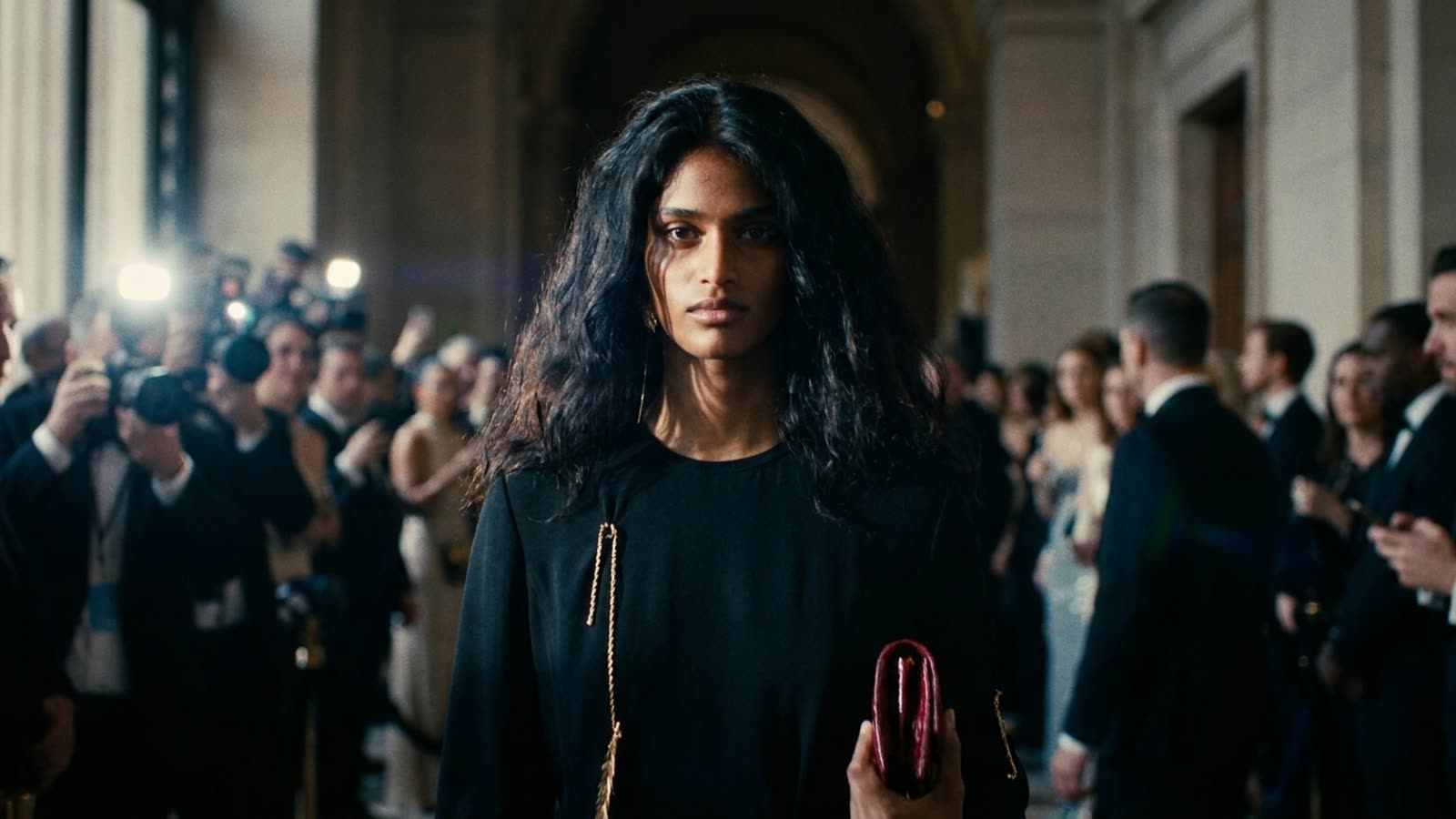
The Met Gala's unspoken contract with its guests is simple: arrive in something that will photograph. The more conceptual, the more unwearable, the more likely to spawn a thousand memes, the better. Bhavitha Mandava, the Indian model who made her debut at this year's event, appears to have read a different brief entirely—and the resulting discourse reveals more about fashion's anxieties around representation than it does about her outfit.
Mandava's look was, by Met standards, almost aggressively restrained. Where other attendees leaned into maximalist interpretations of the evening's theme, she chose something that wouldn't have looked out of place at a particularly elegant dinner party. The immediate reaction split along predictable lines: some praised her for refusing to treat the red carpet as costume theater, while others questioned whether an understated approach from one of the few Indian faces at the event constituted a missed opportunity.
The spectacle problem
The critique is not entirely without merit. The Met Gala has historically struggled with representation, and when a non-Western model does secure an invitation, there's an implicit expectation—fair or not—that she will use the platform to make a statement. The logic goes: if you're one of the few, you carry the weight of the many. Mandava's quiet elegance, by this reading, failed to leverage a rare moment of visibility.
But this framing places an impossible burden on any individual. The demand that underrepresented guests perform their culture loudly enough to register as representation, while Western attendees are free to wear whatever they like, is itself a form of othering. Mandava wore what she wanted to wear. The fact that this feels insufficient says more about the event's structural failures than her sartorial choices.
The quiet luxury paradox
There's also a class dimension to the debate that has gone largely unexamined. Quiet luxury—the Loro Piana-coded, logo-free aesthetic that has dominated fashion's upper echelons for the past few years—is typically read as sophisticated when worn by white Europeans. When a South Asian model adopts the same register, it's suddenly a question of whether she's being "Indian enough." The double standard is glaring.
Mandava's aesthetic has always leaned minimal. Her runway work favors clean lines and architectural simplicity. To expect her to arrive at the Met in a sari dripping with embroidery would be to ask her to perform a version of Indianness that isn't hers—a kind of cultural cosplay for the comfort of Western observers who want their diversity legible at a glance.
Our take
The real problem isn't Mandava's dress. It's that she was one of only a handful of Indian faces on a carpet that claims to celebrate global fashion. When representation is this thin, every individual choice gets freighted with collective meaning it cannot possibly bear. The solution isn't to police what underrepresented guests wear; it's to invite enough of them that no single outfit has to stand for an entire subcontinent. Until then, the debate will keep recurring, and it will keep missing the point.