The transition from professional athlete to media personality has become so common it barely registers as news anymore. But Marcellus Wiley's durability in the space—now spanning more than fifteen years since his playing days ended—offers a case study in why some former players build lasting broadcast careers while others become cautionary tales of awkward studio segments and cancelled contracts.
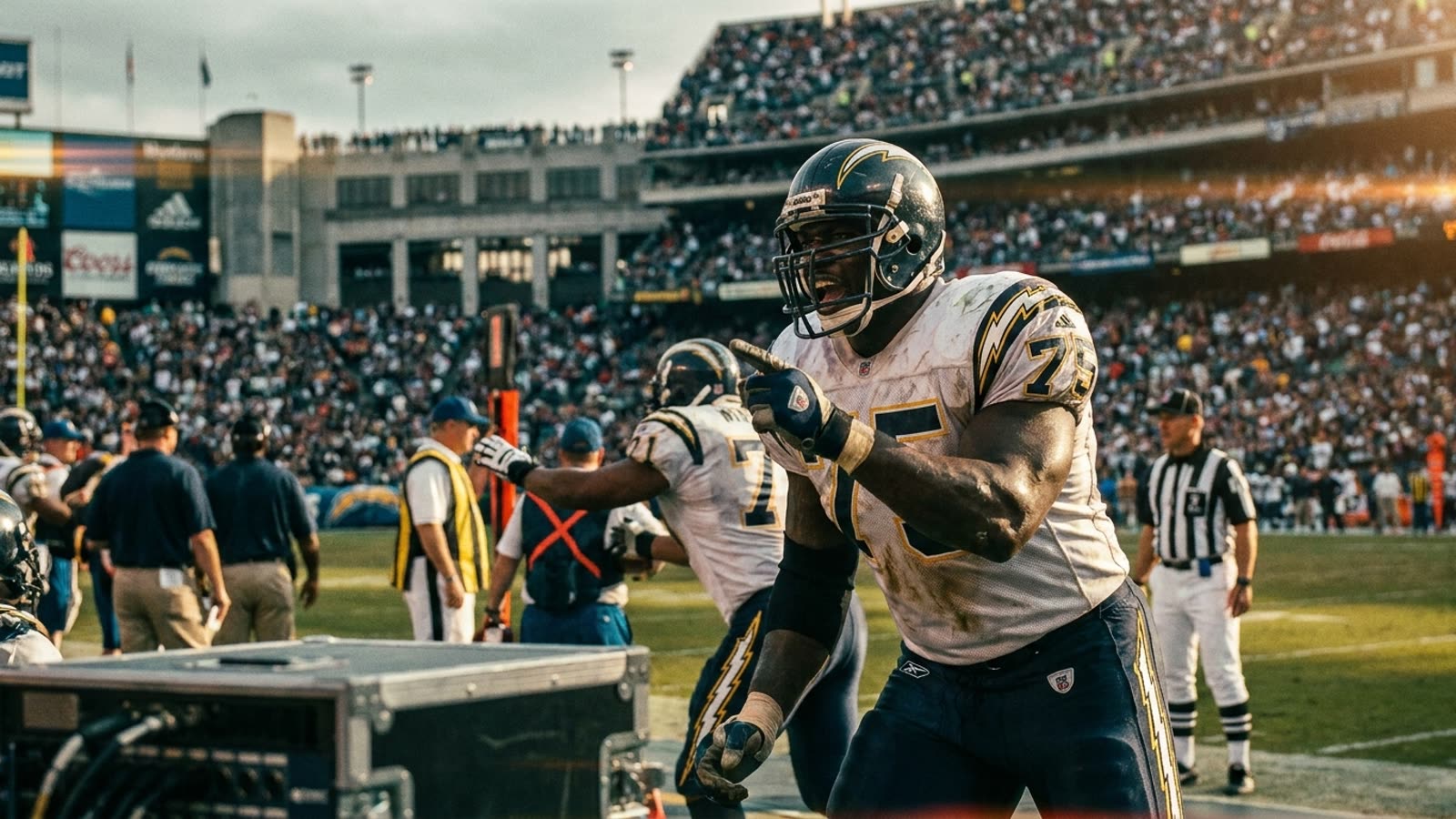
Wiley, who spent eleven seasons as a defensive end with the Bills, Chargers, Cowboys, and Jaguars, never made a Pro Bowl. He was competent, occasionally disruptive, and entirely forgettable in the way that most NFL careers are. His post-playing relevance, by contrast, has outlasted his on-field tenure by a considerable margin.
The articulation advantage
What separates Wiley from the parade of former athletes who stumble through their ESPN or Fox Sports auditions is something networks cannot teach: the ability to construct an argument in real time. His Columbia University education—he graduated with a degree in sociology before the NFL draft—gave him vocabulary and rhetorical structure that most locker rooms do not cultivate. When debate shows require someone to defend an unpopular position for seven minutes without resorting to "at the end of the day" or "it is what it is," Wiley can actually do it.
This matters more than networks publicly acknowledge. The dirty secret of sports media is that former players are hired for credibility but retained for competence. Shannon Sharpe has both. Skip Bayless has only the latter. Most ex-athletes have neither and wash out within three years.
The debate-industrial complex
Wiley's current home at Fox Sports, where he co-hosts "Speak," positions him squarely within the debate format that has dominated sports television since "First Take" proved that arguments generate more engagement than analysis. The model is simple: take two personalities with opposing views, add a moderator, and let them perform disagreement for an hour. Authenticity is optional; entertainment value is mandatory.
The former defensive end has proven surprisingly adaptable to this format, willing to stake out contrarian positions without the performative anger that makes some debate shows unwatchable. He disagrees without shouting, which in 2026 sports media qualifies as revolutionary restraint.
Our take
Marcellus Wiley will never be the biggest name in sports media, and that is precisely why he keeps getting renewed. Networks need reliable middle-class talent—people who show up prepared, hit their marks, and do not generate HR complaints. The NFL produces hundreds of former players every year; it produces perhaps a dozen who can do this job well. Wiley's longevity is not glamorous, but it is instructive: in a field littered with flameouts, showing up competent beats showing up famous.