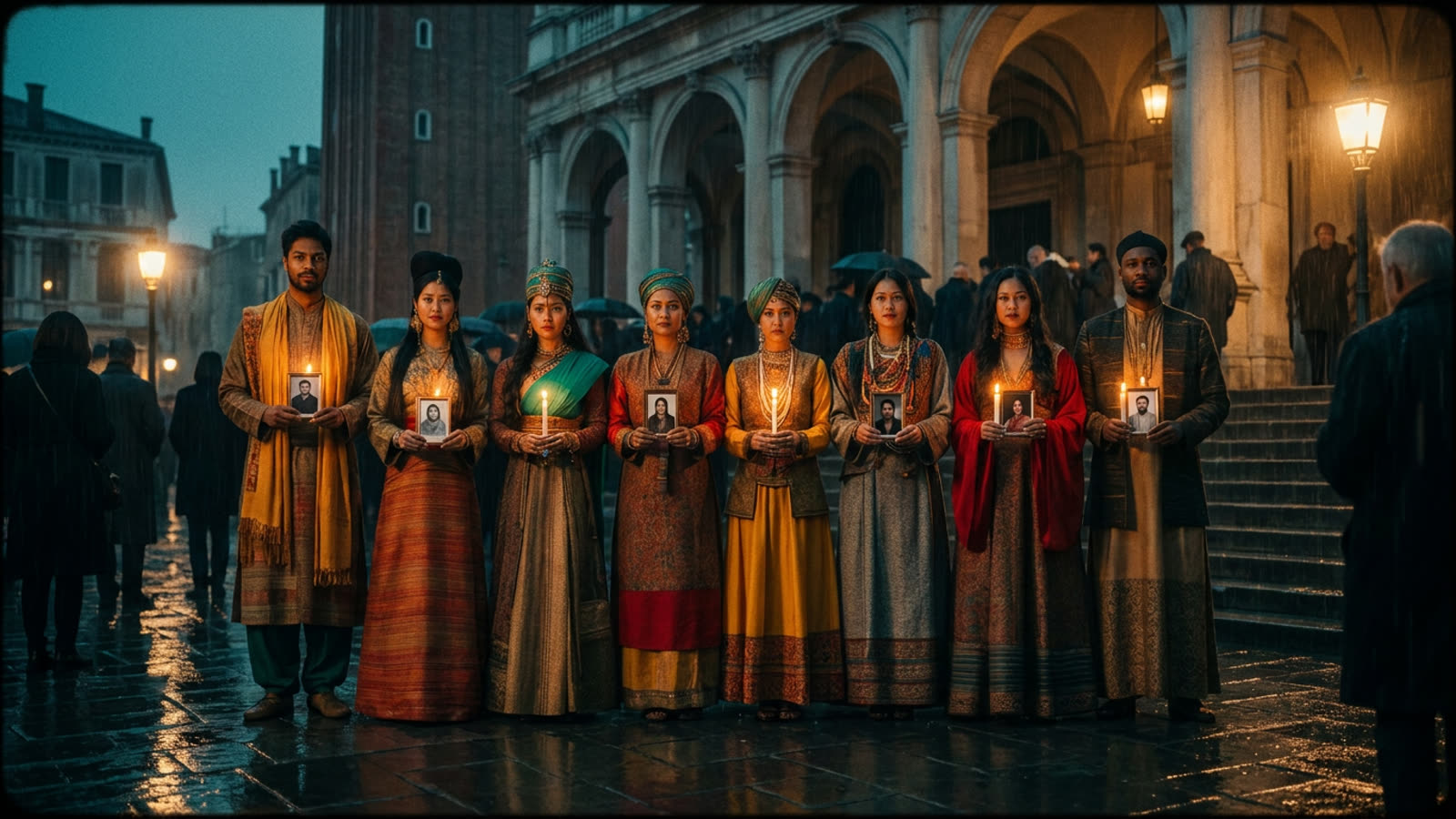
There was a time, not so long ago in historical terms, when the question of what to wear after six o'clock was not a question at all. It was settled. Men wore dinner jackets. Women wore gowns. The maitre d' enforced the rules with the quiet authority of a customs official, and nobody thought this was oppressive because nobody thought about it much at all. Dressing for dinner was simply what one did, like shaking hands or saying please.
That world is gone. The last bastions—a handful of restaurants in London and Paris, certain cruise ships, a few private clubs whose membership skews toward the actuarially concerning—now feel less like guardians of civilization than like historical reenactors, playing at a past that most diners under fifty have never experienced firsthand.
The long unraveling
The decline did not happen overnight. It began, as most cultural shifts do, with the young and the rich deciding they no longer needed to perform respectability for anyone. The 1960s loosened ties, literally. The 1970s introduced the disco shirt as acceptable evening wear. By the 1980s, the power suit had absorbed the dinner jacket's authority, and by the 1990s, the technology industry had made a billion-dollar argument that genius need not tuck in its shirt.
But the real death blow came from airlines. When first-class cabins stopped requiring jackets, when airport lounges began admitting passengers in athletic wear, the message was unmistakable: even the places that charged the most money no longer expected the old courtesies. If you could board a transatlantic flight in yoga pants, why would you change for the hotel restaurant?
What we lost, what we gained
The defenders of dress codes—and they do exist, often writing wistfully in British newspapers—argue that something valuable disappeared with the dinner jacket. Not merely aesthetics, but a shared language of occasion. Dressing up was a way of saying that this evening mattered, that the people at the table mattered, that pleasure itself was worth a small effort. The counterargument is obvious and powerful: comfort is democratic. The old codes were exclusionary, expensive, and frequently ridiculous. Nobody needs to sweat through a three-course meal in a wool jacket to prove they take food seriously.
Both sides are correct, which is why the argument never ends. What is harder to dispute is that the collapse of dress codes has been accompanied by a broader collapse of shared social rituals. We no longer agree on what occasions deserve marking, or how to mark them. The result is a kind of sartorial anomie—not freedom exactly, but a permanent low-grade uncertainty about whether one is dressed appropriately for anything.
The holdouts
And yet. A curious counter-movement has emerged among younger diners who never experienced the old regime. Some restaurants in New York and Tokyo have begun quietly reinstating dress codes, not as throwbacks but as experiences. The appeal is not nostalgia—these diners are too young for that—but novelty. In a world of infinite casual options, being told what to wear has become, paradoxically, a luxury.
Whether this represents a genuine revival or merely a niche aesthetic preference remains unclear. The numbers are small. The cultural momentum still favors comfort. But the very existence of these holdouts suggests that the human appetite for ritual, for occasions that feel different from ordinary life, has not entirely disappeared. It has merely gone underground, waiting for permission to dress up again.
Our take
The dinner jacket is not coming back, and that is probably fine. But something should replace it—some shared signal that says this meal, this evening, these people are worth a small act of intention. The problem with pure comfort is that it flattens everything. Every meal becomes the same meal. Every evening becomes every other evening. The old dress codes were imperfect instruments, but they solved a real problem: how to make an occasion feel like an occasion. We have not yet found a better answer.