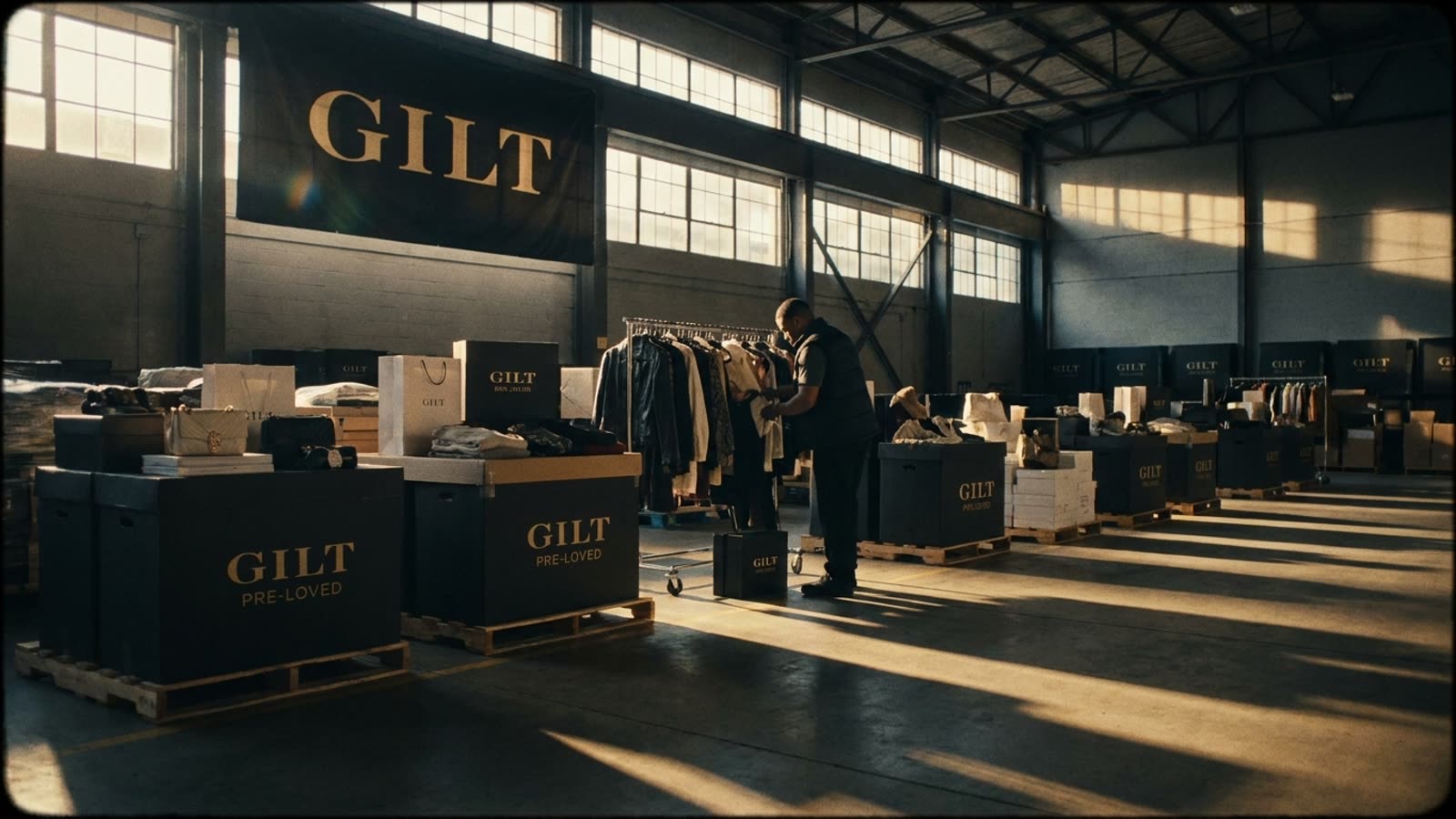
The flash-sale model that once made Gilt Groupe the darling of venture capital is officially a relic. The company, which pioneered the thrill of time-limited designer discounts in 2007, has completed its metamorphosis into something far less revolutionary and far more durable: a consignment platform for secondhand luxury goods, now stocked with pieces from Hollywood stylists and celebrity closets.
The shift, reported this week, represents more than a corporate pivot. It's an admission that the original premise—creating artificial scarcity around new inventory—has been outmaneuvered by a simpler proposition: genuine scarcity, the kind that comes from one-of-a-kind vintage Chanel bags and pre-worn Cartier watches.
The economics of someone else's taste
Gilt's new model capitalizes on a supply chain that costs nothing to manufacture: wealthy people's regret. The platform now sources handbags, jewelry, watches, and accessories from consignors who once paid retail and now want liquidity. For buyers, the appeal is authentication and provenance—two things the broader resale market still struggles to guarantee at scale.
The celebrity angle is strategic rather than substantive. While the company emphasizes pieces from "Hollywood's most coveted labels," the real draw is the infrastructure: Gilt's existing customer base of affluent shoppers who already trust the brand, now redirected toward merchandise with higher margins and lower inventory risk. The consignment model means Gilt holds no stock until it sells, a capital-light approach that would have seemed beneath the company in its 2011 peak, when it was valued at over one billion dollars.
A market that swallowed its pioneers
Gilt's trajectory mirrors the broader consolidation of luxury e-commerce. Acquired by Hudson's Bay Company in 2016 for a fraction of its peak valuation, then sold again to Rue La La in 2018, the brand has spent nearly a decade searching for relevance. The resale pivot places it in direct competition with The RealReal, Vestiaire Collective, and Rebag—platforms that built their entire identities around secondhand luxury rather than arriving there by elimination.
The timing is notable. The global secondhand luxury market is projected to reach nearly fifty billion dollars by 2028, growing faster than the primary luxury market. Younger consumers, particularly those who came of age during climate discourse and economic uncertainty, show less attachment to buying new and more interest in the treasure-hunt dynamics of resale. Gilt, in a sense, is returning to its original emotional proposition—the thrill of the find—but with inventory that actually justifies the excitement.
What the stylists know
The Hollywood sourcing strategy reveals something about how the fashion ecosystem now functions. Celebrity stylists, once gatekeepers of sample closets and brand relationships, increasingly operate as arbitrageurs. Pieces worn once for a premiere or editorial shoot—gifted, borrowed, or purchased at steep discount—flow back into the market through consignment channels. The provenance adds value; a bag carried by someone famous, even briefly, commands a premium that a department store floor model cannot.
This is not entirely new. What's new is the formalization. Platforms like Gilt are building direct relationships with stylists and estates, creating pipelines for merchandise that once circulated through informal networks or charity auctions. The result is a more liquid market for luxury goods, where the distance between red carpet and resale listing continues to shrink.
Our take
Gilt's reinvention is less a comeback than a concession. The company that once promised to democratize access to luxury by making it faster has discovered that the real democratization happens when luxury becomes used. There's something fitting about a brand built on manufactured urgency finding its second act in the unhurried business of consignment—where the only countdown that matters is how long someone's taste lasts before they're ready to sell.