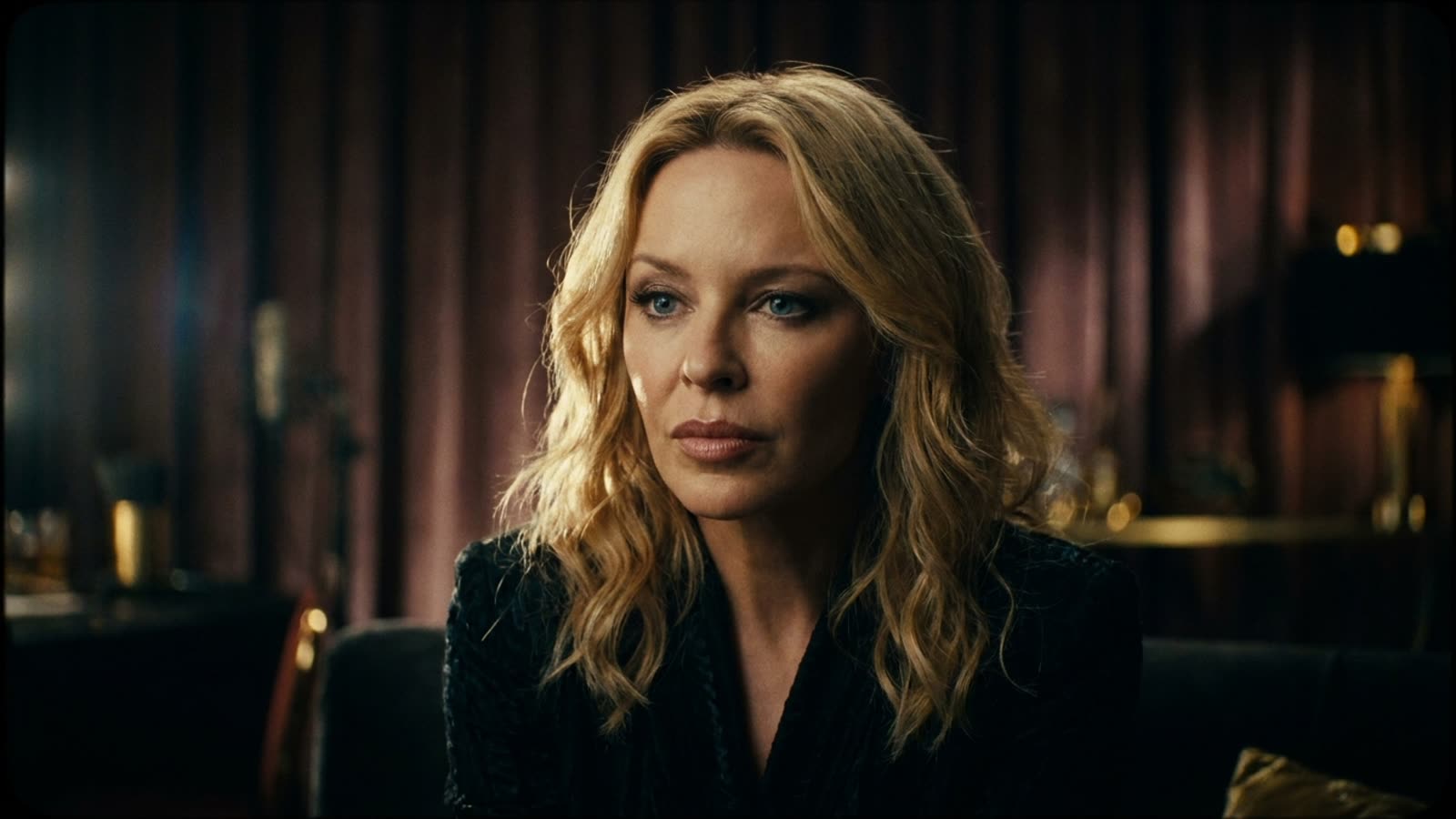
Kylie Minogue has spent thirty-seven years in pop music by mastering the art of controlled revelation—giving audiences just enough intimacy to feel connected while maintaining the professional distance that separates survivors from casualties. Her decision to open up for a Netflix docuseries, announced this week at Cannes, represents not vulnerability but its opposite: a carefully timed move to cement her narrative while she still commands the room.
The timing is surgical. Minogue is riding the highest commercial wave of her late career, with "Padam Padam" having delivered the kind of genuine crossover moment that eludes most legacy artists. She won a Grammy. She headlined festivals. She became a TikTok sound. To document this period is to document triumph, not decline—a luxury few pop stars of her generation can claim.
The reinvention industrial complex
Minogue's interview with Variety this week offered a masterclass in managing the reinvention narrative. She spoke of refusing to be "boxed in," of navigating the brutal tabloid machinery of the 1990s, of giving herself "a chance" when others might have retreated. These are familiar beats from the celebrity redemption playbook, but Minogue delivers them with the polish of someone who has rehearsed her own mythology until it gleams.
What distinguishes her from peers who have attempted similar documentary projects is her apparent lack of desperation. Madonna's recent efforts to control her story have felt defensive; Britney's memoir read as therapeutic necessity. Minogue's docuseries arrives from a position of strength, which paradoxically makes it more likely to succeed as entertainment rather than damage control.
The Netflix calculation
For the streamer, Minogue represents a specific demographic play: millennials who grew up with "Can't Get You Out of My Head," Gen X audiences who remember "Locomotion," and younger viewers who discovered her through last year's viral moment. She is one of the few artists who can claim genuine multi-generational recognition without the baggage of scandal or decline that typically accompanies such longevity.
The format also allows Netflix to continue its lucrative pivot toward music documentaries that function as extended promotional vehicles while maintaining the veneer of artistic legitimacy. Minogue gets legacy architecture; Netflix gets content that markets itself.
Our take
Minogue's genius has always been knowing precisely how much of herself to offer and when. The docuseries will almost certainly be charming, professionally produced, and reveal exactly nothing she hasn't already decided to share. That's not a criticism—it's the reason she's still here when so many of her contemporaries are not. She has survived by treating her own story as intellectual property to be managed rather than confessed. The cameras will capture whatever Kylie Minogue wants them to capture, and that controlled generosity is precisely what her fans have always loved about her.