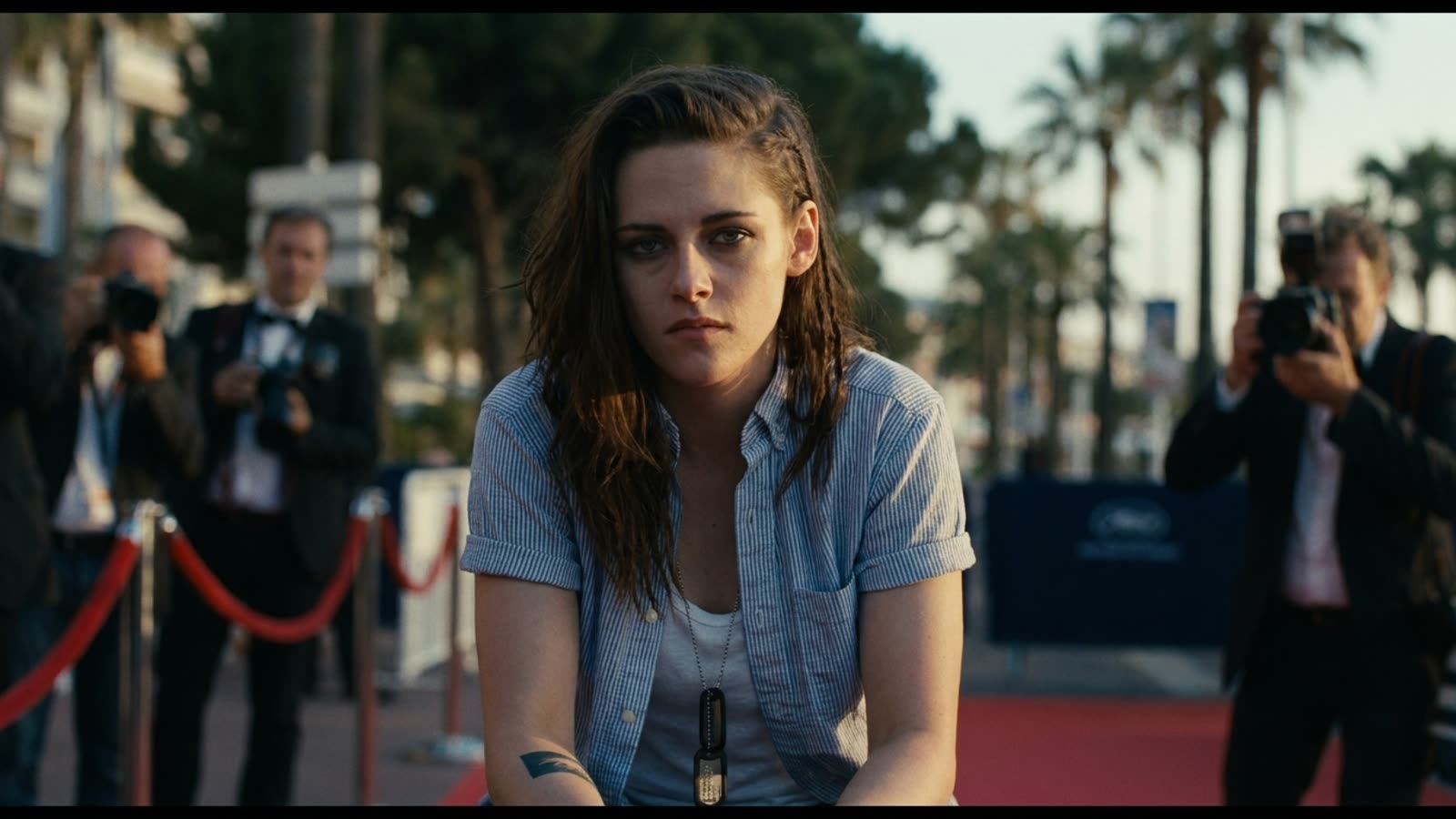
Kristen Stewart has never been particularly interested in playing nice with the industry that made her famous. But her comments at Cannes this weekend—delivered while promoting Quentin Dupieux's absurdist comedy "Full Phil"—landed with unusual force, crystallizing a frustration that has been simmering across the independent film world for years.
"There needs to be less making billionaires more fucking billionaires," Stewart told press, articulating in one profane sentence what countless filmmakers have danced around in polite interviews about "creative freedom" and "artistic vision." She described herself as "so sick" of the studio system, a remarkable admission from someone who spent her formative years inside the Twilight franchise machine.
The Dupieux escape route
Stewart's choice of vehicle for this particular message is telling. She signed onto "Full Phil" before reading the script, drawn entirely by Dupieux's reputation for surreal, low-budget provocations that operate entirely outside traditional Hollywood logic. The French filmmaker—who once made a movie about a sentient, murderous car tire—represents everything the streaming-era studio system is not: cheap, weird, uncompromised, and utterly uninterested in four-quadrant appeal.
This is the path Stewart has been carving since her 2021 Oscar nomination for "Spencer." She has systematically gravitated toward directors working at the margins—David Cronenberg, Kelly Reichardt, now Dupieux—building a filmography that functions as a sustained argument against the blockbuster industrial complex.
Cannes as sanctuary and contradiction
The Croisette has always positioned itself as a refuge for cinema that cannot survive the multiplex. Yet the festival exists in an increasingly awkward relationship with the very forces Stewart is criticizing. Streamers now dominate the market; studio tentpoles still open the proceedings; and the beach parties remain sponsored by the same luxury conglomerates whose parent companies own the entertainment empires under fire.
Stewart's comments arrive during a Cannes that has been notably receptive to filmmaker grievances. The festival's continued resistance to Netflix's theatrical demands, its embrace of directors like Dupieux who work outside the system entirely—these choices suggest an institution trying to maintain relevance as a counterweight to consolidation, even as it depends on industry money to function.
The celebrity investor paradox
Meanwhile, elsewhere at this year's festival circuit, Serena Williams declared that her venture capital career "is going to be much bigger than anything I've ever done before." The juxtaposition is almost too neat: one celebrity rejecting the wealth-concentration machinery, another embracing it as a second act. Both positions are coherent; both are available to people with sufficient fame and resources to choose their path.
Our take
Stewart's critique is not new, but her willingness to deliver it without diplomatic cushioning is refreshing in an industry where even the most independent-minded stars tend to hedge. Whether her words translate into structural change is another matter entirely—the billionaires she's criticizing are not losing sleep over one actor's Cannes interview. But in a festival increasingly defined by the question of who cinema actually serves, Stewart has at least made her answer unambiguous. That counts for something, even if it changes nothing.