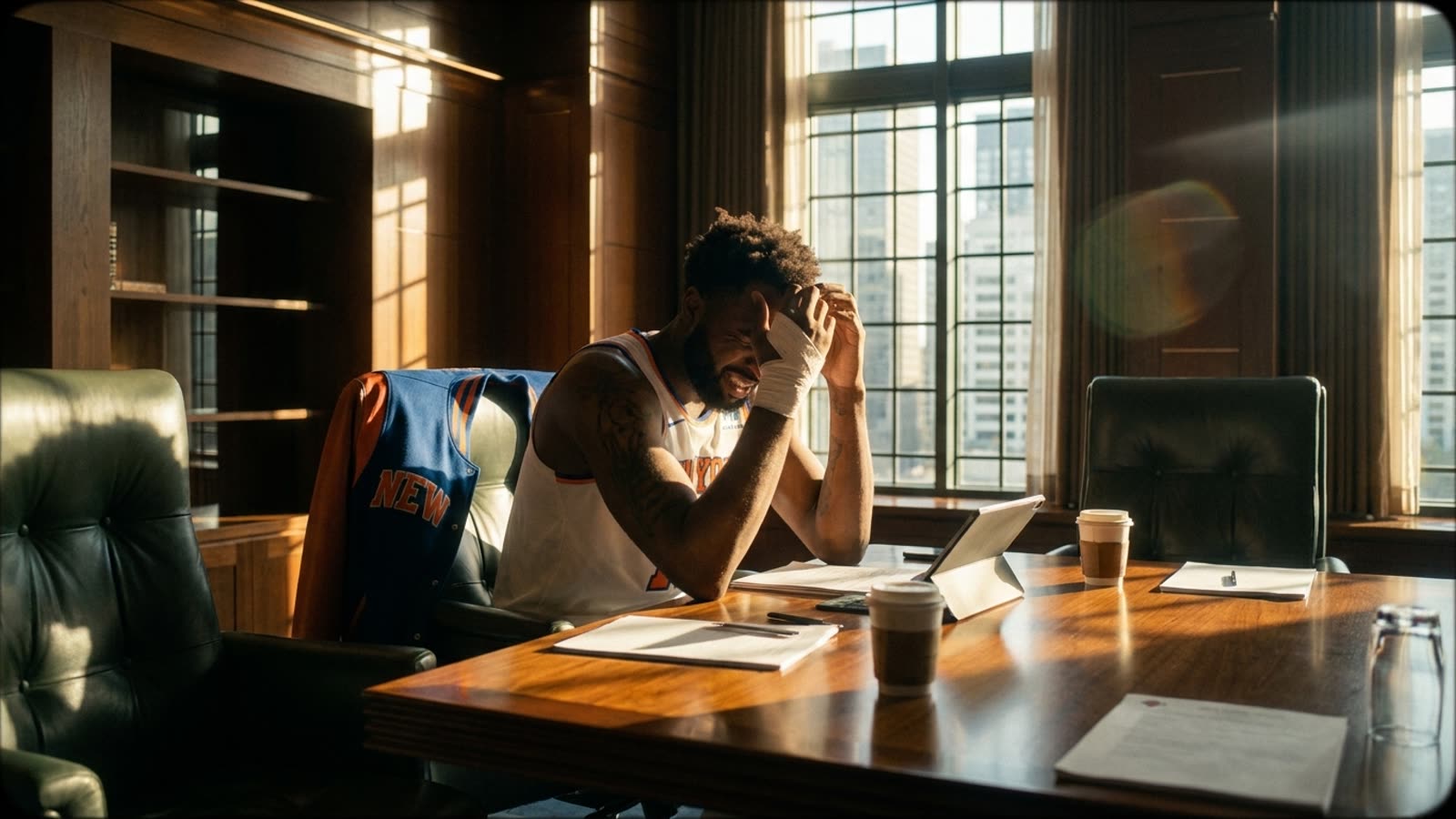
The Knicks have spent three years building a team designed to survive the modern NBA's switching obsession, and now their one irreplaceable piece is sitting in street clothes with a broken finger.
Mitchell Robinson, the 7-foot center whose offensive rebounding rate and rim protection have anchored New York's defensive identity, suffered the injury at precisely the moment when his absence hurts most. With the NBA Finals looming—or already underway, depending on when you're reading this—the Knicks must now navigate the league's most important games without the player who makes their defensive scheme functional.
The irreplaceability problem
Robinson has always been a strange case study in NBA value. He doesn't demand touches, rarely appears in highlight packages, and his offensive game consists almost entirely of catching lobs and vacuuming up missed shots. But the Knicks are a different team without him—slower, smaller at the rim, and suddenly vulnerable to the kind of interior punishment that playoff basketball demands.
The front office knew this. They've known it for years. And yet the backup center position has remained a patchwork solution, a rotating cast of minimum-contract veterans and reclamation projects who can approximate Robinson's presence for twelve minutes but cannot replicate it for thirty.
What comes next
Head coach Tom Thibodeau will likely turn to small-ball lineups featuring Julius Randle or OG Anunoby at the five, a strategy that works against certain opponents but invites disaster against teams with dominant bigs. The alternative—playing a clearly overmatched reserve center extended minutes in the Finals—may be worse.
The injury also raises uncomfortable questions about Robinson's durability. This is not his first significant hand or foot injury, and the pattern suggests a player whose physical style extracts a toll that may shorten his prime.
Our take
Championship teams need depth at their most important positions, and the Knicks gambled that Robinson would stay healthy when it mattered most. That gamble just failed. New York may still win—talent and coaching can overcome a great deal—but they'll have to do it the hard way, and the front office will spend the summer wondering why they didn't address an obvious vulnerability when they had the chance.