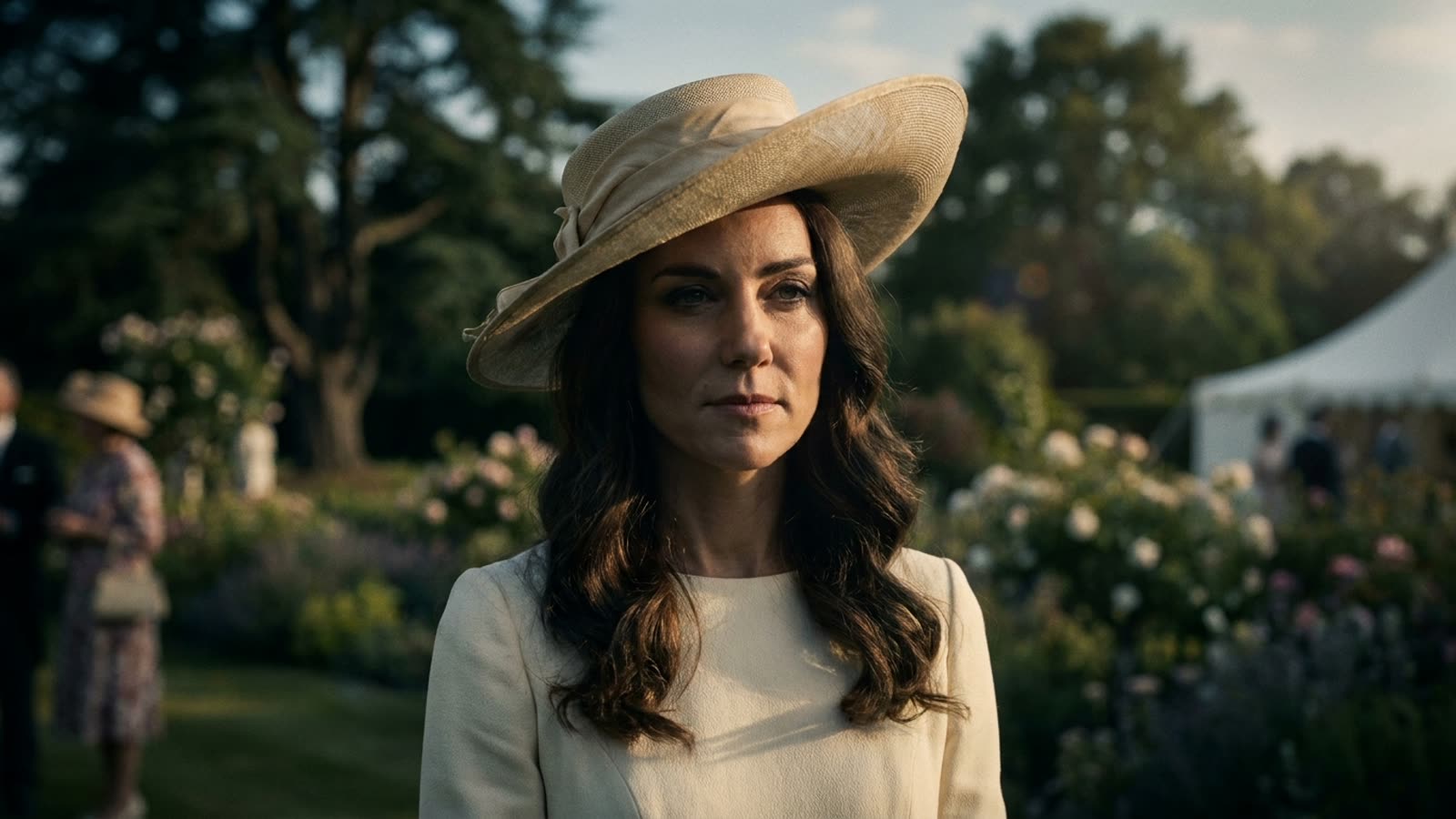
In the carefully choreographed semiotics of royal dressing, nothing is accidental—least of all a hat. When the Princess of Wales stepped out to host the first garden party of the season at Buckingham Palace, she did so beneath a wide-brimmed vintage chapeau that predates her own public life by decades. The choice was deliberate, meaningful, and quietly radical.
Kate Middleton has built her style reputation on strategic repetition. The recycled Jenny Packham gown, the Alexander McQueen coat dress pulled from the archives for its third or fourth outing—these are not signs of a limited wardrobe but of a princess who understands that in an era of climate anxiety and economic strain, conspicuous consumption reads as tone-deaf. Yet the vintage hat represents something beyond mere re-wearing: it is acquisition as preservation, fashion as heritage stewardship.
The politics of provenance
The hat itself—a sweeping, sculptural piece of British millinery—carries the weight of its own history. Vintage royal fashion operates differently from civilian thrifting. When a princess wears something old, she is not merely being frugal; she is making a claim about continuity, about the institution's relationship to its past. At a moment when the monarchy faces questions about relevance and cost, choosing a piece that whispers of permanence rather than shouting of novelty is a strategic masterstroke.
Garden parties themselves are exercises in managed nostalgia. The lawns, the tea, the careful gradations of who stands where—all of it evokes an England that exists primarily in the collective imagination. A vintage hat fits this theater perfectly, suggesting that the woman wearing it belongs not just to the present moment but to the longer arc of the institution she represents.
Beyond the re-wear
The fashion press has spent years cataloguing Kate's repeats, treating each recycled hemline as evidence of relatability. But there is a difference between wearing your own clothes twice and seeking out pieces with their own histories. The former is practical; the latter is curatorial. It suggests a princess who sees herself not merely as a wearer of beautiful things but as a custodian of British craft traditions.
This matters because millinery, once a thriving British industry, has contracted dramatically over the past half-century. The hatmakers who remain are artisans operating at the margins of commercial viability, sustained largely by wedding seasons and royal occasions. When Kate chooses vintage, she implicitly acknowledges this history while sidestepping the awkward optics of commissioning yet another bespoke piece.
Our take
The hat is a small thing, easily dismissed as the kind of style minutiae that fills column inches without consequence. But royal dressing is never just about clothes—it is about the stories the institution tells about itself. In choosing a piece of millinery history over something fresh from a designer's atelier, Kate Middleton suggested that the monarchy's value lies not in its capacity for reinvention but in its role as a living museum. Whether that argument will prove persuasive to a public increasingly skeptical of inherited privilege remains to be seen. But as opening statements go, the hat was impeccable.